By Dr. Praneet Ngamsnae
Aquaculture is one of the fastest-growing sectors in animal food production globally, with an impressive average annual growth rate of 5.3% from 2001 to 2018, according to the Food and Agriculture Organization (FAO 2020). Despite this growth, traditional aquaculture practices often lead to significant environmental degradation. This includes water pollution, destruction of local ecosystems, and heavy reliance on chemical inputs. Such practices not only harm the natural environment, but also negatively affect local communities that depend on these ecosystems for their livelihoods and well-being.
Moreover, as aquaculture production increases, so does the amount of waste, including metabolic byproducts, uneaten feed, and feces. This waste has the potential to cause detrimental environmental effects, such as the eutrophication of water bodies and disruption of local aquatic ecosystems (Bostock 2010; Holmer 2010).
These challenges underscore the urgent need to develop sustainable aquaculture practices. Such practices must meet the growing global demand for food and resources, while minimizing, or ideally eliminating, adverse impacts on the environment.
Integrated Multi-Trophic Aquaculture (IMTA)
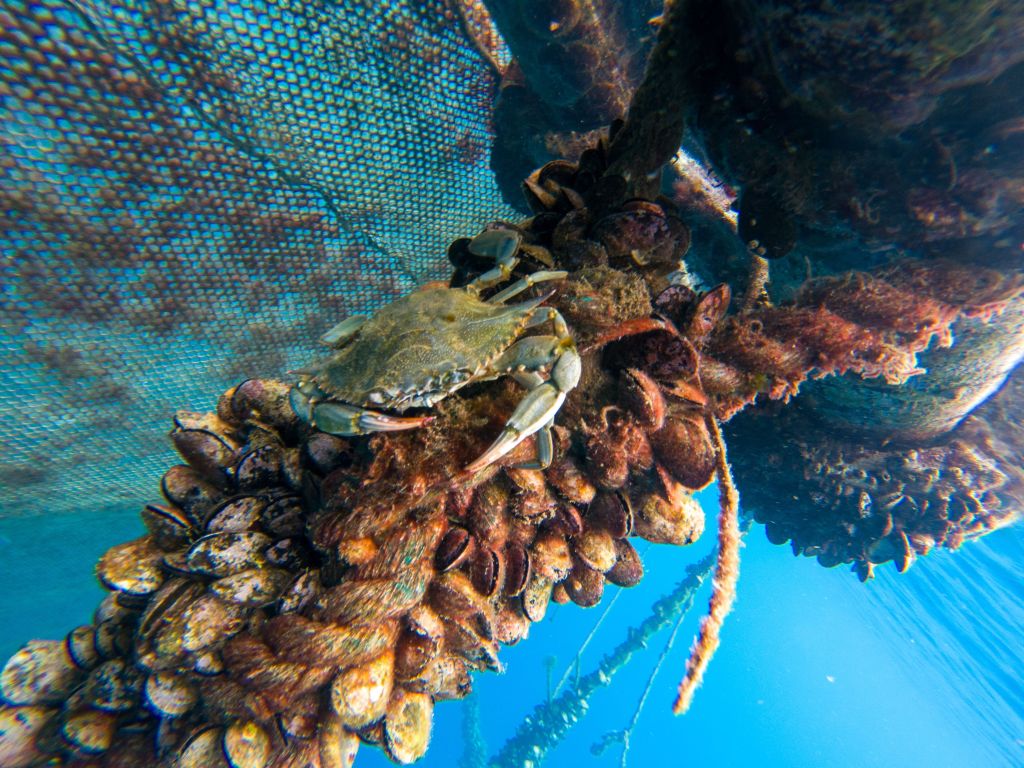
Integrated Multi-Trophic Aquaculture (IMTA) is defined as the co-cultivation of species at different trophic levels in an aquaculture farm, as opposed to the cultivation of a single species. In IMTA, the metabolic waste and uneaten feed from top-level species like fin fish are utilized by lower-level trophic species such as gastropods, bivalves, and macroalgae. This approach contrasts with normal polyculture, which may simply focus on species diversification without necessarily integrating complementary species that enhance systemic balance.
IMTA not only promotes resource efficiency by recycling waste into valuable biomass, but also increases product diversification, which can reduce risks and boost profits for farmers. For example, the cultivation of fed species (dependent on external feed) is linked with the cultivation of extractive species (which extract nutrients from their environment), turning waste from the former into a resource for the latter. This efficient use of inputs allows for greater biomass production compared to monocultures of fed species.
Furthermore, IMTA has evolved as a sustainable aquaculture approach, highly regarded for its ecological, economic, and social benefits. It aligns well with the ecosystem approach to aquaculture (EAA), enhancing the system’s overall sustainability and potentially increasing both social acceptance and market value of niche products.
Historically, the concept of integrating multiple species in aquaculture is ancient, originating from Asia and the Middle East. Although IMTA shares roots with traditional polycultures, it distinctively combines species from different trophic levels, enhancing the ecological balance within the system.
Integrated Multi-Trophic Aquaculture (IMTA) Systems
Integrated Multi-Trophic Aquaculture (IMTA) is versatile, applicable in both marine and freshwater settings to enhance sustainability and productivity. In marine systems, commonly implemented in coastal or offshore waters, species such as salmon are cultivated alongside extractive species like kelp and mussels. These extractive species utilize the nutrients from fish waste, reducing environmental impacts and enhancing water quality (Chopin 2008). Kelp absorbs dissolved nutrients while shellfish filter particulates, collectively contributing to biodiversity and bioremediation.
Conversely, freshwater IMTA systems are typically established in lakes, rivers, ponds, or tanks where species like tilapia or carp coexist with animals like freshwater prawns and plants such as azolla, duckweed, and swamp algae. This configuration allows plants to absorb nutrients directly from water enriched with fish waste, and invertebrates to manage organic waste by breaking it down. Such integration ensures a balanced ecosystem, promotes efficient resource use, and maintains cleaner water, demonstrating how IMTA adapts to diverse environments to improve aquaculture practices (Kibria 2018).
A Proposed Model for Freshwater Integrated Multi-Trophic Aquaculture (FIMTA)
Freshwater Integrated Multi-Trophic Aquaculture (FIMTA) presents numerous benefits, making it a viable option for rural Thai farmers compared to marine IMTA. FIMTA creates a balanced ecosystem by raising multiple species together in freshwater, which can be a convenient and accessible resource in rural areas. This method not only mimics natural processes to maintain water quality using fish waste as nutrients for plants, which in turn purify the water, but also operates in closed systems, minimizing the risk of ecological disruption from invasive species or pollutants. Economically, it provides stability by diversifying production; farmers can cultivate different species like tilapia, carp, prawns, snails, and local edible micro-macroalgae or aquatic plants simultaneously, enhancing productivity and reducing dependency on single market commodities. This integration of traditional practices with modern aquaculture more easily gains community acceptance, and also aligns with local knowledge, making FIMTA an environmentally, economically, and socially sustainable choice for these communities (Shah 2018).
Social and Economic Benefits of IMTA
Integrated Multi-Trophic Aquaculture (IMTA) enhances the sustainability of aquaculture through significant environmental benefits. By utilizing the waste of one species as a resource for another, IMTA reduces reliance on external feeds and fertilizers, thus minimizing the ecological footprint. The system includes species like shellfish or mollusks and seaweeds or swamp algae that perform bioremediation, filtering, and cleaning of the water, which improves water quality and reduces pollution. Additionally, IMTA promotes biodiversity by mimicking natural ecosystems, fostering more resilient and stable aquatic environments.
Alongside its environmental benefits, IMTA also provides substantial social and economic advantages. The system allows farmers to diversify economically by harvesting and selling various products, enhancing profitability while reducing market risks. Furthermore, cleaner waters and healthier ecosystems support local economies, especially in regions dependent on natural resources for tourism and fishing. IMTA also generates job opportunities due to the need for specialized labor and management, contributing to economic growth in rural and coastal communities.
Conclusion and Recommendations
The significance of Integrated Multi-Trophic Aquaculture (IMTA) lies in its efficient use of by-products and waste from one type of aquatic animal as resources for another. This approach promotes environmental restoration and has economic benefits due to its potential for lowering costs, producing diverse outputs, distributing risks, and achieving socially accepted sustainable management practices.
Biological and chemical processes in IMTA contribute to the well-being of the ecosystem and improve water quality. Selecting appropriate species and managing their population sizes ensure a balanced and stable ecosystem function.
IMTA can be implemented in both marine and freshwater environments, and is designed to: (1) reduce dependence on external production inputs; (2) enhance the efficiency of nutrient and energy use within the production cycle to improve system efficiency; (3) limit nutrient loss in water, sediment, and air by reducing waste and mitigating bioaccumulation effects; (4) diversify agricultural outputs and strengthen income reliability, thus reducing reliance on a single market); and (5) increase the variety of nutrient utilization and transfer within the multi-level ecosystem.
The high efficiency of the IMTA system in utilizing nutrients from waste to produce a diverse array of aquatic life, instead of releasing pollutants into the environment, underscores its role in maintaining water quality and its environmentally friendly nature.
IMTA presents a sustainable and efficient way to conduct aquaculture, addressing both environmental and social issues. However, its implementation requires careful planning and management. Stakeholders should consider the following recommendations.
Research and Development: Further research is needed to optimize IMTA systems for different environments and species combinations.
Policy Support: Governments should provide policy support for IMTA, including incentives for farmers to adopt this approach.
Education and Training: Stakeholders should invest in education and training to equip farmers with the necessary skills to implement IMTA.
By embracing IMTA, we can create a more sustainable and resilient aquaculture sector that benefits both people and the planet.
 AQUADAPT