By Dr. Chanagun Chitmanat
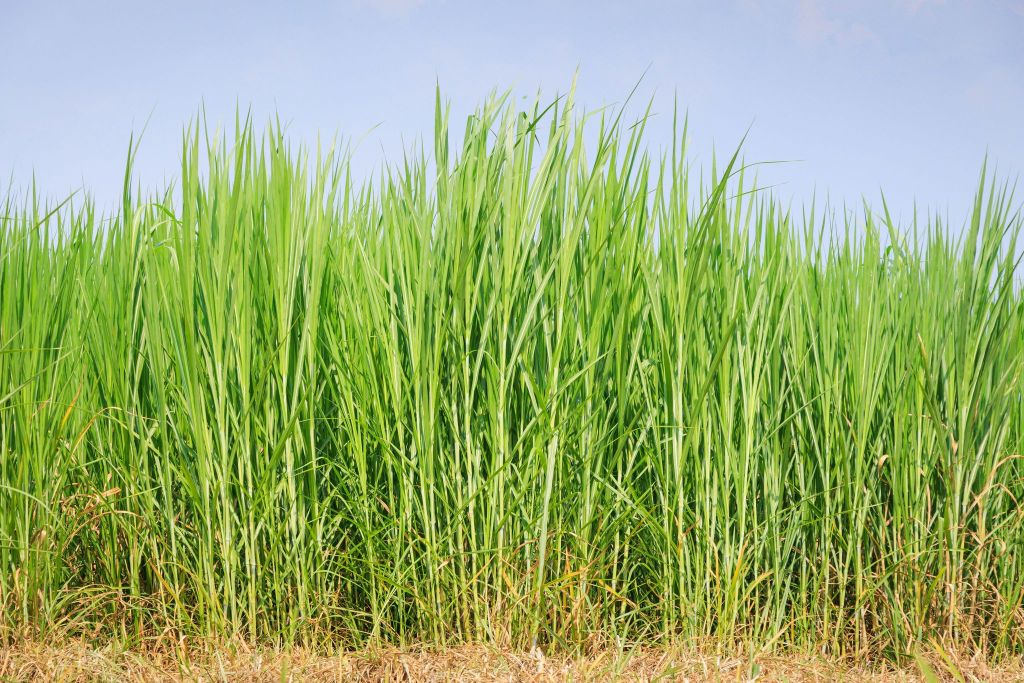
Commercial fish feed prices are continually increasing due to the high cost of fish meal and the variability of its quality. This makes it difficult for farmers to make a profit from tilapia farming. Partial fish meal replacement with plant proteins in fish feed provides benefits such as reducing nitrogen and phosphorus release, and relieving the pressure on environmental deterioration (Awad 2024). Napier grass (Pennisetum purpureum) is widely available in many regions, making it convenient for farmers to source it as tilapia feed. That is why it has been gaining significant attention as an eco-friendly and sustainable low-cost alternative feed option for tilapia farming. This is vital for a sustainable aquaculture in the future. This review aims to explore the benefits, challenges, and potential of using Napier grass in tilapia feed formulations.
Nutritional Benefits
Napier grass is known for its nutritional value, as it contains protein, fiber, vitamins, and minerals essential for tilapia growth and development. Napier grass (Pak Chong 1variety) contains approximately 15% protein, 1.3% fat, and 35% fiber (Sunaree 2017). By incorporating Napier grass into tilapia feed formulations, farmers can provide their fish with a balanced diet and at the same time potentially reduces reliance on expensive commercial feeds. As tilapia is herbivorous, it can digest feed containing plant ingredients possibly leading to improved growth rates and overall health. In addition, an uneaten portion of feed returns to the pond as organic manure that stimulates primary production. These primary production or plankton serve as food for fish in the same pond.
Cost Effectiveness
Feed cost accounts for over 50% of the production cost in aquaculture. One of the primary advantages of using Napier grass as tilapia feed is its cost-effectiveness. Napier grass is a readily available and fast-growing forage crop, making it an affordable option for tilapia farmers looking to minimize feed costs without compromising on nutrition. Chiang Rai Fisheries Provincial Office pioneered a new fish feed, which consists of chopped high-protein Napier grass, rice husk, and concentrated feed in the ratio of 6:4:1 (Bangkok Post 2017). These ingredients were ground, mixed, and fed to tilapia. Whereas the commercial feed price was approximately 30 Baht/kg, the cost was reduced to 6 Baht/kg by implementing the on-farm feed mix, thereby reducing the feed costs (Technology Chaoban 2021).
Sustainable Feed Source
Napier grass offers environmental advantages. As a renewable resource, Napier grass helps reduce the environmental impact of tilapia farming by lowering the carbon footprint associated with feed production. By using locally sourced Napier grass as feed, farmers can minimize transportation costs and support sustainable aquaculture practices. Tilapia is known for their efficient conversion of feed into growth, but uneaten feed and excretion can contribute to excess nutrients in the water, such as ammonia and phosphorus, can accumulate in the water and negatively impact fish health. By utilizing Napier grass, which is low phosphorus content, more digestible, and less likely to cause nutrient buildup, the amount of waste produced by Tilapia can be minimized. This can result in a cleaner aquaculture environment for Tilapia, reducing the risk of disease outbreaks and promoting optimal growth.
Digestibility and Gut Health
Napier grass contains high fiber, which can promote better gut health and digestion in tilapia. The inclusion of Napier grass in tilapia diets can improve feed utilization, reduce the risk of digestive issues, and support overall fish health and growth performance. To enhance results, the Napier grass should be fermented, and beneficial microorganisms added, to provide better digestibility and nutrient absorption. Chawanut (2014) introduced Napier grass (10-15%) to sex reversal tilapia feed (initial average weight, 4.88±0.67 grams) for 20 days. It was found that fish grew very slowly, possibly due to the higher fiber content of the Napier grass mixed feed leading to less nutrient utilization. Low dietary fiber concentration (3-5%) may be beneficial to fish growth, while too high fiber levels may reduce the digestibility of dry matter and the efficiency ratio of other nutrients. To improve digestibility, Tanakorn (2021) reported that a diet of acid fermented milk mixed with fermented Napier grass at the level of 10% significantly increased the daily weight gain and specific growth rates so it could be used to produce feed for Nile tilapia.
Experimenting with Napier Grass: A Case Study
To test the effectiveness of Napier grass, as an additive feed for tilapia, an experiment was conducted at the Faculty of Fisheries Technology and Aquatic Resources, Maejo University, Chiangmai, Thailand. This study was partially supported by the AQUADAPT-Nature project.
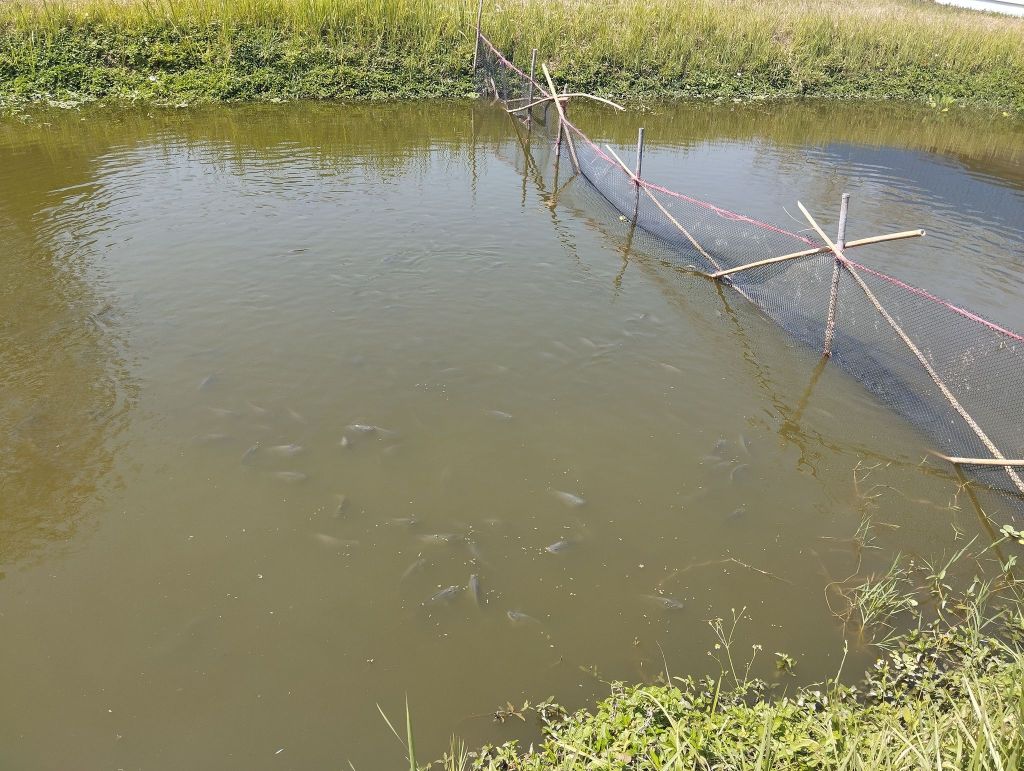
Tilapia with an initial weight of 140 g were raised in an earthen pond for 8 weeks and fed a diet of either 20% Napier grass mixed feed or a commercial feed. The formulation of the mixed feed is shown in the table below. The cost to produce it was approximately 28.30 Baht per 1 kg of feed.
| Ingredient | %Protein | %Ingredient (per kg) |
|---|---|---|
| Broken-milled rice | 10 | 18 |
| Soybean meal | 35 | 28 |
| Fish meal | 60 | 14 |
| Rice bran | 12 | 20 |
| Napier grass | 13.5 | 20 |
| Total | 100 |
After the experiment concluded, it was found that tilapia fed the mixed feed grew more slowly than tilapia fed with a commercial feed. This means that it will take more time for fish on a mixed feed diet to reach marketable size. According to the feed cost/fish weight production, it was found that the feed cost for fish given mixed feed was 10.87 Baht per 1 kg fish, while for commercial feed it was 22.40 Baht per 1 kg fish.

Using locally available ingredients for feed production can be even more affordable. It’s important to consider all factors and weigh the advantages against the disadvantages when deciding whether to use on-farm made fish feed. Formulating balanced feed requires a knowledge of nutrition and feed formulation, which some farmers may lack. Producing feed on-farm can be time-consuming and labor-intensive, especially for small-scale farmers. In conclusion, farmers must consider the tradeoffs between weight gain versus costs.
Guide for Farmers
The following general steps are proposed for farmers interested in utilizing Napier grass.
Step 1 Harvest Napier Grass: Cut fresh Napier grass from your garden or field.
Step 2 Clean and Chop Napier Grass: Wash the Napier grass thoroughly to remove any dirt or impurities. Chop it into small pieces to aid in the fermentation process.
Step 3 Fermentation Preparation: Place the chopped Napier grass in a clean container or fermentation tank. Add a starter culture like rice bran or probiotics to start the fermentation process. Make sure the grass is submerged in water.
Step 4 Fermentation Period: Allow the Napier grass to ferment for about 7-10 days. Stir the mixture occasionally to ensure even fermentation.
Step 5 Check for Readiness: After the fermentation period, the Napier grass should have a sour smell and a slightly brownish color. This indicates that the fermentation process is complete.
Step 6 Drying: Spread the fermented Napier grass thinly on a clean surface to dry. This can be done under the sun or using a dehydrator.
Step 7 Grinding: Once the fermented Napier grass is completely dried, grind it into a fine powder.
Step 8 Mixing with Fish Feed: Mix the fermented Napier grass powder with your regular fish feed at a ratio that suits the nutritional needs of your fish. Start with a small amount and gradually increase as needed.
Step 9 Storage: Store the fermented Napier grass additive fish feed in an airtight container in a cool, dry place away from direct sunlight.
Challenges and Considerations
While Napier grass has numerous benefits as a tilapia feed, it has some challenges to be considered. Nutrient variability, processing methods, and feed formulation optimization are areas that require attention to ensure that the tilapia receive a well-balanced diet that meets their nutritional requirements at different life stages. The variability in nutrient content depends on factors such as soil quality, growth stage, and management practices. Farmers may need to supplement Napier grass-based feeds with additional nutrients to meet the specific dietary requirements of tilapia at different life stages. In addition, ingredients purchased in small batches to produce farm-made feed could increase the overall costs, on top of the issue of ingredient availability near the farm site.
Conclusion
The application of Napier grass as tilapia feed presents an exciting opportunity for farmers to enhance feed sustainability, reduce costs, and promote optimal fish growth. Further research and development in feed formulations, nutritional analysis, and feeding strategies can help maximize the benefits of using Napier grass in tilapia farming and contribute to the advancement of eco-friendly aquaculture practices.
 AQUADAPT