By Dr. Praneet Ngamsnae
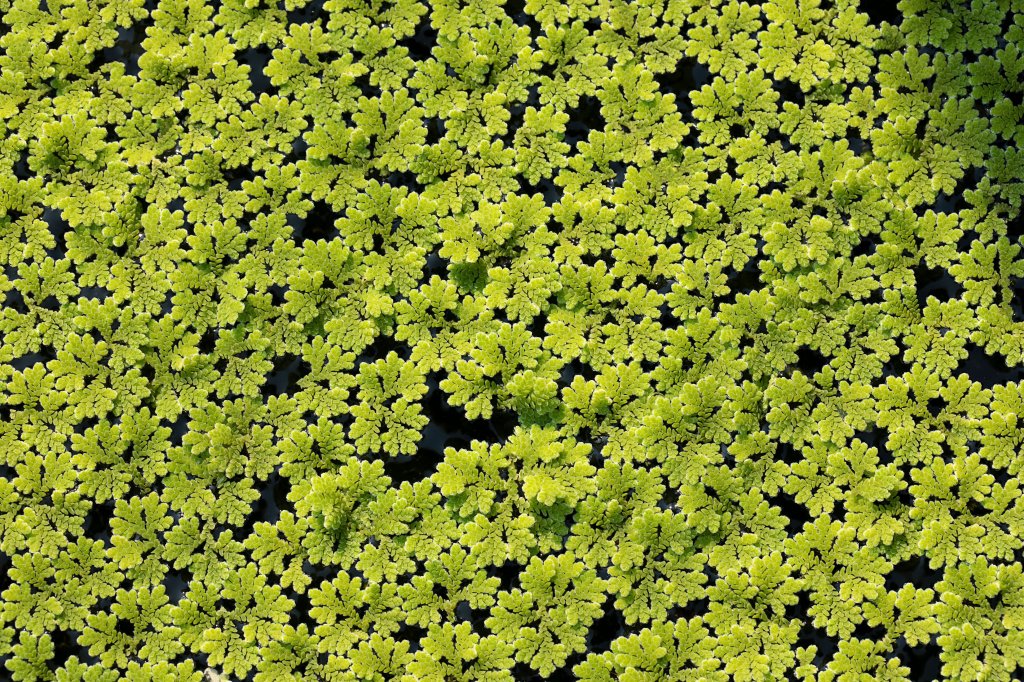
Azolla (Azolla spp.) is a small, fast-growing aquatic fern that plays a significant role in promoting sustainable agricultural practices, particularly in integrated rice-fish culture systems. As a biofertilizer, Azolla offers multiple environmental and economic benefits, making it a valuable tool for improving the sustainability of rice and fish farming. Its ability to fix atmospheric nitrogen through a symbiotic relationship with the cyanobacterium Anabaena azollae enhances soil fertility, reducing the need for chemical fertilizers. This natural fertilization process not only supports healthier rice crops, but also provides an organic nutrient source for fish, contributing to the overall productivity of the system.
Azolla in Integrated Rice-Fish Culture Systems
For farmers, the use of Azolla offers several advantages, including lower input costs due to reduced fertilizer and feed requirements, improved rice yields, and enhanced fish growth. Additionally, Azolla’s fast growth and nutrient-rich composition make it an effective tool for weed control and soil health improvement, further reducing the need for chemical herbicides. By integrating Azolla into rice-fish culture systems, farmers can achieve higher productivity while maintaining environmental sustainability, contributing to the long-term health of the ecosystem and providing economic stability for rural farming communities.
Azolla decomposes into organic matter rich in nutrients like nitrogen, phosphorus, and potassium, which enhances soil fertility. Over time, it increases soil organic carbon and improves soil structure, water retention, and microbial activity. Long-term use of Azolla as a biofertilizer can increase rice yields by up to 20% due to improved soil fertility and nutrient availability. It also supports fish productivity by fostering healthier aquatic ecosystems and serving as supplemental feed for fish.
Benefits of Azolla for Fish
The use of Azolla as a supplementary feed for fish has increased in rice-fish farming systems due to its rich content of protein, vitamins, and essential amino acids. Azolla is also abundant in essential fatty acids and minerals, such as calcium. It is used as a supplement for various fish species, such as Common Carp (Cyprinus carpio) and Grass Carp (Ctenopharyngodon idella). In diverse rice-fish farming systems, including those involving Nile Tilapia (Oreochromis niloticus), which is commonly raised in this system, fish can directly consume Azolla, making it a cost-effective protein source. In South Asia, Azolla is often used as feed for Rohu (Labeo rohita), a popular cultured fish species. In these systems, Azolla is harvested from rice paddies and added to fish ponds, reducing the need for external supplementary feed. Additionally, Azolla is used to enhance the diet of various catfish species, such as African Catfish (Clarias gariepinus).
Common Carp and Nile Tilapia naturally graze on submerged aquatic weeds within rice-fish farming systems. When Azolla is present, it helps control weed growth more effectively by covering the water surface and blocking sunlight, thereby reducing the photosynthesis of aquatic weeds. The combined approach of releasing fish to graze on weeds and using Azolla to cover the water surface enhances weed control more efficiently than using either method alone.
Azolla is a valuable supplementary feed in rice-fish farming systems, promoting the growth of various fish species, such as Common Carp (Cyprinus carpio), Grass Carp (Ctenopharyngodon idella), and African Catfish (Clarias gariepinus). With its soft texture and high protein content (20-30%), Azolla is easy to digest. Studies have shown that supplementing regular feed with Azolla enhances growth and provides health benefits for Common Carp. In studies on African Catfish, Azolla was found to provide essential fatty acids and minerals like calcium, which promote growth and health. Adding Azolla to feed at a rate of 10-20% can increase production. When Azolla is grown in or alongside rice fields as a sustainable fish feed, this reduces reliance on commercial feed. The integration not only lowers feed costs but also provides an eco-friendly approach to fish nutrition, as Azolla rapidly regenerates in rice paddies.
Benefits of Azolla for Rice
In regions like Southeast Asia, Azolla is introduced into rice paddies after rice seedlings are transplanted. The floating Azolla forms a thick mat, which not only prevents weed growth, but also improves the soil through nitrogen fixation, effectively controlling grassy and broadleaf weeds.
Azolla can accumulate between 30-40 kg of nitrogen per hectare within two weeks, acting as a natural fertilizer for rice crops (Watanabe 1977). Research shows that Azolla’s nitrogen contribution is more efficient than urea, as it results in lower nitrogen losses throughout the crop cycle (Watanabe 1989). The use of Azolla not only increases rice yields by up to 20%, but also enhances soil health by improving microbial activity and increasing organic matter content. Studies have shown that incorporating Azolla with rice crops boosts the number of productive tillers and overall yield, even when used in conjunction with urea fertilizers (Yanni 1992).
Through its symbiotic relationship with Anabaena azollae, Azolla fixes atmospheric nitrogen, gradually increasing soil nitrogen levels. This reduces the need for synthetic fertilizers and supports sustainable, high-yield rice production. Azolla helps stabilize soil pH, particularly in slightly acidic conditions, promoting the availability of essential nutrients like phosphorus and iron for plant uptake. Azolla’s decomposition enhances soil microbial diversity, improving nutrient cycling and phosphorus solubilization, which are crucial for sustained rice productivity.
Azolla forms a dense mat on the water surface, blocking sunlight and preventing submerged weed seeds from germinating. This reduces the growth of common rice weeds like Echinochloa crusgalli and Cyperus difformis. Azolla releases allelochemicals, which inhibit the growth of competing plants, particularly weeds, while allowing rice to thrive. This helps suppress weeds like Fimbristylis miliacea and Ludwigia hyssopifolia, which often compete with rice for nutrients.
Overall, incorporating Azolla in rice fields helps lower weed management costs, which typically account for 20-25% of total expenses (De Datta 1983), while enhancing sustainability and improving the health of the ecosystem. In addition to controlling weeds, Azolla provides nitrogen to the rice and food for the fish in integrated systems.
Benefits for the Environment
The integration of Azolla in rice-fish culture systems offers key ecological advantages, particularly as a biofertilizer that enhances nutrient management and supports sustainable agriculture. Azolla serves as an effective biological weed control agent in integrated rice-fish culture systems due to its rapid growth, ability to cover water surfaces, and competition with weeds for light, nutrients, and space.
The symbiotic relationship between Azolla and cyanobacteria enhances nitrogen fixation efficiency, which performs best under adequate light, sufficient phosphorus levels, and optimal temperature. This process reduces nitrogen loss in flooded rice fields, thereby increasing the amount of nitrogen available for plant use. Additionally, Azolla helps reduce ammonia volatilization from urea fertilizer application, improving nitrogen use efficiency in rice cultivation (Vlek 1997).
Azolla fosters biodiversity and reduces reliance on chemical fertilizers, promoting ecological stability in rice-fish systems (Watanabe 1992). In conventional rice farming, herbicides are frequently used to control weeds, which can harm fish in integrated systems. By using Azolla, farmers can reduce or eliminate chemical herbicides, creating a more sustainable, fish-friendly environment. This also lowers production costs and reduces environmental pollution. In organic rice-fish farming, where synthetic herbicides are not permitted, Azolla is a valuable tool. Its thick mat covers the water surface, offering a natural and organic method for preventing weed growth.
Azolla’s ability to improve nitrogen use efficiency reduces the reliance on chemical fertilizers, thereby decreasing nitrous oxide emissions from rice paddies. Resilient to herbicides and low temperatures, Azolla is suitable for diverse climates, helping suppress aquatic weeds and improving crop yields (Lejeune 1999). Despite certain challenges like temperature sensitivity and competition with other aquatic plants, the long-term advantages of incorporating Azolla include improved soil health, enhanced biodiversity, and increased agricultural yields. By offering an eco-friendly and cost-effective alternative to conventional farming methods, Azolla promotes sustainability in rice-fish culture systems, contributing to both environmental health and economic stability.
Recommendations
Azolla, a fast-growing aquatic fern, plays a crucial role in integrated rice-fish culture systems by fixing atmospheric nitrogen, improving soil fertility, and enhancing biodiversity.
The optimal temperature range for Azolla growth is between 20°C and 30°C. Azolla thrives in environments with sufficient sunlight, but excessive solar radiation can lead to photoinhibition. Partial shading is beneficial when sunlight is intense. Azolla prefers slightly acidic to neutral pH levels, ideally between 5.0 and 7.0. The recommended water depth for optimal Azolla growth in rice-fish systems is between 5 and 15 cm. Maintaining a moderate fish density is crucial. Excessive fish populations can overgraze on Azolla, while insufficient fish numbers can lead to stagnant water, both of which affect growth.
These environmental factors must be carefully managed to maximize the benefits of Azolla in integrated rice-fish culture systems.
Limitations
The use of Azolla in rice-fish farming presents several challenges, primarily related to environmental conditions and management practices. However, these challenges can be effectively managed through strategic interventions.
Three challenges in using Azolla in rice-fish farming are its sensitivity to extreme temperatures, particularly when these exceed 31°C, and to nutrient deficiencies, especially when calcium and phosphorus are insufficient (Watanabe 1977). As well, the viability of Azolla in rice fields may also be impacted by herbicide application, as different strains show varying resistance. For example, the “Milan” strain of Azolla has demonstrated resilience to certain herbicides, making it more suitable for integration into farming systems where chemical treatments are applied (Bocchi 2010).
Effective management of Azolla in rice-fish farming involves regular monitoring of water temperature and nutrient levels to ensure optimal growth conditions. Furthermore, selecting herbicide-resistant strains can help reduce the adverse effects of chemical treatments.
Despite some challenges such as temperature sensitivity and competition with other aquatic plants, Azolla remains a promising and sustainable option for integrated rice-fish culture systems.
Conclusion
Azolla offers long-term benefits as a rice biofertilizer in integrated rice-fish systems, enhancing soil health and boosting productivity for both rice and fish, as well as promoting ecosystem sustainability.
Azolla plays a crucial role as a biofertilizer by fixing atmospheric nitrogen through its symbiotic relationship with cyanobacteria. Because Azolla significantly enhances soil fertility and reduces the need for chemical fertilizers, healthier rice crops are the result. Azolla also provides an organic nutrient source for fish, boosting overall system productivity.
Azolla’s multiple benefits extend to weed control and improved soil health. Its use as fish feed, particularly for species like carp, tilapia, and catfish, reduces the need for external feeds, lowers costs, and improves fish growth. It is also instrumental in minimizing the need for chemical herbicides, making farming systems more environmentally friendly.
Despite certain challenges, Azolla remains valuable for its role in enhancing nitrogen fixation and reducing ammonia volatilization, contributing to more sustainable farming practices. Ongoing research is needed to address its declining usage in some areas and to further optimize its application.
In conclusion, integrating Azolla into rice-fish culture systems presents a promising approach to sustainable agriculture, ensuring higher productivity while maintaining environmental balance.
 AQUADAPT