By Vinij Tansakul
Aquaculture, the farming of aquatic organisms, can be categorized into several types based on the level of management and resource utilization. Broadly, these types can be divided into four main categories: extensive, semi-intensive, intensive, and super-intensive. Each category possesses distinct characteristics, advantages, and challenges (Oddsson 2020).
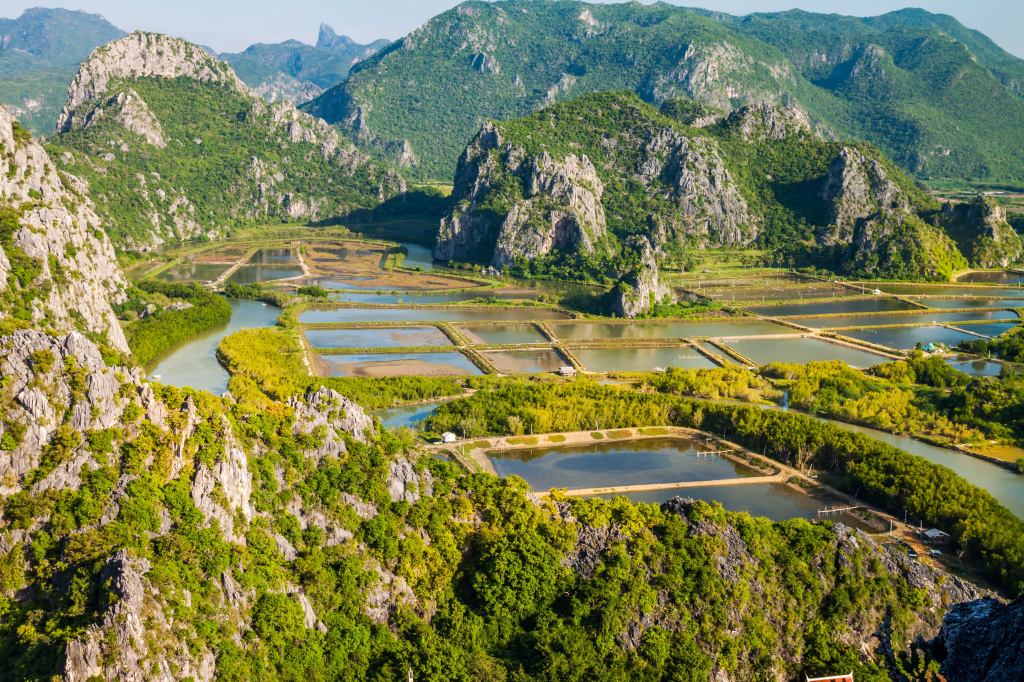
Extensive aquaculture is a traditional form of aquaculture that leverages natural water bodies like ponds or rivers. Fish are reared with minimal intervention, relying primarily on natural food sources such as algae and small aquatic organisms. With low stocking densities and limited management, extensive aquaculture is characterized by low production costs. However, it also results in low and unpredictable yields, often making it suitable for subsistence farming rather than commercial production.
Semi-intensive aquaculture is a hybrid approach that combines natural and artificial feeding. While fish still derive sustenance from natural food sources, supplementary feeds and fertilizers are introduced to enhance productivity. Water quality is monitored and controlled to optimize growth conditions. This method offers higher yields than extensive aquaculture, but it requires increased management and feed costs.
Intensive culture involves the cultivation of fish in confined spaces with a high degree of control over environmental factors. Fish are fed a controlled diet and water quality is meticulously monitored and managed through systems like recirculating aquaculture systems (RAS). This approach enables high-density stocking and rapid growth, resulting in significantly higher yields. However, it demands substantial investments in infrastructure, feed, and labor, and carries a higher risk of disease outbreaks.
Super-intensive culture represents the pinnacle of technological advancement in fish farming. It relies heavily on sophisticated systems like RAS to create optimal growth conditions. By precisely controlling water quality, temperature, and oxygen levels, super-intensive aquaculture allows for extremely high stocking densities and year-round production. While it offers the highest yields, it also requires significant capital investment, technical expertise, and rigorous management to mitigate risks.
| Type | Characteristic | Strength | Weakness |
|---|---|---|---|
| Extensive | Use natural water areas | Low cost | Low productivity |
| Semi-Intensive | Combine natural foods and supplements | High productivity | High management costs |
| Intensive | Control water quality and provide continuous feeding | Very high yield | High operating costs |
| Super Intensive | Use advanced technology | Maximum yield | High initial investment |
Clearly, only the first two types, Extensive and Semi-Intensive, can aspire to wear the label “Nature-based aquaculture”.
The aquaculture industry is undergoing a rapid transformation, driven by the increasing demand for sustainable and efficient aquaculture production. While technological advancements offer promising solutions, a more traditional approach, emphasizing quality over quantity, is gaining traction. This “less is more” philosophy aligns with the principles of nature-based aquaculture, a sustainable and environmentally friendly approach that harnesses the power of natural ecosystems.
What is Nature-Based Aquaculture
Nature-based aquaculture is a farming method that prioritizes the use of natural resources and ecological processes to cultivate aquatic organisms. By mimicking natural environments, this approach minimizes reliance on chemical inputs, artificial feeds, and energy-intensive technologies. Instead, it focuses on fostering healthy ecosystems within aquaculture ponds, promoting biodiversity and reducing environmental impact.
Key Environmental and Economic Benefits of Nature-Based Aquaculture
By encouraging the growth of natural food sources like aquatic plants and plankton, nature-based aquaculture reduces the need for artificial feeds. This not only lowers production costs, but also minimizes water pollution associated with excess feed. In addition, a diverse ecosystem within aquaculture ponds can help control disease outbreaks. By providing habitats for beneficial organisms, such as fish-eating birds and aquatic insects, farmers can naturally regulate the pests and pathogens that are often found in the intensive ponds.
Nature-based aquaculture systems often rely on natural water flow and solar energy to power operations. This reduces reliance on fossil fuels and minimizes greenhouse gas emissions. Additionally, the use of aquatic plants for water filtration can further reduce energy demands. The systems also offer a sustainable approach to aquaculture that prioritizes the health and well-being of aquatic animals. Raising organisms in systems that closely mimic natural environments promotes stronger immune systems and greater adaptability. This enhanced resilience results in healthier, more robust animals with higher survival rates, even in challenging conditions.
Nature-based aquaculture has the key advantage of reduced operational costs. By minimizing reliance on energy-intensive inputs like artificial feed and chemicals, farmers can lower their overall production expenses. While yields may be lower compared to intensive pond systems, the lower cost structure can lead to a more profitable business model.
Moreover, modern consumers are increasingly aware of environmental issues and seek out products that are both safe and sustainable. Nature-based aquaculture, which aligns with these preferences, can capitalize on the growing market for natural, chemical-free products. This premium positioning allows producers to command higher prices and generate greater revenue.
Businesses that adopt environmentally friendly aquaculture practices can benefit from supportive policies and funding initiatives that promote sustainable development. Additionally, the ability to produce products that meets stringent international sustainability standards opens up opportunities for lucrative export markets.
Thus, by embracing nature-based aquaculture, the industry can move towards a more sustainable and resilient future. This approach not only benefits the environment, but also delivers high-quality, premium products that meet the growing consumer demand for sustainable and ethically sourced food, and thus generates substantial economic returns when cleverly marketed.
Examples of Nature-Based Aquaculture
Three examples of nature-based aquaculture are discussed below.
The first is natural shrimp and crab farming. This method utilizes existing water bodies like ponds near canals or estuaries. By strategically managing water flow and incorporating natural food sources like aquatic plants and small organisms, farmers can reduce the dependence on artificial feed. Additionally, these naturally raised shrimp and crab often command premium prices in the market (Trangstory Thailand 2024).
The second is polyculture systems. This involves the raising of multiple aquatic species in the same pond to create a balanced ecosystem. For instance, fish can be introduced to consume algae that could otherwise become problematic for shrimp. In turn, shrimp can consume small worms, contributing to a cleaner pond environment. This minimizes the need for chemicals for pest and algae control. An example of this approach is Prapaphan Farm in Nakhon Pathom province, Thailand, where Nile tilapia and white shrimp are raised together using Integrated Multi-Trophic Aquaculture (IMTA). Waste and leftover feed from the shrimp is utilized by the fish, promoting a healthy farm environment. This strategy enhances both sustainability and economic returns for the farmer (Walker 2024).
The third is tilapia farming in natural ponds and rice fields. This system leverages naturally occurring aquatic plants and algae as a primary food source for tilapia. The method minimizes the need for additional nutrients while offering natural water filtration (Ngamsnae and Samnao 2024; Ngamsnae 2024).
Challenges to Nature-Based Aquaculture
Nature-based aquaculture offers a sustainable and environmentally friendly approach to aquaculture production. However, this promising method is not without its challenges.
One major hurdle is the dependence on natural water sources, which can lead to significant variations in water quality. During dry seasons, water flow may decrease, resulting in reduced water exchange and potential accumulation of waste. Conversely, heavy rainfall can introduce excess nutrients and sediment, negatively impacting aquatic organisms. Farmers must possess a deep understanding of water quality management to mitigate these risks. In addition, extreme weather events, such as heatwaves and heavy rains, can pose significant threats to nature-based aquaculture. These fluctuations can cause dramatic shifts in water temperature, salinity, and oxygen levels, stressing and potentially killing aquatic organisms.
Inconsistent yields is another concern for nature-based aquaculture systems. Reliance on natural processes can produce inconsistent yields in terms of both quantity and size. This variability can make it difficult to meet market demands and maintain stable pricing. Another consideration for nature-based aquaculture is that it typically requires larger land areas compared to intensive aquaculture systems. While underutilized land can be repurposed for this system, acquiring large plots of land for this purpose can be costly and may not always be feasible.
Careful site selection is thus crucial to ensure optimal conditions for nature-based aquaculture.
Recommendations to Stakeholders
For stakeholders interested in applying nature-based aquaculture to meet growing sustainability and market demands, systematic planning and implementation are essential.
Site selection will be key. For this reason, planners must prioritize areas with high biodiversity, such as coastal zones or inland water bodies with abundant natural resources, to ensure access to clean water sources free from pollution, which will maintain optimal water quality. In addition, the design of ponds and their management must be carefully considered. Open-pond systems encourage natural water flow, which enhances biodiversity and nutrient cycling. Where appropriate, introduce habitat enhancement of aquatic plants and structures to create diverse habitats for beneficial organisms.
Another important metric is water quality management. Farmers should utilize biological filtration methods, such as algae and aquatic plants, to reduce the need for chemical treatments. This can be achieved by applying polyculture, which cultivates multiple species in the same pond, mimics natural ecosystems, and improves overall productivity, whilst enhancing disease resistance and water quality. It is also recommended to develop contingency plans to address potential challenges, such as extreme weather events and water quality fluctuations. Regular monitoring and early warning systems can help to mitigate risks and prevent losses.
Academics can contribute to nature-based aquaculture by conducting research to identify suitable species and develop sustainable aquaculture technologies, as well as by exploring innovative approaches to reduce energy consumption and environmental impacts. Government and extension services can support farmers by providing training and capacity building. This includes comprehensive training on ecosystem management, disease prevention, and sustainable practices to empower farmers to make informed decisions and adapt to changing environmental conditions.
The private sector, for its part, can develop market tools and sustainability certification, and promote the environmental and social benefits of nature-based aquaculture products to niche markets. It can thereby validate sustainable practices and enhance market access, and thus contribute to the development of a more sustainable and resilient aquaculture industry.
A Sustainable Future for Aquaculture
Nature-based aquaculture presents a promising approach to aquaculture that prioritizes environmental sustainability, reduces reliance on chemicals and energy, and fosters biodiversity. By harnessing the power of natural ecosystems, nature-based aquaculture provides aquatic animals with a natural diet of plankton, aquatic plants, and small aquatic organisms, significantly reducing the need for costly commercial feed. This approach not only minimizes the environmental impact of aquaculture, but also enhances the health and well-being of aquatic animals, reducing the risk of disease associated with waste accumulation in traditional, closed-pond systems.
From an economic standpoint, nature-based aquaculture offers numerous advantages. By producing chemical-free aquaculture products, it can command premium prices in sustainability-conscious markets, including export markets that prioritize environmentally friendly production methods. Additionally, such projects may qualify for financial support and promotional opportunities from agencies dedicated to sustainable development.
In short, successful nature-based aquaculture implementation demands a strong understanding of aquatic ecology, ecosystem restoration, and biodiversity conservation. Farmers must be well-versed in these areas to minimize environmental impacts and maximize the benefits of their operations.
Ultimately, nature-based aquaculture emerges as a viable aquaculture method that can increase profitability, satisfy the demands of modern consumers, and preserve the delicate balance of natural ecosystems. By embracing nature-based aquaculture and environmentally friendly practices, the aquaculture industry can contribute to a more sustainable future.
 AQUADAPT