By Dr. Chanagun Chitmanat
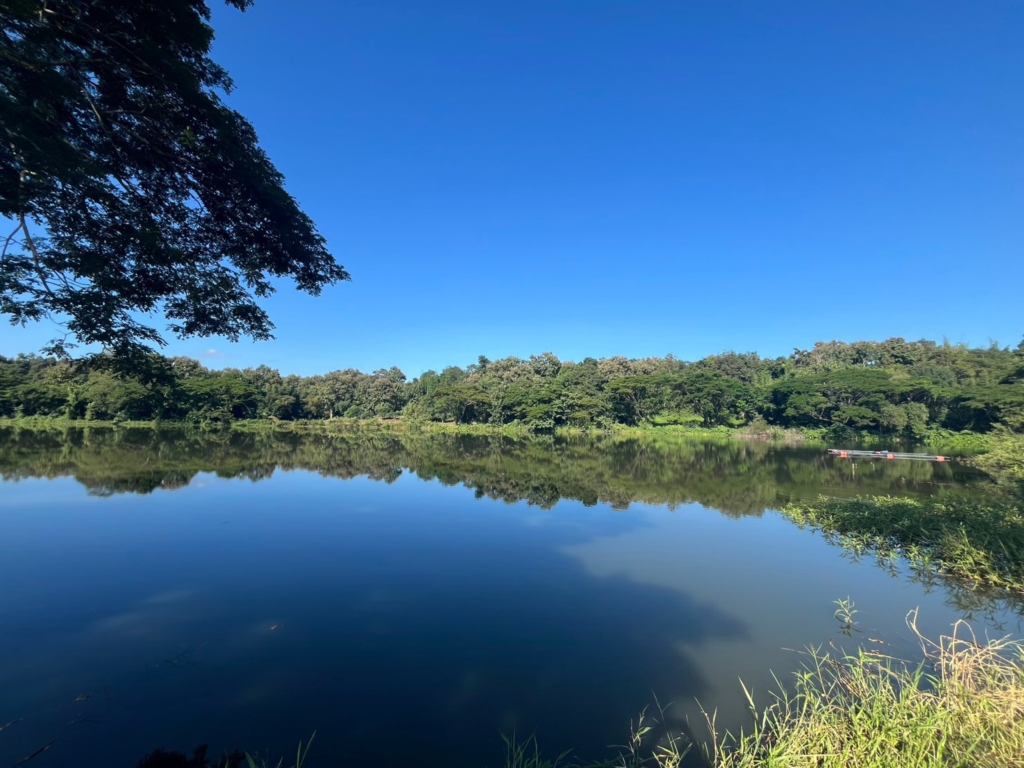
The community fish bank initiative in Thailand is a remarkable model for sustainable fisheries management and community-supported conservation efforts. This innovative approach aims to restore fish populations and provide local communities with the means to secure their livelihoods by raising fish for consumption and generate additional income. This article explores the principles, implementations, and impacts of the community fish bank initiative within the context of Thailand’s freshwater systems.
Thailand is home to diverse aquatic ecosystems that support a rich variety of fish species crucial for the livelihoods of millions. However, overfishing, habitat destruction, pollution, and climate change have resulted in a dire decline in fish populations, threatening both biodiversity and food security. In response, the community fish bank project was developed, as part of a larger framework, to promote sustainable fishing practices and water management, as well as to rehabilitate aquatic resources.
Principles of Community Fish Banks
By involving local fishers and communities in decision-making processes, this initiative fosters a sense of ownership and responsibility towards fishery resources. The initiative emphasizes the use of sustainable fishing practices, including seasonal fishing, selective gear use, and the establishment of no-catch zones to allow fish populations to regenerate (Subnawin 2024).
Community fish banks are designed to enhance biodiversity and restore fish stocks through initiatives such as the creation of fish habitats. The banks not only aim to replenish stocks, but also to provide alternative income sources for communities, such as ecotourism and aquaculture.
Implementations
The implementation of a community fish bank typically involves these four steps.
Community Mobilization: This involves engaging local stakeholders through workshops and meetings to raise awareness about overfishing and conservation.
Setting up of the Bank: This requires the designation of specific areas as community fish banks where fishing is restricted for certain periods to allow fish populations to recover.
Monitoring and Enforcement: This sees a local committee established to monitor compliance with fishing regulations and to ensure that sustainable practices are followed.
Education and Training: This is provided for local fishers on sustainable fishing techniques and the importance of biodiversity.
Impacts and Outcomes
Studies have shown that fish populations in designated banks can increase significantly, not only benefiting conservation efforts, but also enhancing fish stocks available for a sustainable harvest. Which fish species are stocked depends on the consumption demand of villagers and the suitability of reservoirs. Herbivorous fish such as tilapia, common carp, and silver barb are often recommended.
By involving communities in the management of their natural resources, the initiative raises awareness about the importance of fish conservation and sustainable resource use. It thus strengthens local governance and fosters a collaborative approach to environmental stewardship. In addition, the projects provide alternative livelihoods through ecotourism and sustainable aquaculture, helping to alleviate poverty and improve the overall quality of life in participating communities. Fund raising and money management are important to make this activity sustainable. Private and government sectors may be happy to provide initial support. However, the community has to make its own way in the long run.
Case Studies
Three notable case studies of successful community freshwater fish bank projects in Thailand are discussed below.
Chiangkham Fish Bank Project, Phayao Province: This project, setup in 2021, covers a 29 Rai (4.64 ha) site (Facebook page). The initial stock of 415,100 fish included tilapia, silver barb, tinfoil barb, common carp, Julien’s mud carp, and rohu. There are now 156 members, each with a share worth 81,500 Thai Baht. Fish cage culture, river snail culture-in-a-bag, Wolffia culture, and fishing generate income. Approximately 4,589 kg of fish worth 363,440 Thai Baht was harvested last year. The income generated was distributed to the members according to the number of shares they owned. The involvement of local villagers in the decision-making processes and the incorporation of traditional knowledge into the initiative helped increase fish biodiversity. Educational workshops raised awareness about sustainable practices, resulting in improved fishing yields and enhanced community participation.
Nong Bung Kang Fish Bank Project, Yasothon Province: This project covering 12 Rai (1.92 ha) focused on establishing community-managed fish banks in the Yasothon region (DOF 2023). It aimed to conserve local fish species while providing a sustainable source of income for fishers. The Department of Fisheries supplied 80,000 Thai Baht to make the reservoir ready for aquaculture. More than 9,900 people joined this project worth 2.3 million Thai Baht. The accumulated dividend yielded a 1.4 million Thai Baht profit. By introducing a quota system and designating fish spawning areas, the project successfully replenished fish populations. Regular training on aquaculture techniques and sustainable fishing led to increased community ownership and reduced overfishing practices.
Ban Sub Somboon Fish Bank Project, Buriram Province: This fish bank’s objective was to ensure food security and provide a reliable source of fish for local markets (DOF 2018). Eighty-one people hold 285 shares at 100 Thai Baht per share. More than 13 tonnes of fish were harvested generating an income of 392,764 Thai Baht from the sale of fish on the market and the processing of fish products. Part of this income was used for management and part was returned to the villagers who were involved in these activities.
These three case studies demonstrate the potential of Thailand’s community fish bank projects to enhance local fisheries, promote environmental sustainability, and improve the socio-economic conditions of participating communities.
Challenges
Despite its successes, the community fish bank initiative faces challenges. These include, for example, climate change which is a significant threat to aquatic ecosystems and requires adaptive management strategies. Market pressure is another obstacle as increased demand for fish creates temptations to overexploit resources within and outside of the fish bank areas. Overfishing can influence whole ecosystems by changing the size of the remaining fish (WWF 2019), leading to less stock replacement and possible extinction. Thus, ongoing efforts are needed to keep communities engaged and informed about sustainable practices.
Moving forward, sustaining the success of community fish banks will require strong partnerships between local communities, government agencies, NGOs, and academic institutions to ensure comprehensive support for conservation efforts.
Recommendations for Stakeholders
Community fish bank projects can be highly beneficial for local economies, environmental sustainability, and food security. The following recommendations are suggested to stakeholders involved in such initiatives.
Local governments should implement policies that promote the establishment and maintenance of fish banks, as well as provide the funds and resources for training and capacity-building workshops. Academia and researchers can support the projects by conducting studies on local fish species and ecosystems, thus providing data-driven recommendations, and by offering training sessions on fish species conservation and sustainable fishing best practices.
NGOs, civil society, and environmental organizations can facilitate awareness campaigns about the benefits of community fish banks and assist in the formation of cooperatives or associations to organize local fishers. NGOs can also help design and implement conservation plans that protect local waterways and aquatic habitats. Finally, they can suggest ways of monitoring environmental impacts and advise on best practices for sustainability.
Community members should engage actively in decision-making processes to ensure the project meets local needs and should participate in training programs to learn sustainable fishing practices and fish farming techniques. Fishers are encouraged to follow sustainable fishing practices to prevent overfishing and depletion of resources. In this regard, community members should collaborate with scientists and experts to monitor fish populations and health.
Funding organizations should provide grants or low-interest loans to aid in the start-up and continuance of fish bank projects. They should also develop clear metrics for evaluating the success and impact of fish bank initiatives. The private sector can get involved by investing in technology and infrastructure that support fish bank initiatives, such as hatcheries or aquaculture facilities, as well as partner with communities to create market access for sustainable fish products.
By collaborating and sharing resources, stakeholders can maximize the benefits of community fish bank projects for both the environment and local communities.
Conclusion
The community fish bank initiative in Thailand is a noteworthy example of how local communities can effectively manage and restore their fishery resources. By prioritizing sustainability and community engagement, this model not only addresses the urgent need for conservation, but also strengthens economic resilience among local fishers. As challenges continue to mount from environmental changes, the lessons learned from Thailand’s community fish banks may serve as a blueprint for similar initiatives worldwide.
 AQUADAPT