By Dr. Arissara Sopawong and Amornrat Rangsiwiwat
Aquaculture has become vital for driving economic growth and supporting global livelihoods (FAO 2020). As human consumption continues to rise alongside a growing population, aquaculture production is expected to increase significantly. However, the rising costs associated with production, driven by high expenses and variability in ingredient quality, present a challenge for farmers aiming to maintain profitability. Utilizing periphyton in aquaculture offers a promising solution by reducing feed costs, providing natural habitats for microorganisms, and serving as nursery grounds and refuges for aquatic animals. Additionally, it functions as a nutrient removal mechanism, aiding in water quality management, and can be utilized for pond remediation in aquaculture systems.
About Periphyton
Periphyton was first defined in 1928 (from peri = around; and phyton = plant). Nowadays, the word periphyton is often used interchangeably with “biofilm” or “aufwuchs” to describe organisms attached to substrates, including free-floating organisms and detritus (Azim 2005). Scientifically, periphyton is a micro-ecosystem consisting of a complex mucopolysaccharide (long chains of sugar molecules) matrix bound by a community of autotrophic microorganisms (organisms that produces its own food, e.g. plants and algae) and heterotrophic microorganisms (organisms that either consumes producers of food or food produced, e.g invertebrates) (Carvalho 2018). These communities encompass a large diversity of organisms comprising phytoplankton, diatoms, bacteria, fungi, protozoans, zooplankton, and small invertebrates (Azim 2005; Sanli 2015).
In wastewater treatment, biofilm typically refers to bacteria and protozoa that aid mineralization and improve water quality. Thus, the definitions of periphyton can be identified as an important part of food chains in aquatic ecosystems. Periphyton communities play an important role in the natural aquatic ecosystem through their impact on primary production, food webs, organic matter, and nutrient recycling (Battin 2003; Cantonati 2014).
As mentioned above, periphyton commonly lives by attaching to surfaces or substrates in the water column. These substrates provide habitat and shelter for various living organisms, including microorganisms, fish, phytoplankton, zooplankton, and other invertebrates, which can utilize these areas for spawning and refuge (Fontanarrosa 2019; Sopawong 2023). Additionally, substrates can act as feed additives for cultured animals, improve water quality, enhance nutrient removal, and increase aquatic animal production in the systems (Wang 2014).
Factors Influencing the Formation of Periphyton
Periphyton’s diversity and composition are influenced by various factors such as submersion time, water current, substrate type, water chemistry, grazing pressure, nutrient availability, temperature, and light (Lamprecht 2022; Nolan 2023). These components can be affected by both abiotic and biotic factors, which may interact synergistically or antagonistically. For instance, studies have shown that nutrient availability and light availability play crucial roles in shaping periphyton communities, with nutrient enrichment leading to shifts in community composition from diatom dominance to green algae dominance (Calvo 2022). The understanding of the complex interplay of these factors is essential to predict and manage the ecological functions of periphyton in aquatic ecosystems, and highlights the need for comprehensive research to elucidate the intricate relationships governing periphyton dynamics and nutrient cycling.
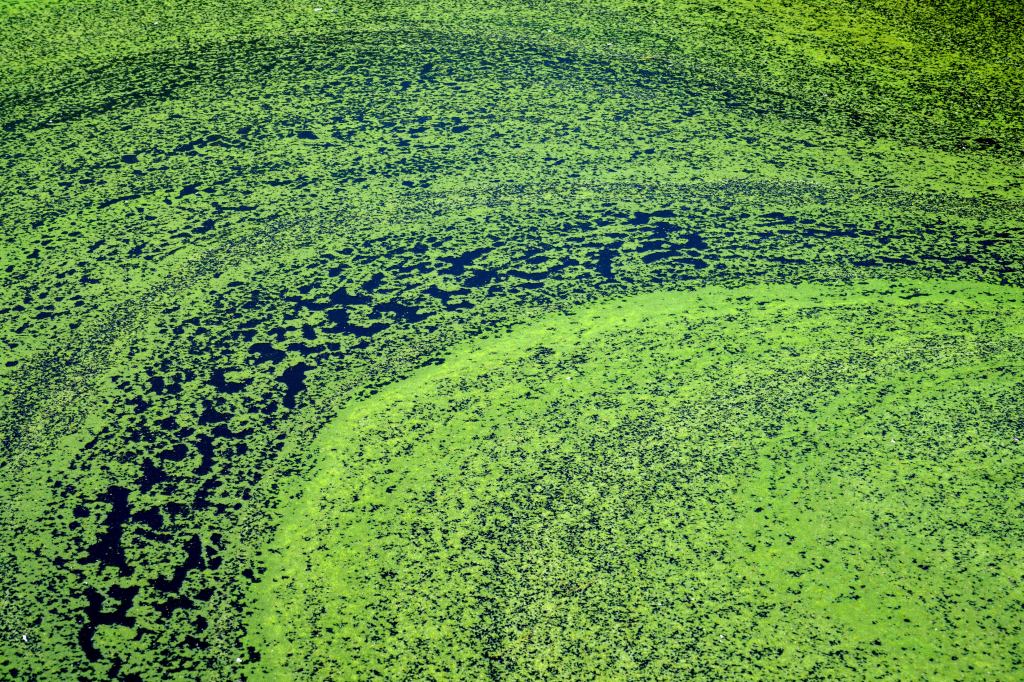
Abiotic factors such as light, pH, temperature, and nutrient availability play crucial roles in influencing the formation and structure of periphyton communities on substrates (Bisht 2023). Light availability affects temperature and impacts the growth of organisms within periphyton, with algae often being a predominant component of these communities (Huang 2023). Poor pond water management leading to eutrophication can result in dense filamentous green algae growth, reducing light penetration for periphyton formation on submerged substrates and plant roots, ultimately affecting the integrity of the periphyton community (Wu 2011). Understanding the interplay of abiotic factors like light and nutrient levels is essential for managing and preserving the stability of periphyton communities in aquatic environments.
Temperature plays a crucial role in various metabolic processes in living organisms, including enzymatic activities, respiration, and photosynthesis, which in turn can impact periphyton formation (Sun 2022; Liu 2023). High temperatures can induce thermal stress in benthic algae, leading to the deterioration of periphyton communities (Marasco 2023). Additionally, nutrient availability, particularly nitrogen and phosphorus, in the water column is essential to enhance the periphyton biomass and diversity on submerged substrates, thereby affecting periphyton communities (Zhang 2023). Understanding the intricate relationship between temperature, nutrient levels, and metabolic activities is crucial for predicting and managing the dynamics of periphyton formation in aquatic ecosystems.
The flow of water can affect the periphyton communities. High flow velocities such as flooding or strong aeration can influence the thickness of the boundary layer of periphyton (Han 2018). Sedimentation can increase turbidity in the water column, which reduces photosynthesis for primary producers.
Grazing, a common biotic factor, significantly influences plant and periphyton communities. Research indicates that different grazing pressures can alter the composition of microbial communities in the rhizosphere, enriching beneficial microorganisms like mycorrhizal fungi and rhizobacteria, which are themselves positively correlated with root metabolites such as amino acids and organic acids (Yuan 2023).
Furthermore, substrates selected to inhibit pathogens can be an alternative way to control harmful species. Cai (2017) and Trentin (2013) found that using bamboo as a substrate can inhibit Flavobacterium columnare and Pseudomonas aeruginosa formation due to the tannins in bamboo, which can inhibit periphyton formation of these microbial species. Therefore, some fish farmers use bamboo in their ponds to reduce disease outbreaks.
Thus, periphyton is an environmentally friendly approach and efficient alternative for farmers, who wish to practice sustainable aquaculture.
Applications of Periphyton in Aquaculture
Periphyton plays a significant role in aquaculture due to its ability to form in various environments using low-cost technology and simple maintenance. It contributes to food availability and forms the foundation of the food web in aquatic ecosystems, by enhancing water quality (Kumar 2017), by providing habitat for microorganisms and invertebrates (Fontanarrosa 2019), and by increasing aquatic animal production (Kumar 2017; Jha 2018).
Additionally, periphyton filtration is recognized as an effective bioremediation technology for treating polluted water (Shabbir 2017). Periphyton can serve as an alternative method to improve water quality and enhance the production of cultured aquatic animals. Periphyton has been shown to support better growth in fish and shrimp (Keshavanath 2017; Kumar 2017) and is considered a natural nutritional feed, comprising 23-30% protein, 2-9% lipid, 25-28% nitrogen-free extract (NFE), and 16-42% ash (Dam 2002; Thompson 2002). Additionally, fatty acids such as polyunsaturated fatty acids (PUFA) can be found in natural food sources like phytoplankton and zooplankton within periphyton communities (Parrish 2009). Therefore, periphyton can be used as a dietary supplement in the culture of fish and shrimp.
Examples on how to Help Grow Periphyton
Garcia (2016) investigated periphyton-based cage culture for Nile tilapia in a Brazilian reservoir, using 6 m3 cages with and without bamboo substrates, while varying stocking densities and feeding regimes. It was found that bamboo substrates reduced feed usage by 32%, shortened growth periods by 20%, and improved dissolved oxygen levels. However, bamboo substrates also decreased cage volume, thereby limiting the capacity for larger fish to grow, and increased parasite prevalence. The study suggests that although periphyton-based cage culture has the potential to enhance fish growth and reduce costs, further research is necessary to optimize the system and assess its feasibility across different aquaculture environments.
Muthoka (2021) studied the effects of periphyton technology on the growth and breeding behavior of Nile tilapia at KMFRI’s (Kenya Marine and Fisheries Research Institute) Sangoro Aquaculture Center in earthen ponds. The ponds were conditioned with lime, fertilized with chicken manure, and fitted with eucalyptus poles as substrates. The researchers found that periphyton-enhanced ponds resulted in improved survival rates, better growth performance, and more efficient feed conversion compared to control ponds. Additionally, periphyton technology delayed breeding behavior and increased fecundity. The study suggests that this approach can enhance tilapia growth, reduce excessive breeding, and minimize the need for synthetic hormones, providing a sustainable alternative for tilapia farming. Further research is recommended to explore periphyton technology as a substitute for synthetic hormones in tilapia hatcheries.
Santhiya (2024) investigated the effects of different natural substrates such as coconut shells, coconut coir, and split bamboo poles on periphyton production in earthen seawater ponds. Substrates were submerged vertically at varying depths (0-40 cm, 40-80 cm, and 80-120 cm) for 45 days, with periphyton samples collected periodically. The study found that coconut coir significantly outperformed the other substrates in biomass and chlorophyll a content, particularly at the shallowest depth. Natural substrates also improved water quality, reduced nitrate levels, increased dissolved oxygen, and provided a natural food source for aquatic animals, leading to better growth and survival rates while lowering production costs.
Limitations
Some limitations to consider include the durability of natural substrates, which may require periodic replacement and maintenance. The installation and management of these substrates can be labor-intensive and may require additional skills, posing a challenge for farms with limited resources. Moreover, the long-term ecological impacts, such as the accumulation of degraded materials or chemicals used in pond preparation should be considered.
Conclusion
To enhance the efficiency and address the limitations of using natural substrates, future research should consider studying cellulose-water reaction and developing durable materials conducive to periphyton growth whilst leaching less chemicals in the ecosystem. Additionally, improving installation techniques for convenience and efficiency, assessing the economic viability of periphyton substrates, and exploring their application across diverse aquaculture systems are also recommended. These advancements will increase the effectiveness and adoption of substrates, and thus promote sustainable and environmentally friendly aquaculture practices. By optimizing materials, refining installation methods, and evaluating their economic feasibility, the integration of periphyton in aquaculture systems can be maximized. Ultimately, applying these substrates in various aquaculture setups will benefit sustainable aquaculture and enable small-scale farms to adopt these practices efficiently and cost-effectively.
 AQUADAPT