By Dr. Praneet Ngamsnae
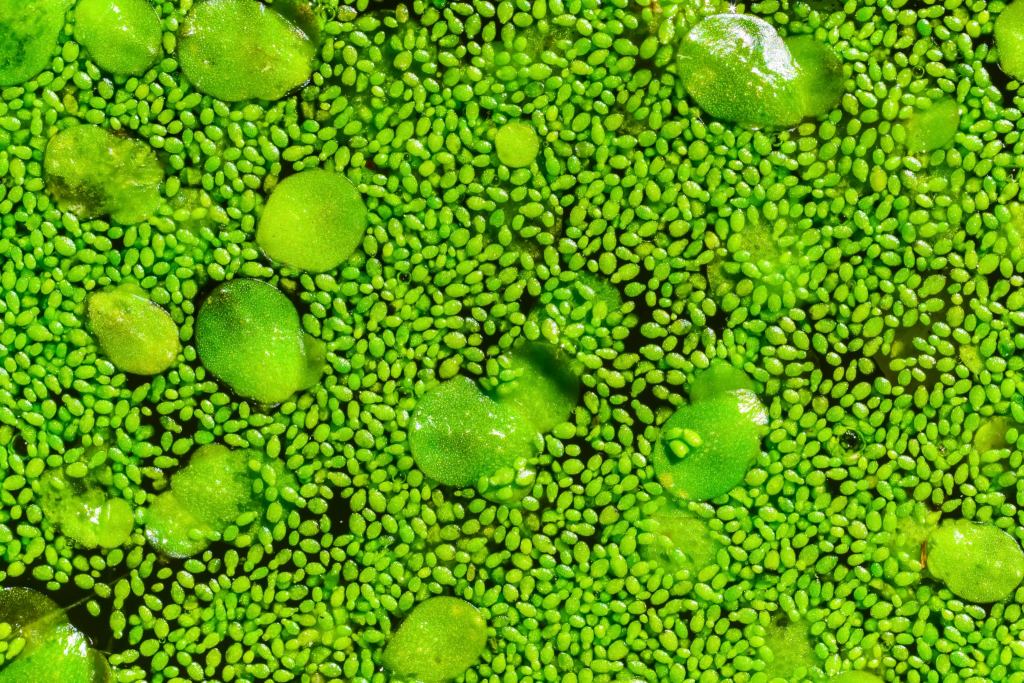
The growing demand for sustainable aquaculture has highlighted the need for innovative and environmentally friendly approaches to optimize production while minimizing ecological impacts. Aquaculture, as one of the fastest-growing food production sectors, plays a critical role in global food security. However, its expansion is often accompanied by issues such as nutrient pollution, habitat degradation, and high feed costs. In response to these concerns, incorporating naturally occurring and resource-efficient organisms into aquaculture systems offers a promising solution. One such organism is Wolffia (Wolffia arrhiza), commonly known as watermeal, which has gained attention for its ecological and nutritional attributes.
Wolffia, a member of the Araceae family, is one of the smallest flowering plants in the world. Native to freshwater ecosystems, this free-floating aquatic plant is highly efficient in nutrient uptake, rapid growth, and biomass production. Its ability to thrive in nutrient-rich environments makes it an ideal candidate for wastewater treatment and nutrient recycling. Furthermore, Wolffia is rich in proteins, essential amino acids, vitamins, and minerals, making it a valuable feed ingredient for aquaculture species. Integrating this plant into aquaculture systems could contribute to a circular economy by converting waste nutrients into high-quality biomass, thus addressing issues related to nutrient runoff and feed sustainability.
This article explores the potential for incorporating Wolffia into aquaculture systems to promote environmentally friendly practices. It examines the ecological benefits, nutritional value, and practical applications of this plant, highlighting its role in enhancing the sustainability of aquaculture production. By leveraging the unique properties of Wolffia, the aquaculture industry can advance toward a more sustainable and resilient future.
Wolffia’s Effect on Water Quality Parameters
Improvements in water quality through Wolffia usage have shown significant promise in aquaculture systems. The plant demonstrates remarkable capability in reducing harmful nitrogen compounds, including ammonia (NH4-N), nitrite (NO2-N), and nitrate (NO3-N), as well as phosphorus (PO4-P), reductions which directly contributes to better aquatic environments for fish cultivation (Velichkova 2013; Baidya 2018).
In recirculating aquaculture systems, Wolffia serves as an effective biofilter, enhancing dissolved oxygen levels while reducing total dissolved solids, thereby promoting healthier fish growth conditions. The plant’s effectiveness extends to effluent management, particularly in treating aquaculture waste streams. Suppadit (2008) highlight its success in reducing biological oxygen demand and nitrogen levels, especially in shrimp farming operations. Additionally, Wolffia’s ability to fix atmospheric nitrogen helps maintain optimal nitrogen balance in low-nitrogen effluents.
Research into optimal coverage areas has revealed interesting findings. Various Wolffia zones, ranging from 10% to 30% coverage, demonstrated improvements in water quality parameters. Sabliy (2019) found that even a modest coverage of 10% could provide significant benefits in reducing ammonia, nitrite, and nitrate levels. However, management considerations are crucial, as excessive Wolffia growth can potentially limit light penetration and compete for resources within the system.
The integration of Wolffia into aquaculture systems offers substantial benefits for water quality enhancement and toxic nutrient reduction, supporting better fish health. Success depends on careful management to maximize these advantages while avoiding potential adverse effects from excessive growth.
Wolffia’s Ability to Remove Nitrogen
The successful usage of Wolffia arrhiza in aquaculture water treatment systems represents a significant advancement in sustainable fish farming practices. The plant’s ability to thrive while assimilating nitrogen compounds, combined with its quick growth rate and adaptability to controlled environments, positions this plant as a valuable tool for managing nutrient levels in aquaculture, contributing to more environmentally responsible fish farming operations.
Under optimal conditions, Wolffia has demonstrated significant ammonium nitrogen removal capabilities, with daily rates ranging from 2.6 to 6.0 mg of NH4+ per gram of plant biomass (Sabliy 2016), underlining its effectiveness in improving water quality in aquaculture systems.
Wolffia’s Effect on Fish Growth and Health
The presence of Wolffia enhances fish growth and health in aquaculture systems by serving as both a nutrient source and a natural water quality regulator. With its high protein content (30-45%), it supports the growth and well-being of herbivorous and filter-feeding fish. Additionally, Wolffia improves water quality by reducing harmful nutrients like ammonia, nitrite, and nitrate, thus minimizing fish stress and boosting survival rates. Designated Wolffia zones in aquaculture systems create optimal conditions for fish to thrive and achieve better growth.
The incorporation of Wolffia demonstrated significant benefits for aquaculture operations by serving as an effective and economical supplement. Recent studies across multiple fish species have shown promising results when Wolffia is integrated into conventional feeding regimens, including the following.
Tilapia (Oreochromis niloticus): A diet of 20% Wolffia and 80% commercial feed resulted in optimal weight and length growth (Kamelia 2022).
Indian Carp (Labeo rohita): Supplementing conventional feed with Wolffia improved growth, with rohu fry achieving weight gains of up to 22.58 g over a period of 210 days, exceeding results from conventional diets alone (Mandal 2012).
Queen Loach (Botia dario): Incorporating Wolffia, particularly with Spirulina, enhanced survival rates and pigmentation (Gogoi 2018).
These findings highlight Wolffia’s potential to improve growth, survival, and feed efficiency while reducing costs across various fish species.
Wolffia’s Effects on the Flesh and Organoleptic Quality of Various Carp Species
Baidya’s (2017) research in Tripura, India, found that the integration of Wolffia arrhiza into polyculture systems had notable effects on the flesh quality of several carp species, including Catla (Catla catla), Indian Carp (Labeo rohita), Mrigal (Cirrhinus mrigala), Grass Carp (Ctenopharyngodon idella), Puntius (Puntius javanicus), and Fancy Carp (Cyprinus carpio haematoperus).
In terms of flesh quality, the protein content showed significant improvements in Catla, Indian Carp, Mrigal, and Fancy Carp, with the highest levels observed with the 20% Wolffia treatment. Crude lipid content responded variably; it increased significantly in Grass Carp and Puntius under the 30% Wolffia treatment, while it decreased in Catla, Indian Carp, and Fancy Carp compared to the control. Ash content was significantly reduced in Catla, Mrigal, Grass Carp, and Amur Carp when treated with Wolffia. Additionally, moisture content declined across most species receiving the Wolffia treatments, resulting in improved flesh consistency.
Regarding organoleptic quality, no significant differences were observed in sensory attributes such as color, odor, texture, gill condition, body surface, and eye clarity. This consistency in sensory quality is likely due to the stable culture environment and optimal water conditions maintained throughout the study (Baidya 2017).
The research demonstrates that co-cultivation of Wolffia enhances the nutritional quality of fish flesh while maintaining organoleptic properties, supporting its viability as an addition to sustainable aquaculture systems.
Wolffia’s Environmental Benefits in Aquaculture
Wolffia serves as an exceptional environmental solution in aquaculture systems through its natural filtration capabilities and sustainable characteristics. The plant functions as an effective biofilter in recirculating aquaculture systems, significantly improving water quality by reducing harmful compounds. Research by Baidya (2018) demonstrated that Wolffia zones covering just 10-30% of water surface area substantially decrease concentrations of nitrogen compounds, including ammonia (NH4-N), nitrite (NO2-N), and nitrate (NO3-N).
The plant’s environmental value extends to its remarkable adaptability to various water conditions. Velichkova (2013) found that Wolffia naturally increases dissolved oxygen levels while reducing phosphorus content, creating healthier aquatic environments. Furthermore, its versatility in switching between photoautotrophic and heterotrophic feeding makes it particularly effective in treating nutrient-rich waters, as documented by Czerpak (2005). This adaptability enables Wolffia to effectively reduce biological oxygen demand (BOD5) and chemical oxygen demand (COD) in aquaculture systems.
As a sustainable feed ingredient with protein content reaching up to 41.81% under optimal conditions (Prosridee 2023), Wolffia offers an environmentally friendly alternative to conventional fish feeds, potentially reducing the aquaculture industry’s reliance on less sustainable feed sources. This dual role as both water purifier and sustainable feed source makes Wolffia a valuable tool for developing more environmentally responsible aquaculture practices.
Wolffia’s Limitations
Incorporating Wolffia into aquaculture presents several challenges that require careful management. First, this species demands specific growth conditions for optimal development. These include a neutral pH of approximately 7, a daily light exposure of 13 hours, and strict control of biomass concentrations. These precise requirements can make cultivation difficult in less controlled environments. Additionally, Wolffia is highly sensitive to environmental factors such as elevated salinity levels and presence of pollutants, which can hinder its growth. Although the rapid growth rate, which sees a doubling of its biomass within 1 to 6 days, is advantageous for production, this rapidity can also cause overgrowth issues, complicating Wolffia’s integration into aquaculture systems (Bahagia 2024).
The plant’s presence significantly influences water quality parameters, which may necessitate additional management to maintain a balanced aquatic environment. Furthermore, its competitive nature can result in the displacement of other aquatic species, potentially disrupting the ecological balance within the system.
These limitations highlight the need for careful planning and monitoring when incorporating Wolffia into aquaculture practices.
Recommendations on Wolffia’s Uses
To successfully integrate Wolffia into aquaculture systems, the implementation of several strategic measures is essential. Regular monitoring and management systems should be established to ensure that growth conditions remain optimal and to address potential issues promptly. Nutrient inputs, particularly when using organic fertilizers, must be carefully balanced to avoid nutrient imbalances that could lead to overgrowth or water quality deterioration.
The installation of biofiltration systems is recommended to maintain water quality by mitigating the impact of nutrient fluctuations and other water quality challenges. Additionally, control measures, such as alum treatment, can be applied to regulate biomass levels and prevent overgrowth.
Developing comprehensive management strategies is crucial to balance the benefits of Wolffia with the risks associated with its rapid growth. Such strategies should aim to maximize its nutritional advantages while minimizing potential ecological disruptions.
The successful incorporation of Wolffia into aquaculture ultimately hinges on meticulous management practices that address its limitations and leverage its potential benefits effectively.
Recommendations for Stakeholders
Wolffia has significant potential across government, academia, and the private sector.
Governments can promote it for food security, sustainable livestock and aquaculture feed, wastewater treatment, and carbon sequestration, with policies supporting its commercialization.
Academia can explore its genetics, role in circular agriculture, bioactive compounds for health applications, and climate adaptation potential.
The private sector can develop Wolffia-based food, animal feed, cosmetics, and pharmaceuticals while investing in innovative farming methods like hydroponics and vertical farming.
Cross-sector collaboration can drive Wolffia’s role in sustainable food systems, environmental conservation, and economic growth.
Conclusion
The incorporation of Wolffia into aquaculture represents a significant step toward sustainable and environmentally friendly practices. This tiny aquatic plant offers multiple benefits, including its ability to improve water quality, act as a natural biofilter, and serve as a high-protein feed ingredient for fish. Its rapid growth and nutrient absorption capabilities make it a valuable resource for enhancing aquaculture efficiency while reducing the ecological impact of fish farming.
However, the successful integration of Wolffia requires meticulous management to address challenges such as its sensitivity to environmental conditions, potential overgrowth, and competition with other aquatic species. Strategic measures, including regular monitoring, nutrient balancing, and biofiltration, are essential to maximize its advantages and mitigate risks.
By leveraging the ecological and nutritional properties of Wolffia, aquaculture systems can achieve greater sustainability and thus contribute to food security and environmental conservation. The effective management of this innovative practice offers promising opportunities for advancing the resilience and productivity of the aquaculture industry.
 AQUADAPT