By Chalisa Kallayanamitra
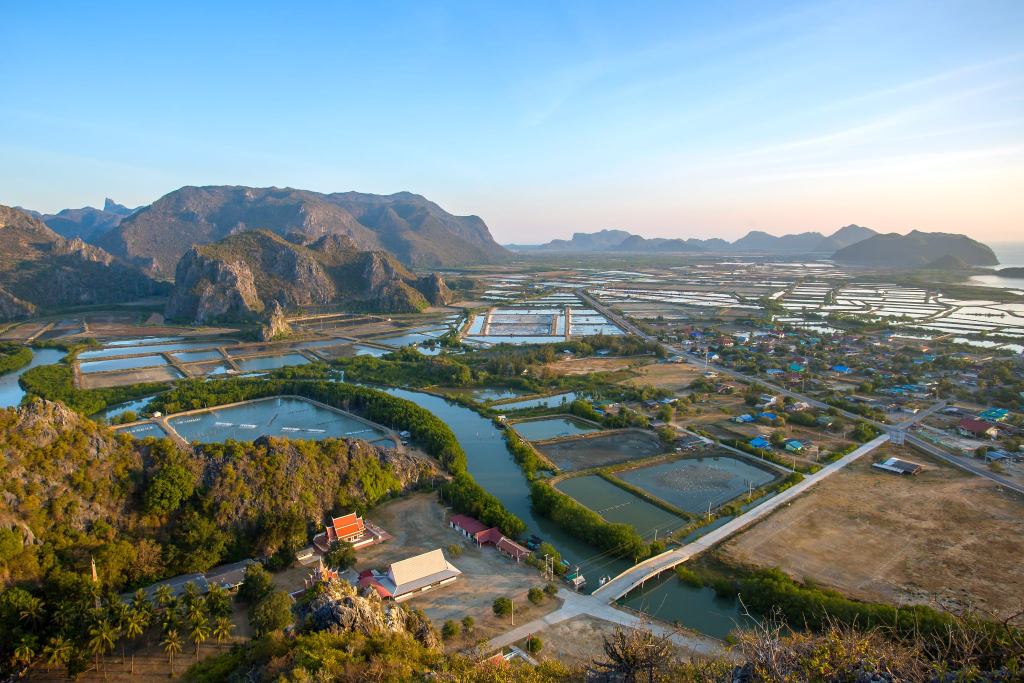
The world’s growing appetite for protein is straining global food systems, and aquaculture, while a promising solution, presents complex environmental, social, and economic challenges. Traditional aquaculture practices can lead to habitat destruction and pollution from waste and antibiotics. Economically, these practices may offer short-term gains, but they risk long-term instability due to environmental degradation and social conflict caused by competition for resources, disputes over land and water rights, and the disruption of traditional livelihoods. Therefore, a transition to sustainable and eco-friendly aquaculture is crucial, not only to mitigate environmental impacts, but also to ensure the long-term viability of the industry and its positive contribution to food security and local economies. Government subsidies can be a powerful tool to incentivize this shift, fostering responsible practices that benefit both the environment and the communities that depend on aquaculture. Such support is vital in both developing and developed nations, enabling the adoption of sustainable aquaculture practices and driving innovation in the sector.
What are Subsidies?
Subsidies are financial assistance provided by governments to support specific industries or activities. In the context of aquaculture, they can be a crucial tool for promoting the adoption of eco-friendly practices. While these methods offer numerous benefits, they often require significant upfront investments in technologies like water filtration systems, organic feed, and renewable energy sources. These costs can be a major barrier for small-scale farmers, hindering the widespread adoption of sustainable practices.
Furthermore, even with upfront investment, accessing markets for eco-friendly aquaculture can be challenging. Although consumer demand is growing, small-scale farmers may lack the resources and connections to reach these markets and receive fair prices for their products. Subsidies can address both of these hurdles. By offsetting the initial costs of transitioning to more sustainable methods, subsidies can make eco-friendly aquaculture more economically viable for farmers. They can also support initiatives that help farmers access markets for their sustainable products, such as certifications, labeling programs, and cooperative marketing efforts. This financial assistance can level the playing field, making sustainable aquaculture a competitive and attractive option, ultimately leading to a healthier and more sustainable industry.
Why are They a Solution for Eco-Friendly Aquaculture?
Government subsidies can effectively address the challenges facing the widespread adoption of eco-friendly aquaculture by tackling several key areas.
First, they can reduce financial barriers by providing direct financial support to farmers, offsetting the initial costs of adopting sustainable technologies. This includes subsidies specifically targeted at technology adoption, covering a portion of the cost of water filtration systems, renewable energy installations, and other eco-friendly equipment, as well as feed development subsidies to support the development and production of sustainable and affordable organic feeds.
Second, subsidies can improve market access through market development subsidies, supporting the development of value chains and marketing channels for eco-friendly seafood products, and through financial assistance for certification and labeling programs, enhancing market recognition and consumer trust.
Third, subsidies can enhance research and development by funding the creation of new sustainable aquaculture technologies and practices, leading to more efficient and cost-effective methods.
Fourth, subsidies can support technical assistance through training programs and capacity-building initiatives, equipping farmers with the knowledge and skills needed for successful implementation of sustainable aquaculture practices.
Fifth, they can facilitate infrastructure development through investments in hatcheries, feed mills, and processing facilities, improving efficiency and reducing production costs for small-scale farmers.
Finally, subsidies can support other environmental protection initiatives, such as mangrove restoration and water quality monitoring, which are crucial for the long-term health and sustainability of the aquaculture sector.
Case Studies
Government subsidies are playing crucial roles in fostering eco-friendly aquaculture practices globally, across both developing and developed nations. Thailand, Vietnam, India, Indonesia, the EU, and the USA offer compelling examples of the diverse roles that government subsidies play in aquaculture due to their varied approaches, from supporting cutting-edge technology development in developed nations to promoting sustainable practices and ecosystem restoration in developing economies, sometimes with the aid of international organizations. Their experiences showcase the breadth of government intervention, demonstrating how subsidies, including those sourced internationally, can address diverse challenges and opportunities within the aquaculture sector globally.
WWF Thailand played a crucial role in supporting Best Aquaculture Partners (BAP) through its Market Transformation Initiative (MTI) via an Aquaculture Improvement Project (AIP). The BAP farm, located in Surat Thani, Thailand, produces 200 metric tons of shrimp annually. It was the first company in Thailand to undertake an AIP to achieve Aquaculture Stewardship Council (ASC) certification. WWF Thailand assisted BAP in analyzing the gaps between their operations and the ASC standards and then helped develop and implement an action plan for improvement. Subsequently, third-party auditors rigorously evaluated BAP’s operations to ensure minimal environmental impact through efficient resource use, elimination of chemicals and antibiotics, and conservation of biodiversity and ecosystems. BAP’s certification is a crucial first step towards more responsible and sustainable aquaculture in Thailand, meeting international standards and facilitating access to international markets (WWF 2016).
The Asian Development Bank (ADB) and Australis Holdings have partnered to advance sustainable aquaculture in Vietnam with a $15 million convertible note. The objective is to boost farming of climate-resilient, ocean-based barramundi and seaweed. This investment would fund the expansion of Australis’ operations in central Vietnam and the development of a second production hub in southern Vietnam. ADB’s Director General noted that these projects support Vietnam’s sustainable aquaculture development and low-carbon protein production. In addition, a $3 million grant from the Climate Innovation and Development Fund (CIDF), administered by ADB, would support Australis’ subsidiary in researching and developing Asparagopsis taxiformis seaweed cultivation. This seaweed can reduce methane emissions in cattle and offers other benefits like mitigating ocean acidification and providing carbon sequestration. The CIDF is a blended finance facility supporting sustainable low-carbon development (SEADS 2023).
The Indian government is actively promoting sustainable aquaculture practices like Biofloc Technology (BFT) and Recirculating Aquaculture Systems (RAS) through various subsidy schemes at national and state level. These schemes aim to reduce reliance on antibiotics, improve water quality, and enhance production efficiency. Their effectiveness is being evaluated through field visits and farmer engagement initiatives (Kumar 2024).
The Indonesian government, with support from international organizations like the World Bank, is incentivizing mangrove restoration and promoting sustainable aquaculture practices within these ecosystems. This approach not only enhances coastal resilience, but also provides economic benefits to local communities (World Bank 2023).
In the EU, the European Maritime, Fisheries and Aquaculture Fund (EMFAF), one of five European structural and investment funds, is central to the EU’s approach to ocean management. With a budget of €6.108 billion for 2021-2027, it supports the EU’s Common Fisheries Policy, maritime policy, and international ocean governance commitments. Recognizing the EU’s role as a major seafood producer and global ocean actor, the EMFAF aims to protect and sustainably use marine resources. It funds diverse initiatives, including projects promoting sustainable use of aquatic resources, transitioning to low-carbon fishing, conserving marine biodiversity, ensuring a stable supply of high-quality seafood, and supporting the socio-economic health of coastal communities, particularly those dependent on small-scale fisheries. The EMFAF also invests in developing sustainable and competitive aquaculture, improving skills and working conditions in the sector, fostering innovation in the blue economy, strengthening maritime security, and encouraging international cooperation for healthy oceans. The fund is implemented through shared management (€5.311 billion allocated to national programs) and direct management (€797 million handled by the European Commission) (European Commission 2021).
In the US, the NOAA Northwest Fisheries Science Center and the Jamestown S’Klallam Tribe have partnered to advance sustainable aquaculture for sablefish. This collaboration aims to boost tribal economic development by comparing land- and ocean-based farming methods, respecting Indigenous culture and history. The project, facilitated by Cooperative Research and Development Agreements (CRADAs), explores land-based aquaculture, amidst environmental challenges to ensure a sustainable fish supply and to replenish wild stocks. This research fosters local business development and seeks to reduce U.S. dependence on seafood imports. Collaboration is central to the project’s success. Addressing public perceptions and supporting Indigenous access to local fish are also key aspects of the project. CRADAs provide a flexible framework that allows the participants to be flexible, responsive, and free to experiment. At the same time, it ensures the protection of their processes and intellectual property (Bukvich 2024).
Challenges
While subsidies, including financial assistance, training, technical assistance, and market access support are important tools for promoting sustainable aquaculture, they are often insufficient on their own to guarantee widespread adoption of best practices. Farmers frequently face multiple, interconnected challenges that subsidies alone cannot fully address. Financial constraints, even with subsidized loans, can still be a barrier, particularly when upfront investments in new technologies or infrastructure are substantial.
Furthermore, the effectiveness of training and technical assistance depends on factors like farmer engagement, local context, and the long-term availability of support. Market access subsidies may not be sufficient if broader market dynamics, such as fluctuating prices or consumer demand, are unfavorable. Beyond these direct limitations, subsidies can sometimes create unintended consequences, such as dependency, market distortions, or a lack of incentive for innovation once the subsidy is removed.
Therefore, a more holistic approach is needed, one that considers the complex interplay of economic, social, and environmental factors influencing aquaculture sustainability, one that goes beyond simply providing subsidies. This might involve regulatory frameworks, community-based initiatives, or public-private partnerships, working in concert with targeted subsidies to achieve lasting change.
Recommendations
A comprehensive national strategy for sustainable aquaculture requires a coordinated, inter-agency approach. The agency responsible for fisheries/aquaculture leads, setting sector direction and prioritizing subsidies for eco-friendly practices. The agency for environment ensures sustainability, guiding subsidy designs to minimize environmental impact. The agency for agriculture/food addresses food security, aligning subsidies with sustainable feed development and responsible farming. The agency for economic development/planning oversees national economic strategy, allocating funds for impactful subsidy programs and ensuring their alignment with broader economic goals. These agencies collaboratively develop the national strategy and integrated policy framework (including targeted subsidies, regulations, and support mechanisms), ensure inter-agency coordination, and establish national targets while monitoring progress.
Subsidy program design and implementation require collaboration. The agency responsible for fisheries/aquaculture often leads, especially for sector-specific subsidies like those for Recirculating Aquaculture System (RAS) technology or organic feed. The agency for agriculture/food is involved where relevant, for example, subsidizing integrated aquaculture-agriculture systems. The agency for finance/treasury manages budget allocation and financial accountability, ensuring subsidies are disbursed efficiently and effectively. The agency for SMEs supports small-scale businesses, offering tailored subsidies and guidance for adopting eco-friendly practices. These entities design targeted programs, establish transparent procedures and eligibility criteria, manage budgets, and promote programs to stakeholders.
Research, development, and technology transfer are crucial for making eco-friendly aquaculture economically viable. The agency for science, technology, and innovation can fund research into areas like disease-resistant strains and sustainable feed alternatives, which can be further incentivized through targeted subsidies. The agency for education/higher education (overseeing universities and research institutions) supports research and development, while specialized aquaculture research institutes provide focused expertise. These agencies can fund research, support technology transfer, and collaborate with academia and the private sector, potentially linking subsidies to the adoption of research outcomes.
Effective extension services are essential for the successful implementation of eco-friendly practices and the maximal impact of subsidies. Provided by the agency responsible for fisheries/aquaculture or vocational training institutes/technical colleges, these services can deliver training, on-site assistance, and educational materials to farmers on sustainable aquaculture practices, including how to access and utilize available subsidies.
Market access and certification are vital for creating demand for eco-friendly products and justifying the investment in sustainable practices. The agency for trade/commerce can develop market strategies, including those that promote eco-friendly aquaculture through targeted marketing campaigns and, potentially, through offers of subsidies for certification. Standards and certification bodies can develop and implement certification programs, build consumer trust, and thus enable producers to command premium prices. These entities can promote eco-friendly products domestically and internationally.
Environmental monitoring and regulation ensure the long-term sustainability of aquaculture and build public trust. The agency for environment can establish standards, monitor water quality, enforce regulations, and support ecosystem restoration (e.g. mangrove restoration). Subsidies can be linked to compliance with these standards and regulations, incentivizing environmentally responsible practices.
International collaboration and donor relations are crucial for accessing funding, expertise, and best practices. Managed by the agency for foreign affairs/international relations and agencies for international development/aid, such collaboration and communication can secure funding and assistance, often targeted towards specific eco-friendly aquaculture projects, engage with international organizations (e.g. World Bank, FAO, UNEP), and facilitate knowledge sharing, including successful subsidy models from other countries.
Conclusion
Government subsidies offer a powerful tool for promoting sustainable aquaculture. They can effectively address key barriers to adopting eco-friendly practices, from upfront investment costs to market access challenges. As the case studies of Thailand, Vietnam, India, Indonesia, the EU, and the USA illustrate, subsidies can be applied in diverse ways to suit different contexts. However, subsidies alone are not a silver bullet. Their effectiveness is maximized when integrated with a broader strategy that includes robust regulations, community engagement, public-private partnerships, and continued investment in research and development. A balanced approach, combining targeted subsidies with these complementary measures, is crucial for fostering a thriving, environmentally responsible, and economically viable aquaculture sector. This approach can help meet the increasing global protein demand while protecting ecosystems and supporting livelihoods. By working collaboratively and strategically, we can move towards a future where aquaculture plays a positive role in both food security and environmental health.
 AQUADAPT