By Vuong Kha Tu
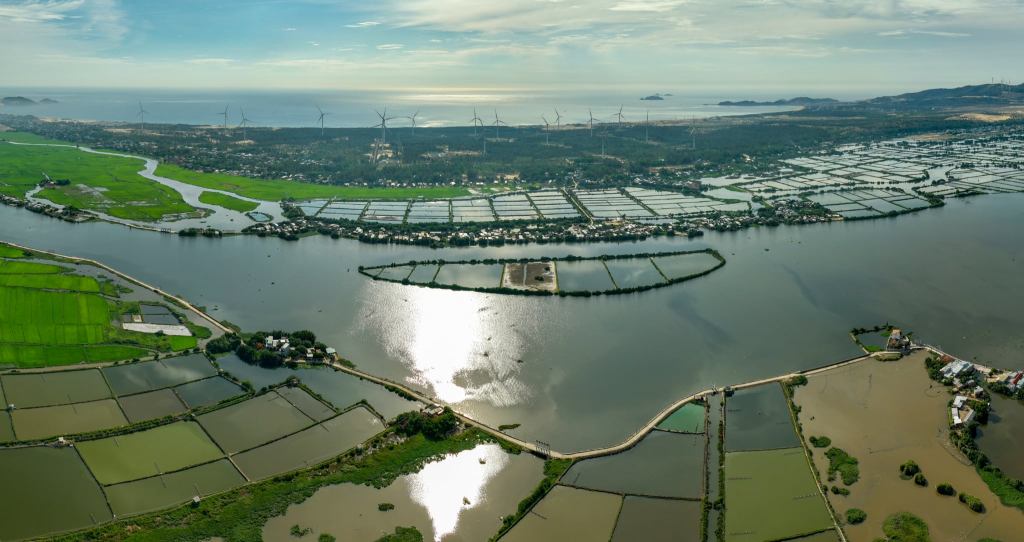
Aquaculture plays a vital role in ensuring global food security and meeting the nutritional demands of the rapidly growing global population. The sector currently accounts for a significant 52% of the total supply of aquatic animal products consumed worldwide (Jones 2022). With natural advantages such as a diverse ecosystem and favorable climatic conditions, Asia serves as a major hub for both production and innovation in aquaculture. Within the region, several countries stand out as leading aquaculture producers. These include China, Indonesia, India, Vietnam, Bangladesh, the Philippines, and South Korea (Jory 2024).
Aquaculture’s Carbon Footprint
The total greenhouse gas (GHG) emissions associated with aquaculture production were estimated to be approximately 0.49% of global anthropogenic GHG emissions in 2017 (MacLeod 2019; MacLeod 2020). Although this proportion appears relatively small in the context of total global emissions, the sector’s significant growth potential necessitates a thorough examination of its environmental footprint and the development of effective mitigation strategies. As demand for seafood continues to rise, understanding and addressing GHG emissions from aquaculture will be essential to ensuring the long-term sustainability of this crucial food source.
The most energy-intensive operations include water management (pumping and circulation), feed production (sourcing, processing, and transport of feed ingredients), and post-harvest processing (refrigeration and packaging) (MacLeod 2019). Notably, species selection also influences carbon emissions, with those species requiring high-quality feed and stringent water conditions typically having a higher environmental cost.
Understanding the energy demands of these core operations is fundamental to identifying opportunities for improving energy efficiency and reducing the overall environmental impact of aquaculture.
Energy Transition in Southeast Asia’s Aquaculture Sector
Southeast Asia, where Indonesia, Thailand, and Vietnam are the leading aquaculture producers, is striving to balance economic growth with the need for clean and renewable energy. Aquaculture operations consume substantial energy, particularly electricity for aeration and water pumping systems. For instance, in shrimp farms, the largest electricity costs stem from air blowers, water pumps, and infrastructure construction or maintenance (Boyd 2022). Electricity demand in Vietnam’s Mekong Delta aquaculture sector has surged from 7,780 MW in 2015 to 9,529 MW in 2024, according to EVNSPC (Viet Nam Electricity/Southern Power Corporation) (VietFish Magazine), leading to localized grid overloads. Concurrently, both Vietnam and Thailand are under pressure to reduce climate emissions. Vietnam has pledged carbon neutrality by 2050 (Ly 2022), while Thailand aims to reach carbon neutrality by 2050 and net-zero emissions after 2065 (Energy Asia). This implies that the aquaculture sector must also seek solutions for emission reductions.
In terms of its transition potential, Southeast Asia is endowed with abundant renewable energy resources (solar radiation, coastal winds, tidal energy, and small-scale hydropower), and many aquaculture zones are located in off-grid rural areas, creating favorable conditions for solar-on-pond or rural wind turbine systems. Overall, Southeast Asia’s aquaculture sector is situated at a critical juncture in terms of energy consumption and need for emissions reductions: rapid growth, pressure to comply with climate commitments and to adopt clean export standards on one hand, but also abundant opportunities for clean energy adoption on the other hand.
Technical Solutions for Energy and Emissions Reduction in Vietnamese Aquaculture
Several energy-efficient aquaculture techniques have been studied and implemented. These include the application of solar energy in shrimp farms, the utilization of biogas from organic waste, and the deployment of water recirculation systems to reduce water exchange volumes and optimize aeration systems, thereby lowering energy consumption.
Solar-Powered Aeration Systems: Shrimp farms in Vietnam have experimented with solar panels mounted above ponds to supply electricity for aerators. Research by the Fraunhofer Institute (Germany) through the SHRIMPS (Solar-Aquaculture Habitats as Resource-Efficient and Integrated Multilayer Production Systems) project in the Mekong Delta of Vietnam showed that a 1 MW solar power plant operating on shrimp farms could reduce emissions by approximately 15,000 tCO2/year, while saving 75% of electricity use compared to diesel-powered farms (Vo 2021). The PV panels covering pond surfaces also help reduce water evaporation and deter predatory birds. For instance, in Bac Lieu province, a small-scale system (two 85 W PV panels and two batteries) was used to power a 120 W aerator, lighting, and water pumps for shrimp-farm operations (Vo 2021).
Renewable Energy Integration Systems: The Southern Power Corporation (EVNSPC) noted that shrimp farming consumes substantial electricity, often exceeding grid supply capacity. EVNSPC has recommended the integration of solar panel installations into the power grid in key shrimp-producing provinces to ease grid loads. The corporation is piloting PV installations combined with aeration motors in Soc Trang, helping farmers reduce electricity costs. In practice, the energy-saving program has enabled 161 shrimp-farming households in Soc Trang to cut electricity use by 15%, saving approximately 29,000 USD/year (VietFish Magazine). Moreover, wind turbines or small-scale hydropower (where topography permits) offer promising options for powering aquaculture equipment at lower costs.
Equipment Upgrades and Farming Improvements: Investments in energy-efficient aerators (high-performance motors, advanced impeller designs) and adoption of advanced water management solutions (recirculating systems, biofloc technology) help reduce aeration needs. Closed-loop farming systems (recirculating aquaculture systems, RAS), although electricity-intensive for water treatment, allow for heat and wastewater reuse, reducing total emissions compared to open-pond farming. Integrated multi-trophic aquaculture (e.g. shrimp-fish-seaweed) may also enhance the efficiency of resource utilization. Through the application of solar and wind energy technologies and process optimization (equipment upgrades and pond management), the aquaculture sector can significantly reduce energy consumption and related emissions (Vo 2021).
Social Considerations
Beyond the technological advancements for optimized energy use and sustainable aquaculture, a critical focus must be placed on the social dimensions of the energy transition. Specifically, strategies must proactively integrate Gender Equality and Social Inclusion (GESI).
Research highlights the significant, yet often underestimated, role of women in the aquaculture value chain, particularly in product delivery from farm to market, where they make substantial contributions to the local economy (Davila 2024). However, women in this sector frequently encounter barriers, including limited access to information, finance, and knowledge, exacerbated by social norms that undervalue their contributions to fisheries activities (Kusakabe 2022).
To ensure an equitable and effective energy transition, it is imperative to empower women through their meaningful involvement in decision-making processes and dedicated training initiatives. This will enable them to stay abreast of and effectively adopt new energy transition technologies. Ultimately, the successful and sustainable development of Vietnam’s aquaculture sector hinges on the proactive integration of GESI principles into all aspects of implementation and decision-making.
Limitations
While Vietnam’s aquaculture sector is making progress with renewable energy integration, several critical limitations must be addressed. First, recirculating aquaculture systems (RAS), widely regarded as a climate-resilient approach, require high upfront investments and specialized technical skills to operate and maintain, factors that limit adoption by smallholder farmers (Ahmed 2021). As well, the application of solar energy in aquaculture should contribute to the effectiveness of the national electricity grid (Vo 2021). Furthermore, gender inclusion remains limited. Women, who play key roles in fish processing and trade, are often excluded from technology training and decision-making due to entrenched social norms and a lack of gender-responsive extension services (Davila 2024). Lastly, although pilot renewable-energy systems provide energy savings and lower greenhouse gas emissions, their scalability is hindered by fragmented policy support, inconsistent financial incentives, and the absence of comprehensive lifecycle assessments to guide investments and policy design.
Recommendations to Stakeholders
To overcome these challenges, stakeholders should adopt an integrated, equity-focused approach. Government agencies should establish financial mechanisms, such as low-interest loans, feed-in tariffs, and grant-based subsidies, to reduce capital barriers for RAS and renewable energy adoption (Ahmed 2021). Simultaneously, capacity-building programs should be scaled up through partnerships with academic institutions, NGOs, and extension services to provide ongoing technical training and maintenance support, especially targeting small-scale operators. To ensure gender equity, programs should include gender-sensitive outreach, actively engaging women in technology training, leadership, and decision-making platforms. Multilateral development agencies should incentivize public-private partnerships to pilot scalable and replicable renewable energy installations. Finally, comprehensive lifecycle and cost-benefit studies, coordinated by academic and research institutions, could provide the evidence base needed for the long-term planning and mainstreaming of clean energy solutions in the aquaculture sector.
Conclusion
Aquaculture plays a critical role in ensuring global food security. Although aquaculture typically has a lower carbon intensity than many other forms of animal protein production, its increasing scale necessitates coordinated efforts to enhance sustainability. GHG emissions, mainly from feed production and energy consumption, are key areas for intervention. Integrating renewable energy technologies, especially solar power, offers a promising pathway for mitigating aquaculture’s environmental impact. Initiatives in Vietnam, such as the SHRIMPS project and EVNSPC’s energy efficiency programs, demonstrate the practical application and significant benefits of solar energy in shrimp and pangasius farming. Floating solar panels, wind power, and small-scale hydropower also hold the potential to diversify the renewable energy mix in aquaculture.
 AQUADAPT