By Dr. Praneet Ngamsnae
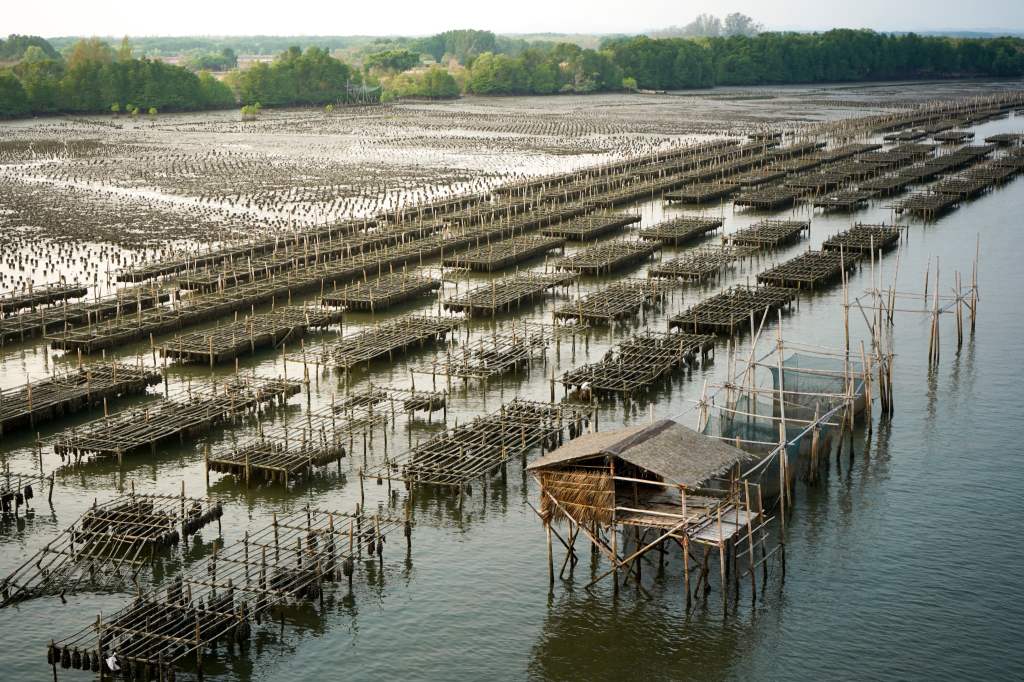
Bivalve aquaculture has emerged as a significant contributor to food security, economic development, and environmental management in Thailand. The farming of species such as green mussels, oysters, and blood cockles offers high-quality protein and essential micronutrients, supporting nutritional needs across diverse population groups. At the same time, bivalve farming generates employment and income, particularly for coastal communities, and contributes to national export revenues. However, despite these benefits, the sector is not without challenges. Issues including environmental degradation, the introduction of non-native species, and contamination from pollutants such as microplastics and heavy metals pose significant threats. Addressing these challenges is essential for ensuring the sustainability and resilience of bivalve aquaculture. This article aims to analyze the multifaceted implications of bivalve farming, encompassing economic, ecological, and health dimensions, and to recommend strategic approaches for its sustainable development.
Key Bivalve Species Cultivated in Thailand and Southeast Asia
Bivalve aquaculture in Thailand and Southeast Asia centers on several economically important species, notably blood cockles (Anadara granosa), green mussels (Perna viridis), oysters (Crassostrea spp.), and horse mussels (Modiolus spp.). Blood cockles are a major cultivated species, with regional production reaching 73,820 metric tonnes in 1997 (Nair 2001). Green mussel cultivation also contributes significantly to Thailand’s mollusc output. Oyster farming involves species such as Crassostrea belcheri and C. iredalei, supported by recent advances in hatchery technologies. Although less prominent, horse mussels are cultivated for both human consumption and as animal feed (Chalermwat 2003).
Economic Significance and Food Security Contributions
Bivalve aquaculture significantly enhances local and national economies. In Thailand, production volumes nearly doubled between 1988 and 2000, rising from 73,976 to 138,202 metric tonnes (Chalermwat 2003). This growth has translated into employment opportunities in farming, processing, and distribution (Krause 2019), particularly benefiting rural and coastal populations. Moreover, Thailand’s bivalves are recognized globally for their export potential, especially in markets such as Europe, the United States, and Japan, where demand for sustainably produced seafood is rising (McCoy 1988).
In terms of food security, bivalves provide a sustainable source of nutrition with high levels of protein, omega-3 fatty acids, and micronutrients. They are capable of meeting the dietary requirements of vulnerable populations, particularly in regions where protein deficiency remains a public health concern (Willer 2020). Bivalve aquaculture’s relatively low environmental impact compared to other animal protein sources further strengthens its position as a sustainable option for expanding food production in tropical regions.
Environmental Impacts and Ecosystem Dynamics
Despite the economic value of these species, the sector faces critical challenges. Environmental degradation, including pollution and habitat loss, negatively affects bivalve health and farming operations (Sahavacharin 1995; Nair 2001). Additionally, heavy dependence on wild seed collection results in inconsistent seed supply, which undermines production stability (Nair 2001).
Bivalve aquaculture has both beneficial and detrimental effects on the aquatic environment. On the positive side, bivalves act as natural biofilters, removing excess nutrients such as ammonia and organic particles from the water column. This filtration activity improves water clarity and oxygenation, thereby promoting healthier aquatic ecosystems (Kong 2023). Additionally, bivalve farming structures provide artificial reef habitats that enhance marine biodiversity and support robust food webs.
However, intensive aquaculture operations can lead to localized eutrophication, adversely affecting benthic ecosystems (Burkholder 2011). Furthermore, the introduction of exotic species in farming systems can disrupt local biodiversity and facilitate the spread of diseases (McKindsey 2007). These issues underscore the need for improved sustainability practices and enhanced resource management to ensure the long-term viability of bivalve aquaculture in the region. Thus, while bivalve farming offers environmental services, it also necessitates responsible management to mitigate its ecological footprint.
Public Health Considerations
Contamination of bivalves with pollutants poses significant risks to human health. Recent studies indicate high levels of microplastics in bivalves cultivated in Thai waters, with contamination rates ranging from 69% to 93%, and an average of 1.87 microplastic items per individual (Chinfak 2024). Benthic species, such as clams and cockles, tend to accumulate higher concentrations due to their sediment-dwelling behavior. Additionally, cadmium and lead concentrations in bivalves, particularly in cockles, have reached such levels as to pose health risks to children and frequent consumers (Tanaviyutpakdee 2023).
Viral contamination is another concern. Hepatitis A virus has been detected in 3.8% of tested bivalve samples, with gill tissues identified as primary sites of infection (Namsai 2011). These findings highlight the need for enhanced monitoring, regulation, and public awareness to ensure the safety of bivalve consumption.
Climate Resilience and Adaptive Strategies
Bivalve aquaculture can play a vital role in enhancing the resilience of coastal ecosystems to climate change. Through their influence on nutrient dynamics and primary productivity, bivalves contribute to ecosystem stability, especially in estuarine environments (Filgueira 2016). However, the benefits depend significantly on farming intensity and management practices. Excessive nutrient input from high-density farming can shift trophic balances and reduce biodiversity.
Adaptive strategies such as selective breeding for temperature tolerance, strategic site selection, and improved infrastructure can mitigate climate-related vulnerabilities, including marine heatwaves and extreme weather events (Masanja 2024). Furthermore, community-based governance and stakeholder engagement are critical for fostering social-ecological resilience, enhancing the capacity of aquaculture systems to adapt to environmental changes (Guillotreau 2017).
Strategies for Sustainable Development
To ensure the long-term sustainability of bivalve aquaculture, ecosystem-based management approaches must be adopted. Integrating ecosystem services into aquaculture planning can maximize biodiversity benefits while minimizing environmental degradation (Theuerkauf 2021). The Drivers-Pressures-State-Impact-Response (DPSIR) framework offers a structured approach to evaluating and managing the ecological impacts of bivalve aquaculture (Cranford 2012).
Mathematical models assessing the ecologically sustainable carrying capacity can support optimal farm design by predicting interactions between bivalves and environmental variables, including nutrient flows and sedimentation (Newell 2007). Moreover, the implementation of polyculture systems and tiered monitoring thresholds can enhance nutrient recycling and provide early warnings of ecological stress (Gallardi 2014).
Policy Recommendations and Governance
Policy interventions should integrate regulatory frameworks, environmental protection, and community participation. The U.S. National Estuarine Research Reserve System (NERRS) demonstrates how structured governance can support research and sustainable aquaculture (Bell 2022). Similarly, Mexico’s Integral Management Zones combine conservation with aquaculture, empowering local communities in resource management (Soria 2024).
Engaging stakeholders through participatory planning ensures that local knowledge and socio-economic contexts are incorporated into policy decisions (Carranza 2020). Risk assessments for exotic species and standardized best management practices are also essential for maintaining ecological integrity.
Conclusion
Bivalve aquaculture in Thailand represents a promising avenue for achieving food security, economic development, and environmental conservation. Its ability to deliver high-quality nutrition, support livelihoods, and enhance coastal ecosystem resilience makes it a valuable component of sustainable development strategies. However, realizing its full potential requires addressing challenges related to pollution, disease, ecological disruption, and climate change.
By adopting ecosystem-based management, implementing adaptive strategies, and reinforcing policy frameworks with community engagement, stakeholders can balance the economic advantages of bivalve farming with the preservation of environmental and public health. A coordinated, science-based approach will be essential to ensuring that bivalve aquaculture continues to contribute meaningfully to regional development while maintaining ecological sustainability for future generations.
 AQUADAPT