By Dr. Kanokwan Manorom and Dr. Bernadette P. Resurrección
Nai Tung is a fishing village on the western coast of the Gulf of Thailand in Pak Phanang Bay, about 25 kms east of Nakhon Si Thammarat. In administrative terms, the village belongs to the Tha Sala district of Nakhon Si Thammarat province, Southern Thailand. For over two decades, this Muslim fishing village witnessed the desecration of its sea resources by illegal clam-dredging vessels operating within three nautical miles of the coast.
These boats, often exceeding 50 Gross Tonnes, tore up the seabed, destroyed juvenile habitats, and stripped local fishers of both income and food. Families that once harvested several baskets of clams or crabs a day were left with barely 2-5 kilograms. The women, who managed household food and income, felt the loss most directly. The sea, once upon a time their moral and material commons, could no longer sustain them.
When Nai Tung’s male fishers protested against these vessels in 2007-2009, the women joined not out of ideology but of necessity. Their entry into marine resource rehabilitation arose from an ethic of care for family sustenance, from an essential need for community survival, and from a faith-rooted responsibility for the well-being of the sea (amanah). The shift from silent endurance to public participation marked a transformation of gender roles in Southern Thailand’s coastal politics.
Why Women Joined the Protests: Notes from Field Interviews
Women’s decisions were shaped by intertwined economic, moral, and social motivations as drawn from field interviews.
Livelihood Loss and Food Security: A 58-year-old housewife joined marches “to oppose outsiders using tools that destroyed marine resources,” as her family’s survival depended entirely on small-boat fishing.
Moral Reasoning: A woman who owned a fishing boat said, “I wanted to preserve marine life such as shrimp, shellfish, crabs, and fish from being destroyed… they die before they have a chance to grow.” Sustainability was, for her, an ethical obligation.
Household Responsibility: Depletion of seafood translated into domestic crisis because the women handled households’ budgets and children’s nutrition. Activism was thus an extension of everyday care work.
Community Solidarity: A development worker, who coordinated between local fishers and authorities, demanded regulations that banned clam dredging within three nautical miles of the shoreline. Not all the women could join the protests directly. For example, a coconut milk vendor supported the cause by providing food and information.
In a community where religious custom limits women’s public speech, these quiet acts of resistance sustained the broader movement.
From Protest to Rehabilitation
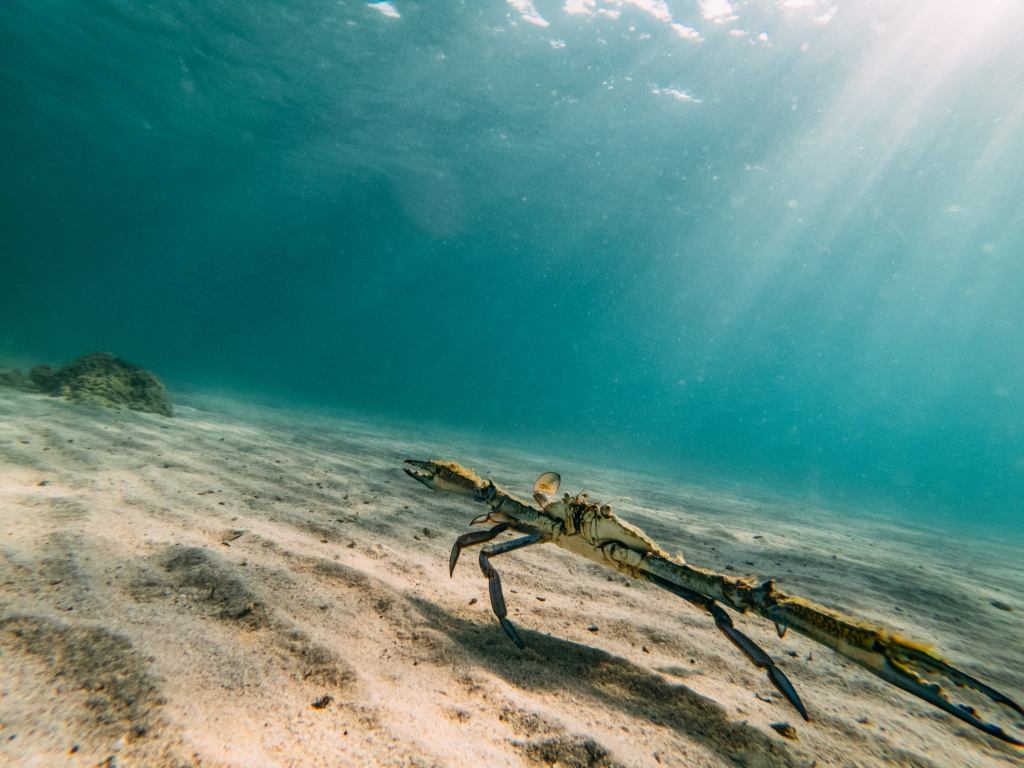
When the 2009 provincial ordinance banning the clam-dredging boats came into effect, the Nai Tung community shifted from confrontation to rehabilitation. Men and women worked together to found in 2010 the Blue Crab Bank, a Nature-based Solution (NbS), that bred and released egg-bearing crabs to restore the sea’s fertility.
Women took central roles in this transition. One woman helped procure materials, prepare food for volunteers, and release mother crabs into the sea. One woman collected gravid crabs from fishers and returned them to the water with her husband’s help. Another woman described the bank as “a learning resource for children and community members.” These activities turned domestic skills (cleaning, cooking, organizing) into sustainable infrastructure.
In addition to supplying their labor efforts, women reframed environmental knowledge into moral pedagogy. As one informant reflected, “If we eat egg-bearing crabs now, where will more crabs come from?” Such reasoning links Islamic stewardship with ecological science, translating sustainability into an everyday ethic.
Economic Innovation: From Crab Bank to Luilay-Branded Food
To generate conservation income, the women established Luilay, a community food enterprise producing crab curry and chili pastes certified under the Department of Fisheries’ “Green Flag Fisheries” standard.
A committee member explained that Luilay began in 2015 with help from community-development officers, Walailak University, and the Government Savings Bank. The ingredients came from fishers who followed the crab bank’s rules. During the COVID-19 pandemic, online sales through Facebook and Line kept household incomes flowing, all the while promoting products free of preservatives and MSG.
Profits were shared among workers, a community fund, and local schools. Through Luilay, women transformed marine conservation into social enterprise. Their work connected ecological restoration to economic empowerment, turning the sustainability label into tangible livelihoods.
Enabling Partnerships
The success of Nai Tung’s crab bank stems from cooperation between local knowledge and external institutions: Walailak University provided scientific training and research support; the Department of Fisheries supplied equipment, funding, and recognition; the Government Savings Bank offered micro-finance for conservation and Luilay operations; and the Thai Sea Lovers Association supported public outreach and eco-education. These alliances legitimized women’s roles in resource management and bridged traditional experience with modern technology, such as solar-powered oxygen systems in crab tanks.
Outcomes and Community Transformation
Women interviewees noted several results since the bank’s founding in 2010.
Ecological Recovery: Blue crab populations increased dramatically. One mother crab releases up to a million larvae, of which 5,000-10,000 survive. Women reported the return of once vanished fish species and even dolphins.
Income Growth: Typical households now earn 20,000-30,000 THB per month, with 7,000-8,000 THB from crabs. Women gain extra earnings through peeling, processing, and sales.
Social Cohesion: The crab bank “brought villagers together as one,” replacing competition with cooperation.
Cultural Pride: Muslim women participants linked stewardship of the sea with the religious notion of humans as khalifah, or successor-caretakers of creation.
Challenges and Gendered Negotiation
Although these achievements are clearly visible, women still face limitations. Leadership remains male-dominated, with women serving mainly as committee members. Their domestic contributions (cooking, sorting, recordkeeping) often go unacknowledged in official statistics. Climate variability adds new stress, such as coconut shortages from drought, while stronger storms and shifting tides also impact local livelihoods. Yet many interviewees linked the crab bank’s solar-cell technology and restored biodiversity to climate-mitigation benefits.
Policy Engagement and Wider Influence
Women’s activism in Nai Tung has shaped local and national policy. At the district level, the Tha Sala Subdistrict Administrative Organization enacted Thailand’s first local marine ordinance in 2009, co-drafted by fishers and community representatives, banning clam-dredging boats within three nautical miles of the shore and formally recognizing the crab bank as a conservation mechanism. This ordinance transformed grassroots protest into enforceable law and gave women’s voices, which were often mediated through community committees, a regulatory outcome.
Nationally, the Department of Fisheries’ Marine Fisheries Management Plan (2020-2022) cites gender inclusion as essential to sustainability and pledges to double small-scale producers’ incomes, particularly women’s, by 2030.
The department’s “Green Flag Fisheries” certification awarded to the Luilay group demonstrates how local women’s enterprises can meet national standards for clean, traceable, and eco-friendly production. Partnerships with Walailak University, the Government Savings Bank, and the Thai Sea Lovers Association have replicated the Nai Tung model in neighboring villages, thus integrating gender indicators into provincial coastal-resource plans.
Through these linkages, women’s everyday ecological care has become a policy reference point for community-based, gender-responsive, and climate-adaptive fisheries governance in Thailand.
 AQUADAPT