By Surachet Burut-Archanai, Kallaya Sritunyalucksana, Parichat Chumtong, Patchari Yocawibun, and Chumporn Soowannayan
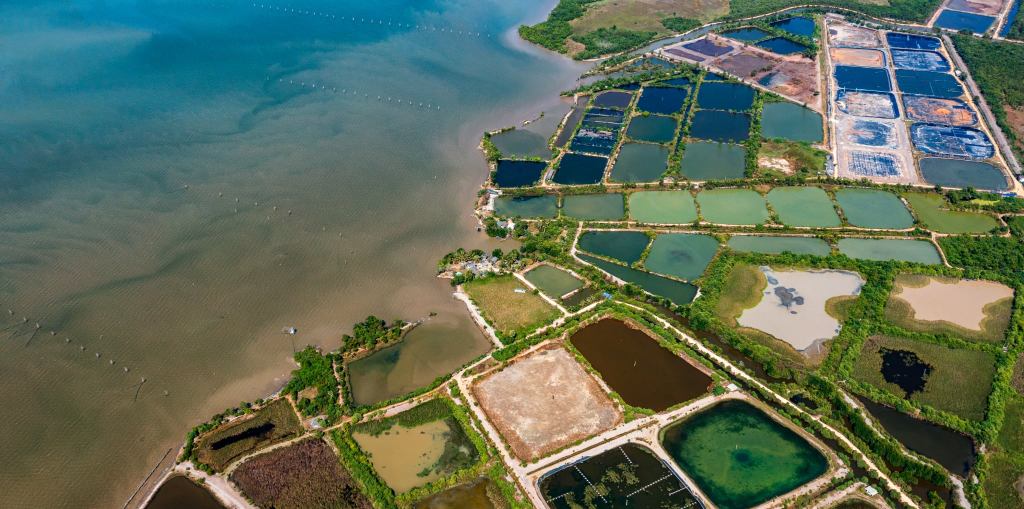
Wild fish stocks no longer meet the rising global demand for seafood. In response, aquaculture, the farming of aquatic animals, has become the world’s fastest-growing food production sector. It now supplies over 50% of the seafood consumed globally and plays a critical role in ensuring food security (Richter 2022). However, conventional aquaculture practices often negatively impact the environment through water pollution, habitat destruction, and proliferation of disease. These environmental concerns have prompted a shift towards more sustainable, environmentally friendlier aquaculture approaches that focus on minimizing ecological damage while enhancing productivity.
Problems Requiring a Holistic Approach
Conventional intensive aquaculture has a significant environmental footprint. A primary concern is the discharge of waste, uneaten feed, and chemical treatments into surrounding waters. This can lead to eutrophication, where excess nutrients cause harmful algal blooms and accumulations of anoxic sediments. The widespread use of antibiotics and chemicals to manage diseases also risks creating antibiotic-resistant bacteria and contaminating the environment. Beyond pollution, conventional farming methods contribute to the destruction of coastal wetlands and often rely on wild-caught fish for feed, a practice which worsens overfishing. These practices also pose biological risks, as diseases and parasites can spread to wild fish and escaped farmed fish can interbreed with native stocks, weakening their genetic diversity.
This pattern of degradation is not just an industry problem; it is a global policy issue. The United Nations and other international bodies recognize that conventional individual and corporate responses are not enough to combat aquaculture’s large-scale environmental damage. This has led to a fundamental shift from local corporate responsibility to global policy challenge with implications for food security and climate change. The UN’s recent endorsement of “Guidelines for Sustainable Aquaculture” highlights this new approach, which calls for collaboration among governments, industry, and other stakeholders to develop science-based standards (NOAA 2024).
To address these political, economic, and societal challenges, a comprehensive multifaceted approach is required. This article will demonstrate how the integration of the three pillars, Nature-Based Solutions (NbS), advanced water quality control technologies such as Recirculating Aquaculture Systems (RAS), and biological interventions such as probiotics and phage therapy, offers a powerful pathway toward a more resilient, efficient, and environmentally responsible aquaculture industry.
Component 1 of the Holistic Approach: Nature-based Solutions (NbS)
The International Union for Conservation of Nature (IUCN) defines Nature-based Solutions as “actions to protect, sustainably manage, and restore natural or modified ecosystems, simultaneously providing human well-being and biodiversity benefits.” This definition represents a conceptual shift from an economic production model that externalizes environmental costs to a model of “Blue-Green” economy that values and integrates human development with the health of the oceans (Hughes 2021).
Nature-based aquaculture mimics natural aquatic ecosystems by cultivating organisms in environments that support biodiversity and ecological balance. Instead of relying heavily on artificial feeds, these culture systems encourage the growth of natural food sources like plankton and aquatic plants, a practice that reduces nutrient pollution and production costs. Aquaculture ponds managed under this principle use natural water flow, solar energy, and biological filtration to maintain healthy ecosystems and support the well-being of farmed species (Tansakul 2024). By adopting NbS, aquaculture can thus provide valuable ecosystem services.
Component 2 of the Holistic Approach: Culture Systems
Integrated Multi-Trophic Aquaculture (IMTA)
Integrated Multi-Trophic Aquaculture is a prime example of an NbS. This approach involves the co-cultivation of species at different trophic levels within a single farm system. The core principle is that waste from one species, such as fish or shrimp, becomes a food source for another, such as seaweed or shellfish. For example, soluble nutrients from fish waste can be directly absorbed by seaweed, while organic waste and uneaten feed provide food for filter-feeding organisms like mussels or deposit feeders like marine worms (Ngamsnae 2024). Many species of seaweeds also produce compounds that inhibit or interfere with the virulent mechanisms of pathogenic bacteria and viruses of marine fish and shrimps, particularly Vibrio species. Extracts from these seaweeds protect cultured species when supplemented to their respective feeds (Kamble 2022; Karnjana 2020; Yasim 2022; Piruthiviraj 2024).
This biological and chemical synergy creates a balanced system that not only reduces waste and risk of eutrophication but also provides economic benefits by diversifying outputs and reducing costs.
Biofloc Technology (BFT)
Biofloc Technology is another innovative approach that fosters a microbial community or “biofloc” in nutrient-rich water. This community of beneficial microorganisms converts uneaten feed and harmful nitrogenous waste into a high-protein biomass. This biofloc serves as a supplementary food source for the cultured organisms, reducing the need for commercial feed and contributing to a “zero waste” system.
BFT’s ability to recycle nutrients and stabilize water quality acts as a natural filtration system, minimizing disease outbreaks and improving the overall health of aquatic life (Ingthamjitr 2024). Shrimp feed made up of approximately 25% biofloc supplement and 80% fish meal has been shown to be protective against the acute hepatopancreatic necrosis disease (AHPND) in shrimp (Promthale 2025).
Recirculating Aquaculture Systems (RAS)
Recirculating Aquaculture Systems are game-changers as they shift open-water farming to closed-loop, land-based facilities. This technology continuously filters and reuses water, dramatically reducing water consumption. A traditional farm may use approximately 50,000 liters of water to produce one kilogram of fish, while an advanced RAS facility requires only about 500 liters for the same output, recirculating up to 99% of its water (Finnforel 2025). The contained nature of RAS facilities allows for the capture of solid waste, preventing pollution discharge into natural waterways. This bio-secure environment also eliminates the risk of farmed fish escaping and interacting with wild populations, protecting the genetic diversity of native stocks and preventing the transmission of diseases and parasites. Precise control over water quality parameters such as temperature, pH, and dissolved oxygen enables year-round production and optimizes fish welfare and growth (Finnforel 2025).
A commercial-scale RAS, developed by the National Center for Genetic Engineering and Biotechnology (BIOTEC) under the National Science and Technology Development Agency (NSTDA), Thailand, integrates a hybrid nitrification biofilter and a patented Tubular Denitrification Reactor, along with an automated control system. This innovative RAS enables high-intensity fish culture while significantly reducing water and chemical usage and lowering the risk of disease (BIOTEC 2023).
All three culture systems, IMTA, BFT, and RAS, form part of and contribute to sustainable aquaculture, but in different ways and to varying degrees. Probiotics and phages constitute a third approach to this goal of sustainability.
Component 3 of the Holistic Approach: Probiotics and Phage Therapy
Microbial interventions such as probiotics and phage therapy highlight the critical roles of microorganisms and the targeted interactions that enhance animal health and environmental sustainability in aquaculture systems.
Probiotics
Probiotics are live natural microorganisms that, when added to aquaculture systems, improve the microbial balance of the aquatic environment and the gut health of farmed species. Their functions are multifaceted and targeted.
A primary function of probiotics is bioremediation, particularly in promoting nitrogen cycling. The decomposition of uneaten feed and fish waste leads to an increase in nitrogenous compounds like ammonia, which are toxic to aquatic life (DOF 2021). Studies have shown that adding probiotics to the culture water can reduce these harmful compounds by increasing the abundance of the nitrifying and denitrifying bacteria essential for nitrogen removal (Mang 2024). Enzymes, produced by probiotic strains, break down large organic waste molecules, further improving water quality. Probiotics are also known to strengthen the immune system of aquatic species, thus making them more resilient to environmental stressors and infections. Finally, feed utilization and nutrient absorption are enhanced by probiotics, leading to improved growth rates and feed conversion ratios (Rahayu 2024).
At BIOTEC-NSTDA, researchers have screened probiotics for their ability to interfere with virulent mechanisms such as quorum sensing and biofilm formation, which are produced by critical fish and shrimp pathogenic bacteria. Many of these probiotic bacteria, particularly those in the Bacillus subtilis group and in the lactic acid bacteria (LAB) group, have been found to inhibit the formation of pathogenic bacterial biofilms. When supplemented to shrimp or fish feed, these bacteria protect the animals from bacterial infections (Yatip 2018; Imtiyaz 2022). Many beneficial isolates, identified by BIOTEC-NSTDA, have passed stringent biosafety assessments in accordance with the guidelines of the European Food Safety Authority and are now in use.
Phage Therapy
Phage therapy represents a novel biological control strategy that goes beyond traditional probiotics, offering a powerful tool against disease and antimicrobial resistance (AMR).
Vibriosis, caused by various Vibrio species, is one of the most devastating bacterial infections in the global shrimp aquaculture industry, leading to high mortality rates and economic losses. The widespread and often inappropriate use of antibiotics to control vibriosis has, unfortunately, led to a rapid escalation of AMR, rendering many conventional treatments ineffective and posing a severe threat to both shrimp farming sustainability and public health.
The project “ShrimpGuard” led by BIOTEC-NSTDA and Kasetsart University, developed a phage-associated formulation specifically designed to combat antimicrobial-resistant Vibrio species in cultured shrimp (BIOTEC 2024). “ShrimpGuard” addresses this critical issue by integrating bacteriophages, viruses that specifically infect and kill bacteria. Unlike broad-spectrum antibiotics, bacteriophages (often simply called “phages”) are highly specific, targeting only the harmful bacterial cells without disrupting the beneficial microbiota of the host or the surrounding environment. These phages can be administered via water treatment or through feed additives, effectively reducing Vibrio bacterial loads in shrimp farming systems (Thammatinna 2023).
This innovative approach represents a major step forward. It directly addresses the AMR crisis in aquaculture by offering a targeted, eco-friendly alternative to antibiotics. Phage therapy reduces environmental discharges of antibiotics, ensures long-term economic viability for the shrimp-farming industry, reassures shrimp-farmers about their future incomes, and protects global public health.
When combined, probiotics and phage therapy enhance disease resistance, reduce mortality, and boost feed conversion efficiency, resulting in healthier, faster-growing animals.
Environmental and Economic Benefits of a Holistic Approach
By minimizing nutrient-rich discharge and reducing chemical use, the three components protect surrounding water bodies from contamination. Closed or semi-closed systems prevent the escape of farmed species, which protects wild populations. Mimicking natural ecosystems also supports biodiversity, promotes ecological resilience and fosters ecosystem services, like natural pest control.
Recycling water and nutrients leads to lower operational costs by reducing the need for antibiotics, chemicals, and feed inputs. Additionally, chemical-free products command premium prices in markets that increasingly value sustainability. Eco-friendly methods lead to improved feed conversion ratios, reduced waste, and enhanced growth rates, which contributes to greater profitability. This approach also reduces financial risks associated with disease outbreaks, seasonal variations, and market fluctuations, providing more production stability and reliable revenue streams.
Thus, the benefits of sustainability directly translate into protection of the environment and economic viability of the industry.
Social and Public Health Benefits of a Holistic Approach
Sustainable aquaculture plays a vital role in redressing global food insecurity. With the help of the three components mentioned earlier, Thailand’s men and women fish farmers will undoubtedly play their part in the path to sustainability. For example, one of the probiotic isolates mentioned in the section on Probiotics and Phage Therapy has now been incorporated into the Thai Department of Fisheries’ (Thai DOF) probiotic formula 2, which the Thai DOF has mass-produced and supplies to Thai fish farmers nationwide (DOF 2021). This probiotic use has led to lower antibiotic application in shrimp farms across the country’s marine shrimp farming regions.
Controlled environments in land-based systems result in a cleaner, safer product for consumers. Fish from these systems are not exposed to environmental contaminants like microplastics or heavy metals and offer a predictable quality and nutritional profile. From a human public health standpoint, the reduced reliance on antibiotics, made possible by bio-secure systems and by probiotics and phage therapy, mitigates the critical risk of antimicrobial resistance.
This makes sustainable aquaculture a surer and more acceptable source of daily income for farmer-fishers and a safer and more responsible choice for food production.
Limitations of a Holistic Approach
Despite its clear benefits, the adoption of environmentally friendly and nature-based aquaculture practices faces numerous challenges.
The design and management of integrated biological systems, due to their technical complexity, require detailed ecological knowledge and constant monitoring. In addition, more research is required to optimize probiotic strains and phage cocktails for various aquatic species and environmental conditions, to refine biofiltration processes, and to develop more efficient integrated multi-trophic aquaculture models.
Nature-based aquaculture systems may produce lower biomass compared to intensive methods due to reduced feed inputs and more natural growth rates. Furthermore, advanced filtration and monitoring technologies can be costly to implement, particularly for small-scale farmers and especially at the start-up phase of projects.
Finally, not all ecosystems or regions can support nature-based aquaculture due to inadequate water availability, conflicting land use, and unsuitable climate conditions.
Recommendations for a Holistic Approach
To fully realize the potential of sustainable aquaculture, several strategic actions should be undertaken. Governments should create incentives, subsidies, and regulatory frameworks that promote sustainable aquaculture and mitigate environmental risks. Public-private collaborations between academia, industry, and communities will accelerate innovation and knowledge transfer. Increased investment in research to develop effective probiotic formulations and biofiltration technologies tailored to local conditions is required. Training farmers and stakeholders on ecosystem-based management, probiotic use, and water quality monitoring techniques is essential. Finally, greater promotion of sustainably produced aquaculture products should drive up market demand and encourage wider adoption.
Towards a Holistic Approach to Sustainable Aquaculture
Sustainable aquaculture, guided by nature-based principles, is a transformative approach to meeting growing seafood demand without compromising the health of the planet. By integrating Nature-based Solutions, advanced water treatment technologies like RAS, and biological interventions like probiotics and phage therapy, a more efficient, resilient, and responsible food production system can be created. This integration could transform waste into resource, mitigate disease risks, and protect natural ecosystems.
Although challenges related to technical complexity and costs remain, strategic investments in research, education, and policy can overcome these barriers. Ultimately, embracing nature-based, biologically-supported aquaculture aligns with global objectives for sustainable food production, biodiversity conservation, and climate change mitigation, promising a resilient future for both aquaculture and planet.
 AQUADAPT