By Dr. Nguyen Van Bao
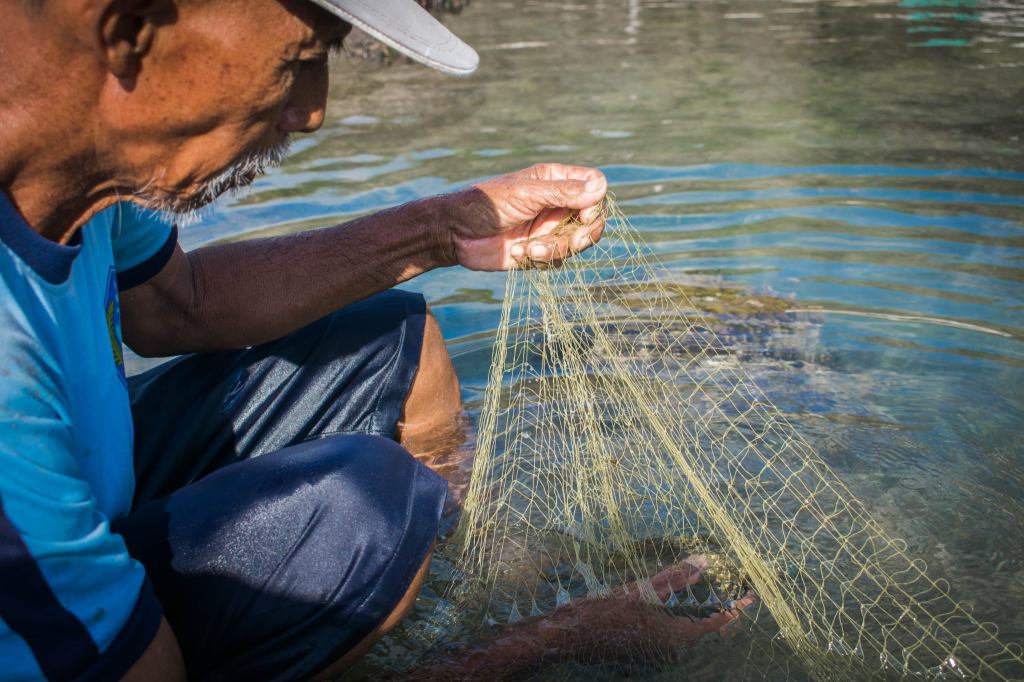
Across many coastal and deltaic areas of the Mekong Region, aquaculture remains a cornerstone of rural livelihoods and local food systems. However, the social foundations of aquaculture systems are experiencing a profound demographic transition. In many aquaculture-dependent communities, younger people increasingly leave family farms for urban and industrial centers, while older adults remain as the primary, or in some cases the sole, operators of aquaculture systems. This demographic trend has important implications for labor availability, production practices, and social inclusion. Yet discussions of aquaculture sustainability and climate adaptation rarely place aging and labor dynamics at the center of analysis.
Within this context, Nature-based Solutions (NbS) have gained prominence as approaches that work with ecological processes to address environmental challenges while delivering social and economic benefits. In aquaculture, NbS typically focus on enhancing ecosystem functions, reducing dependence on chemical inputs, and strengthening environmental resilience (Turner 2022; Debele 2023). However, the potential of NbS to respond to labor constraints associated with an aging workforce has received far less attention.
This article argues that NbS can play a crucial role in promoting elderly inclusion in aquaculture by reducing labor intensity and aligning production systems. Rather than viewing population aging as a barrier to sustainability, labor-reducing NbS offer a pathway to enable older farmers to remain productively engaged in aquaculture with dignity, autonomy, and reduced physical strain. Framed through a Gender Equality and Social Inclusion (GESI) lens, this paper positions aging farmers not as passive beneficiaries of adaptation, but as central actors whose inclusion is essential to sustainable aquaculture development.
Population Aging, Youth Out-Migration, and Aquaculture in Vietnam
Population aging is accelerating across rural Vietnam. According to the National Statistics Office (NSO 2025), internal migration is strongly age-selective: individuals aged 20-29 consistently account for the largest share of internal migrants, numbering several hundred thousand in each intercensal period. This pattern is particularly pronounced in the Mekong River Delta, where sustained out-migration toward Ho Chi Minh City and its surrounding industrial and service hubs has resulted in persistent net population loss. As the country’s primary aquaculture region, the Delta has consequently experienced a disproportionate decline in its working-age population and a relative increase of its aged population in rural and coastal communities.
Younger generations increasingly perceive aquaculture as physically demanding, environmentally risky, and less attractive than urban employment, especially when compared with industrial or service-sector jobs which offer more predictable wages and social protection. As a result, aquaculture-dependent areas are increasingly characterized by aging resident populations. National demographic data show that the proportion of older persons (aged 60 and above) in rural areas has risen steadily, while younger adults are progressively absent from agricultural and aquaculture households (NSO 2025). Empirical studies from shrimp- and fish-farming communities in the Mekong River Delta also document the growing prevalence of “elderly-only” or elderly-dominated households, as adult children migrate permanently to urban areas in search of more stable incomes and to escape the financial volatility and debt risks associated with aquaculture (Fly 2016). This demographic transformation remains underacknowledged in mainstream discussions of aquaculture sustainability and climate adaptation, even though it shapes the social and labor foundations of smallholder and nature-based production systems in Vietnam.
Nature-based Solutions in Aquaculture: Beyond their Environmental Benefits
The aging of the aquaculture workforce and the sustained out-migration of younger labor fundamentally reshape the conditions under which aquaculture is practiced in Vietnam. In many coastal and deltaic communities, the question is no longer how to intensify production with abundant labor, but how to sustain aquaculture systems when older farmers increasingly constitute the core, and sometimes the only remaining, workforce. This demographic reality exposes a growing mismatch between labor-intensive production models and aging farmers’ physical capacities. Against this backdrop, NbS are not only environmentally desirable, but socially and demographically relevant, as they offer pathways to reorganize aquaculture systems in ways that are less dependent on heavy manual labor and more aligned with experience-based management.
First, NbS reduce the physical intensity of aquaculture labor by enhancing ecological self-regulation within production systems (ILO 2022). In Vietnam, NbS practices such as mangrove-shrimp systems, rice-fish farming, and ecological ponds with limited water exchange allow farmers to rely more on natural nutrient cycling and biological regulation and to thus reduce the need for frequent pumping, chemical treatment, and emergency disease control. These changes are particularly important for older farmers in the Mekong River Delta, where physically demanding tasks, such as dredging ponds, carrying heavy feed bags, or conducting sudden water exchanges, are increasingly difficult to sustain with advancing age. By lowering the frequency and urgency of such interventions, NbS enable aquaculture production to continue at a more stable and manageable pace that is better aligned with the physical capacities of aging farmers.
Second, NbS reshape the nature of aquaculture work by shifting labor from physically intensive tasks toward observation, experience-based judgment, and adaptive decision-making, rather than sheer physical strength (ILO 2022). In practice, productivity in Vietnam’s mangrove-shrimp and rice-fish systems depends heavily on farmers’ ability to interpret ecological signals such as water color, salinity fluctuations, and seasonal changes as they affect the biological cycles of fish, shrimp, and crops. These competencies are typically accumulated over long periods of farming experience. As younger labor continues to migrate out of rural areas, NbS creates conditions in which the accumulated ecological knowledge of older farmers becomes central to system performance, rather than being sidelined as inefficient or outdated, as often occurs in intensive, technology-dependent aquaculture models.
Third, NbS contribute to sustaining livelihoods and productive engagement for older farmers under conditions of labor scarcity, rather than accelerating their withdrawal from aquaculture. In Vietnam, aquaculture is increasingly practiced within demographically constrained households, where older farmers form the core labor base as a result of sustained youth out-migration. Under such conditions, labor-reducing NbS allow older farmers to remain actively involved in production without heavy reliance on hired labor, which is both costly and difficult to secure. More fundamentally, NbS help reframe older farmers not as vulnerable actors in need of exit or replacement, but as key contributors to local food security, rural livelihoods, and climate adaptation capacity.
Designing a GESI Framework for Aging Aquaculture Communities
From a GESI perspective, population aging should be recognized as a core dimension of social inclusion in aquaculture rather than a background demographic trend. Existing GESI frameworks in the sector have largely prioritized gender and, to a lesser extent, ethnicity or poverty, while age is often treated implicitly or subsumed under broad notions of vulnerability. In aging aquaculture communities, however, older adults constitute a distinct social group facing specific, structurally embedded barriers to participation. Elderly inclusion, in this context, refers to the ability of older farmers to engage meaningfully in aquaculture production under conditions that respect their capacities, rights, and dignity. This framing shifts the focus away from welfare-oriented support toward productive inclusion, aligning GESI objectives with broader goals of sustainability and resilience.
Responding to aging labor dynamics requires rethinking how work is organized within aquaculture systems. Labor-intensive production models implicitly privilege younger, physically strong workers, even as such labor is increasingly scarce due to sustained rural-urban migration. This creates a structural mismatch between system design and demographic reality. NbS can then be understood as an adaptive response to this mismatch, not only because of their environmental benefits, but because they reorganize labor in ways that are more compatible with aging workforces. By reducing reliance on frequent mechanical intervention, chemical inputs, and emergency responses, NbS lower the physical intensity and risk profile of aquaculture work, making continued participation more feasible for older farmers.
From a GESI standpoint, however, labor reduction alone is insufficient if the remaining work is insecure, unsafe, or poorly recognized. Ensuring elderly inclusion therefore requires integrating considerations of decent work into NbS-based aquaculture. This involves attention to the quality as well as the quantity of work. It includes physical safety, manageable workloads, income stability, access to social protection, opportunities for skills development, and participation in decision-making processes. Without such safeguards, NbS risk reproducing exclusion through informalization, whereby older farmers shoulder ongoing responsibilities without adequate recognition or protection.
At the same time, a GESI lens requires explicit attention to risks and trade-offs. While NbS can reduce physical labor, they may increase cognitive and learning demands, potentially excluding older farmers who lack access to age-sensitive extension services or tailored training. Similarly, low-input or “traditional” NbS practices may rely heavily on unpaid or underpaid labor when implemented without clear labor standards. Unequal access to land, water, and institutional support can further shape who benefits from labor-reducing NbS and who remains excluded. Designing for elderly inclusion therefore requires complementary governance measures, including age-sensitive extension approaches, collective learning mechanisms, and explicit recognition of labor rights and workload distribution.
Aging Gracefully within Vietnam’s Aquaculture
Ultimately, a GESI framework for aging aquaculture communities reframes inclusion as a question of system design rather than individual limitation. Inclusion is achieved not by adding compensatory support around unchanged production models, but by transforming aquaculture systems themselves so that work remains possible, safe, and meaningful across the life course. In contexts where demographic aging and climate change increasingly intersect, integrating aging and labor considerations into NbS design is not only a matter of social equity, but a prerequisite for the long-term viability of smallholder and nature-based aquaculture systems.
 AQUADAPT