By Dr. Praneet Ngamsnae
Fishing is an important source of food security, income, and cultural identity for millions of people around the world, especially in coastal, estuarine, and inland freshwater systems. However, conventional capture fisheries and habitat modification have led to overexploitation, ecosystem degradation, and declining fish stocks, undermining livelihood security.
In response, sustainable resource management increasingly emphasizes approaches that integrate ecological restoration with managed enhancement of fish production. Within this context, culture-based fisheries and low-input aquaculture that rely on habitat rehabilitation, natural recruitment, and community governance offer promising pathways to balance ecosystem recovery with food security and socio-economic resilience.
The “Live Fish House” or “Aquatic Life Shelter” model (“Baan Pla Mee Cheewit” in Thai) represents an innovative, community-based approach to aquatic resource management that integrates local knowledge with Nature-based Solutions (NbS) to restore aquatic resources and simultaneously strengthen community capacity and resilience.
The model which originated in the Songkhla Lake Basin of Southern Thailand (Research World Thailand 2025) builds upon indigenous practices, such as the construction of traditional fish shelters (called “sung/sunk“) and locally managed aquatic conservation areas. These practices are conceptually comparable to Indonesia’s “Lubuk Larangan” or “Forbidden Deep Pool”, a form of community-protected aquatic area which is combined with the long-established customs and cultural traditions of collective resource stewardship found in Indonesian communities (Tumanggor 2025).
The transformation from temporary fish aggregating devices into living, self-sustaining aquatic habitats demonstrates the potential for harmoniously integrating traditional ecological knowledge with scientific principles. This synergistic approach enhances ecosystem functionality and provides a robust foundation for achieving genuine long-term sustainability in aquatic resource management.
Drivers for the “Live Fish House” Model
The development of the “Live Fish House” model was driven by a convergence of ecological, economic, and social pressures. In the Songkhla Lake Basin, an ecologically complex system characterized by fluctuating freshwater, brackish, and marine influences, fish populations have experienced persistent decline. This degradation has directly undermined the livelihoods of small-scale fishers, accelerated urban migration and weakened community cohesion.
Traditional fish aggregating devices constructed from bamboo and branches have proven inadequate in addressing these challenges. Their short lifespan, typically less than six months, requires frequent replacement and continuous extraction of natural materials (Research World Thailand 2025). Abandoned structures contribute to “ghost fishing” and environmental pollution, further destabilizing aquatic ecosystems. Moreover, habitat restoration efforts in the region face unique constraints due to variable salinity and strong currents, which significantly reduce the survival of planted aquatic vegetation.
These interconnected challenges highlighted the need for an adaptive, low-cost, and ecologically grounded solution capable of restoring habitat complexity while remaining compatible with local socio-economic realities.
Applying Local Knowledge in Aquatic Restoration
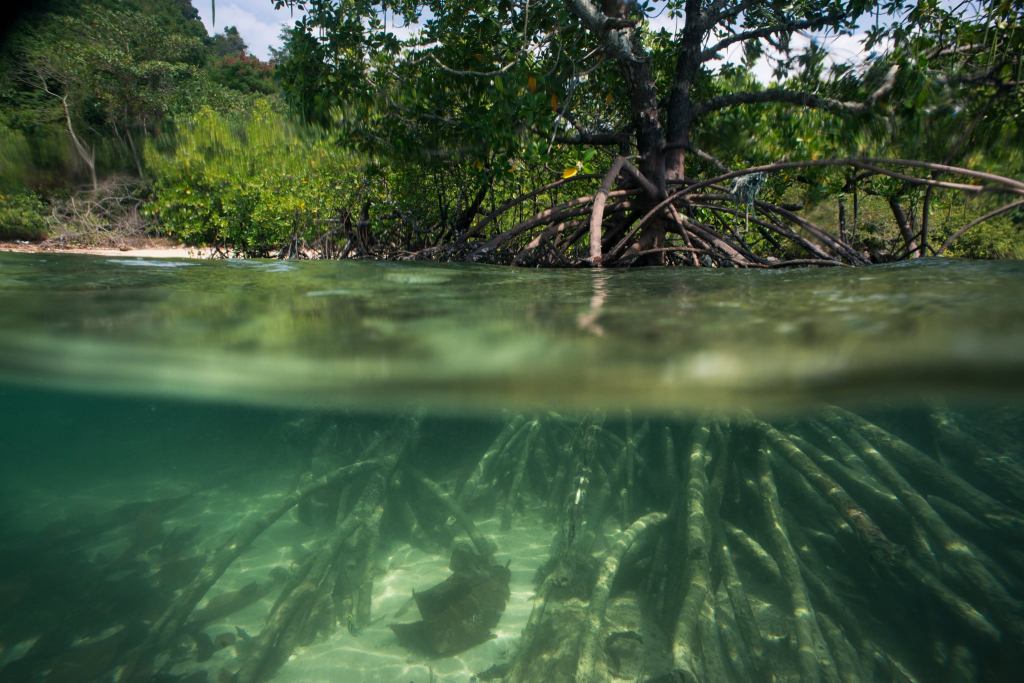
The “Live Fish House” model operationalizes local knowledge by shifting from inert fish shelters to living habitats. Instead of piling up dead branches, communities plant mangrove species, particularly Rhizophora apiculate within bamboo or wooden enclosures. As these trees mature, their root systems form durable, complex structures that provide shelter, spawning grounds, and feeding areas for aquatic organisms (Thaksin University 2025).
Local ecological knowledge guides material selection and site placement. For example, the use of Melaleuca (Samed Khao) branches reflects community understanding of materials that decompose slowly and maintain structural integrity under dynamic water conditions. Mangrove leaf litter contributes organic matter, creating a self-renewing food base that supports aquatic food webs. This approach reduces maintenance costs, minimizes environmental disturbance, and enhances long-term habitat stability.
Local Knowledge within a Nature-based Solutions Framework
Conceptually, the “Live Fish House” aligns closely with Nature-based Solutions by restoring ecological processes rather than imposing intensive technological interventions. Traditional ecological knowledge is embedded within an NbS framework that emphasizes ecosystem regeneration, biodiversity conservation, and adaptive governance.
A central practice is the establishment of protected aquatic areas which are similar to Indonesia’s “Forbidden Deep Pool” or “Lubuk Larangan” systems, where designated sections of rivers or lakes are declared no-take zones (Tumanggor 2025). These areas function as natural breeding refuges, allowing fish populations to recover and generate spillover benefits to surrounding fishing grounds. Complementary traditions, such as “The catch fish together festival” (or “Mancokao” in Indonesian) institutionalize collective responsibility for conserving culturally significant species and reinforce long-term community stewardship (Permana 2022).
Selective harvesting practices further support ecological integrity. The use of low-impact fishing gear, seasonal closures, and biodegradable fish aggregating devices (such as “tuasan” and “onjhem” in Javanese) enhances habitat complexity while minimizing bycatch and physical disturbance (Zulkifli 2022). Together, these practices illustrate how local knowledge can operationalize NbS principles in small-scale fisheries management.
Linking the “Live Fish House” to Culture-based Fisheries and Aquaculture
Conceptually, the “Live Fish House” system can be understood as a form of culture-based fishery embedded within a nature-based aquaculture continuum. Rather than relying on artificial feeding, hatchery dependence, or intensive infrastructure, the system enhances natural fish production through habitat restoration, protection of spawning and nursery grounds, and community-regulated harvesting. By creating structurally complex, living habitats that increase carrying capacity and survival rates of wild and semi-wild fish stocks, the “Live Fish House” functions as a low-input, habitat-based stock enhancement strategy. In this sense, it aligns with culture-based fisheries that emphasize environmental manipulation, natural recruitment, and collective management to increase aquatic productivity.
The integration of community governance, selective harvesting, and spatial protection further positions the “Live Fish House” as a culturally grounded, aquaculture-related system that bridges conservation-oriented fisheries management and sustainable aquatic food production.
Community Participation and Fish Stock Sustainability
Community participation is fundamental to the effectiveness and sustainability of the “Live Fish House” model. Management rules are collectively designed and enforced to reflect local ecological conditions and social norms. For example, a key mechanism is the establishment of community-defined safe zones extending approximately 500 meters out from shorelines to protect spawning and nursery habitats during critical life stages.
Locally developed regulations, known in Southern Thailand as “Gatika Thongthin“, are enforced through strong social accountability mechanisms (Research World Thailand 2025). Violations are met with clear sanctions; these include removal of committee members involved in illegal fishing, thus reinforcing ethical leadership and collective compliance. Community members also share responsibility for the maintenance of “Live Fish House” structures by volunteering regularly to repair and reinforce habitats. This collective investment fosters a strong sense of ownership and stewardship, enhancing both ecological resilience and social cohesion.
Implementation Challenges and Adaptive Responses
Despite its benefits, implementing the “Live Fish House” model involves multiple challenges. Environmental variability, particularly fluctuating salinity levels, has resulted in high mortality rates of mangrove saplings in the early implementation phases. These challenges were addressed through adaptive, evidence-based solutions developed in collaboration with researchers, such as the use of PVC pipe shields, mud infilling, and bamboo anchoring to stabilize young plants.
Social acceptance also posed challenges during the initial stages. These were mitigated through participatory learning and the presentation of empirical evidence demonstrating ecological benefits. Comparative studies revealed that “Live Fish House” areas supported substantially higher species diversity than control sites, strengthening community confidence and encouraging wider adoption.
Long-term sustainability further depends on institutional support. Integrating “Live Fish House” activities into Local Development Plans ensures access to funding, formal recognition, and alignment with broader governance frameworks, thereby reinforcing community-led conservation efforts.
Socio-Economic Dimensions of Sustainability
Socio-economic outcomes play a decisive role in sustaining conservation initiatives. The “Live Fish House” model has significantly increased household incomes among participating fishers, with reported monthly earnings rising from approximately 16,000-24,000 THB to 40,000-52,000 THB (Research World Thailand 2025). These tangible benefits strengthen community commitment to conservation rules and reduce incentives for resource overexploitation.
Resource recovery has also improved local employment opportunities, reduced urban migration, and preserved fisheries-related skills and knowledge. Economic efficiency is enhanced through reduced maintenance costs, as living root systems replace frequently renewed bamboo structures. Furthermore, communities have diversified income sources by developing value-added products and eco-tourism initiatives linked to restored aquatic landscapes.
Community Engagement and Policy Support
Active community engagement enhances the effectiveness of policy reforms by grounding regulations in local realities. Co-management arrangements enable customary rules to be formalized into public policies, strengthening legal recognition and enforcement.
Communities also contribute as citizen scientists by collecting ecological data that demonstrate significant increases in fish biomass. Such locally generated evidence provides a strong foundation for scaling up the “Live Fish House” model and integrating it into regional and national policy frameworks.
Case Studies of the “Live Fish House” Model
Thailand’s successful “Live Fish House” cases illustrate how locally grounded Nature-based Solutions (NbS) can effectively address biodiversity loss, livelihood security, and socio-ecological resilience in aquatic systems. The model applies ecosystem processes such as habitat restoration, species interactions, and natural regeneration as core mechanisms for sustainable fisheries management, while embedding community participation and local governance.
The Songkhla Lake Basin, particularly Baan Mai, represents a flagship NbS example. Recognized with a Silver Medal at the Kaohsiung International Invention and Design Expo (KIDE) 2024, Baan Mai’s initiative integrates mangrove species into fish habitat structures, simultaneously restoring degraded ecosystems and enhancing fisheries productivity. The approach demonstrates how NbS can generate multiple co-benefits, including conservation of biodiversity, food security, and community empowerment, and has become a national reference for community-led aquatic restoration.
Additional cases reinforce the NbS principles of context specificity and multifunctionality. Along the Lau Teba River, habitat restoration based on local ecological knowledge promotes natural selection processes, supports aquatic biodiversity, and creates opportunities for eco-tourism (Thamrin 2022). In Bangkhunsai, Phetchaburi Province, traditional clam farming exemplifies a low-impact NbS pathway, where long-established practices maintain ecosystem integrity while sustaining local livelihoods (Kongprasertamorn 2007).
Inland adaptation is evident in the Lam Ta Kong Basin, where traditional weirs and small dams function as NbS for water regulation, improving retention, moderating seasonal flows, and increasing resilience to climate variability (Kongsat 2009).
In Indonesia’s Situbondo regency, the “Petik Laut” or “Sea-offering ritual of gratitude” tradition highlights the governance dimension of NbS, demonstrating how culturally embedded rules and collective stewardship sustain fisheries, strengthen social cohesion, and ensure equitable resource use (Ibad 2017).
Environmental and Economic Outcomes
Empirical evidence indicates substantial ecological recovery in areas equipped with “Live Fish House” structures, including dramatic increases in fish biomass and return of previously absent species. Economically, restored ecosystems have enabled the development of complementary livelihoods, such as eco-tourism and community-based processing enterprises, generating multiple revenue streams.
Social Considerations
The “Live Fish House” model generates profound social benefits by reinforcing community empowerment, intergenerational knowledge transfer, and culturally grounded stewardship of aquatic resources. Central to this process is the mobilization of local knowledge, which shapes collective norms, ethical resource use, and adaptive management practices aligned with ecological conditions.
Community-based governance structures, particularly Local Management Committees, serve as institutional platforms through which traditional rules, social sanctions, and shared responsibilities are formalized. These mechanisms ensure that the management of fish aggregating structures remains responsive to environmental change while balancing the interests of diverse stakeholder groups. The integration of customary regulations with participatory decision-making strengthens social cohesion and trust, both of which are critical for long-term resource sustainability.
Importantly, the “Live Fish House” model contributes to social resilience by revitalizing fishing as a respected and viable livelihood. By improving resource abundance and income stability, the model attracts younger generations back to fisheries-related occupations, thereby preventing the erosion of local ecological knowledge. In this sense, the “Live Fish House” functions not only as a habitat restoration tool but also as a nature-based social innovation that sustains cultural identity, community dignity, and collective responsibility for ecosystem stewardship.
Conclusion
The “Live Fish House” model demonstrates that integrating local knowledge with Nature-based Solutions can generate synergistic outcomes for aquatic ecosystem restoration, livelihood enhancement, and sustainable fish production. By functioning as a habitat-based, culture-based fishery system, the model enhances natural recruitment, increases carrying capacity, and supports fish stock recovery without reliance on intensive aquaculture inputs. This approach links conservation objectives with food security and economic incentives, reinforcing long-term community stewardship.
As a scalable and context-sensitive strategy, the “Live Fish House” provides valuable insights for fisheries management, aquaculture-related development, and policy frameworks seeking resilient and inclusive pathways for sustainable aquatic resource governance.
 AQUADAPT