By Dr. Lonn Pichdara
Wild fish are a valuable protein source for millions of people living along the Lower Mekong River, with its critical habitat for populations of diverse fish species. However, the Lower Mekong’s wild fish population is threatened and the livelihoods of the fishers are negatively impacted by a declining fishery resource (Chevalier 2023). The causes of the decline include overfishing, unstainable development along the Lower Mekong River, e.g. the dams, population growth, and limited law enforcement of the fishery’s management. To cope with the decline, a strengthening of law enforcement and a campaign of sustainable development initiatives, combined with aquaculture, have been progressively expanded across the Lower Mekong Region (Orr 2012; Pittock 2017; Kang 2022).
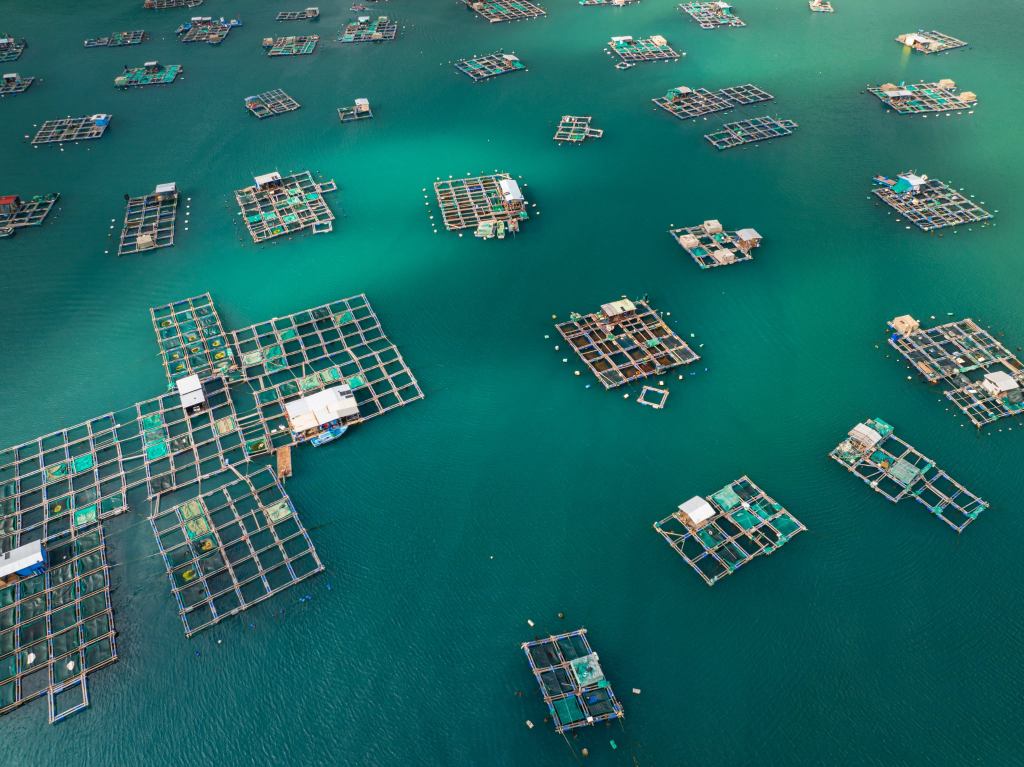
Aquaculture today accounts for 48% of the total fish supply in the Lower Mekong Region (SEAFDEC 2025). Many consider this aquaculture a nature-based solution that could solve food shortages because it uses existing available resources, i.e. rivers, stream, ponds, or rice fields, as the natural tool with which to provide culture fish and additional food for the increasing population (Le Gouvello 2022).
In the context of the aquaculture industry, women have played important roles in, for example, feed preparation, pond management, disease monitoring, seed stocking, processing and marketing (Bosma 2018), yet their contributions are often overlooked in policies and statistics (Ninh 2022). Gender dynamics within this sector lead to persistent inequities that constrain both social and economic outcomes (Kruijssen 2018).
This article reviews studies on aquaculture and gender in the Lower Mekong countries (Cambodia, Vietnam, Laos, and Thailand). It focuses on the barriers to women’s participation in aquaculture and proposes suggestions for improvement.
Aquaculture as NbS in the Lower Mekong: Analysis by Eight Criteria
Nature-based Solution (NbS) is defined by the International Union for Conservation of Nature (IUCN) as “actions to protect, restore, manage ecosystems to address societal challenges sustainably” with three objectives: biodiversity co-benefits, ecosystem conservation, and ecosystem restoration (IUCN 2020). The IUCN’s Global Standard for Nature-based Solutions lists these eight criteria which must be met before an action can be considered an NbS.
NbS Address Societal Challenges: Aquaculture directly addresses food security, poverty reduction, and climate resilience. In Cambodia’s Tonle Sap and Vietnam’s Mekong Delta, aquaculture provides protein to millions while reducing pressure on wild fisheries (FAO 2022). It also helps communities adapt to climate variability by diversifying livelihoods.
NbS are Implemented at Scale: Aquaculture is practiced across diverse scales, from small household ponds in Laos to large export-oriented shrimp farms in Thailand. This scalability allows NbS to be tailored to local contexts, ensuring both community-level resilience and regional economic integration (ASEAN Secretariat 2023).
NbS are Site-Specific and Context-Specific: Aquaculture systems in the Lower Mekong are adapted to local ecosystems: rice-fish systems in Cambodia, integrated mangrove-shrimp farming in Vietnam, and upland pond aquaculture in Laos. These site-specific practices align with NbS principles by respecting ecological and cultural contexts (IPCC 2023).
NbS Produce Biodiversity Net Gains: Well-managed aquaculture can enhance biodiversity. Integrated rice-fish farming improves soil fertility and reduces pesticide use, while mangrove-shrimp systems restore coastal habitats. These practices contribute to biodiversity conservation while sustaining livelihoods (FAO 2022).
NbS are Economically Viable: Aquaculture generates significant economic returns. Vietnam is among the world’s largest exporters of aquaculture products, while Cambodia and Laos rely on aquaculture for rural income. By embedding sustainability, aquaculture ensures its long-term viability and reduces external costs such as overfishing (ASEAN Secretariat 2023).
NbS are Inclusive, Equitable, and Participatory: Women play critical roles in aquaculture, particularly in fish processing and marketing. Inclusive aquaculture strengthens household resilience and community participation (FAO 2022).
NbS Maintain Ecosystem Integrity: Aquaculture, when integrated with ecosystem-based approaches, supports ecosystem integrity. For example, mangrove-shrimp systems in Vietnam maintain coastal protection, while upland aquaculture in Laos reduces soil erosion by stabilizing water use (IPCC 2023).
NbS are Managed Adaptively: Aquaculture systems in the Lower Mekong increasingly adopt adaptive management, such as climate-resilient species, biosecure practices, and water-efficient technologies. Adaptive management ensures aquaculture remains viable under changing climate and market conditions (FAO 2022).
Aquaculture in Cambodia, Vietnam, Laos, and Thailand, therefore satisfies the criteria for NbS because it addresses food security, supports biodiversity, sustains livelihoods, and builds resilience to climate change. By aligning with the eight NbS criteria, aquaculture is not just an economic activity but a strategic nature-based solution for sustainable development in the Lower Mekong Region.
Aquaculture in the Lower Mekong and its Gender Equity Role
Almost all Lower Mekong countries, where smallholder systems depend heavily on household labor, have similar rates of 35-55% for women’s participation in aquaculture production. Major constraints to participation include limited access to training and to credit, plus lack of formal recognition for women’s roles, despite their significant contributions to productivity (Kruijssen 2021; Kusakabe 2025).
A study on pangasius catfish farming in Vietnam’s Lower Mekong Delta demonstrates that women play vital roles in water quality management and household-level decision making. However, their participation is hindered by limited access to training and extension services, reflecting a broader social-cultural inequity in aquaculture governance (Ninh 2022).
Another study found that women’s roles were concentrated in feed preparation, and post-harvest processing, while men dominated pond construction and harvesting. Regression analysis of survey results indicated that households with higher female involvement in water quality monitoring achieved statistically significant improvements in feed conversion ratios (Boyd 1998).
Barriers to Women’s Participation and Recognition in Aquaculture
Several structural barriers limit women’s full participation in aquaculture. First, access to resources such as credit, extension services, and training remains unequal (Ninh 2022). Surveys across the Lower Mekong Region show that men are more likely to receive technical training, which directly influences their authority in household and community-level aquaculture decisions. Second, cultural norms reinforce gendered divisions of labor, framing women’s contributions as “support work” rather than “professional work”. This invisibility perpetuates inequities in recognition and remuneration. Third, policy gaps persist, as national aquaculture strategies often fail to integrate gender-sensitive frameworks, resulting in interventions that overlook women’s capacity, ability and expertise (Newton 2019).
Regarding decision-making and resource access, only 32% of the women surveyed reported primary decision-making authority in aquaculture activities. Access to extension services was uneven; 68% of men had received training compared to lower percentage of women. Logistic regression on the survey data showed that training access was a strong predictor of women’s decision-making authority. These findings align with gendered value chain analyses that emphasize structural inequities in resource distribution (Kruijssen 2021).
Solutions and Pathways Forward
Policy solutions should therefore integrate gender into aquaculture development strategies. Recent studies, which emphasize the need for gender-transformative approaches that go beyond inclusion to actively challenge inequitable norms, provide guidance. For example, Kusakabe and colleagues (2025) propose a gender monitoring schema that captures processes of change, enabling policymakers to track shifts in women’s abilities and participation. Their work forms the basis of the following three suggestions.
Expanding Gender-Sensitive Training
Aquaculture in the Lower Mekong Region is increasingly knowledge-intensive, requiring skills in feed management, disease prevention, water quality monitoring, and market access. By integrating gender-sensitive training, governments and NGOs can ensure that women are not only included but actively empowered to adopt new technologies. This is crucial because women’s participation directly influences productivity, food security, and household nutrition outcomes.
A study applying the Gender Monitoring Schema revealed incremental shifts in women’s abilities. In Vietnam’s rice-fish systems, households engaged in gender-transformative training reported increases in joint decision-making (Kusakabe 2025).
At the household level, evidence suggests that equitable participation enhances productivity. Households with joint decision-making and shared technical responsibilities report higher yields and improved feed conversion ratios, underscoring the economic benefits of gender equity (Kruijssen 2021). At the community level, participatory governance structures that include women in aquaculture cooperatives and producer groups strengthen collective resilience, particularly in climate-sensitive systems such as rice-shrimp farming in Vietnam (Trinh 2021).
Moreover, gender-sensitive training acknowledges the social realities of rural communities. Women often multi-task aquaculture with caregiving and other household responsibilities, so training programs must be flexible in timing, location, and delivery methods. For example, mobile extension services or community-based workshops can reduce barriers to participation. In Cambodia’s Tonle Sap region and Vietnam’s Mekong Delta, women already play vital roles in fish processing and marketing; thus, equipping them with technical knowledge enhances value-chain efficiency (ASEAN Secretariat 2023).
Integrating this approach into current aquaculture trends ensures that modernization does not widen gender gaps but instead strengthens inclusive growth.
Facilitating Credit and Financial Inclusion Programs
Access to finance remains one of the most significant barriers for women in aquaculture across the Lower Mekong (Larson 2023). Traditional banking systems often require collateral, land titles, or formal business registration, criteria that many women cannot meet due to gendered property rights and informal labor arrangements. Without tailored financial inclusion programs, women are locked out of opportunities to expand production, invest in better inputs, or adopt climate-resilient technologies. Facilitating microcredit schemes, savings groups, and gender-responsive financial products allows women to become active aquaculture entrepreneurs rather than secondary laborers.
This integration is particularly urgent given the current trend to industrialized and export-oriented aquaculture in Vietnam and Thailand, and the push for climate-resilient livelihoods in Cambodia and Laos. Women’s access to credit enables them to diversify cultured species, invest in improved feed, and adopt biosecure practices that reduce disease risks. Financial inclusion also strengthens household resilience, as women are more likely to reinvest earnings into education, health, and nutrition (UNDP 2023).
By inserting gender-responsive finance into aquaculture development, the region can unlock a broader base of entrepreneurial talent, ensuring that growth is not concentrated among male-dominated enterprises but shared across communities.
Embedding Gender Monitoring Frameworks into National Aquaculture Policies
Policies in the Lower Mekong increasingly emphasize sustainability, climate resilience, and regional integration (Du 2023). However, without gender monitoring mechanisms, progress risks being uneven and invisible. Embedding gender indicators into aquaculture policies ensures that governments can track whether women are benefiting from training, credit, and market access, and whether interventions are reducing structural inequalities. This is not just about fairness, it is about efficiency. Studies show that gender-inclusive aquaculture systems are more productive and resilient, as they leverage the skills and perspectives of all community members (IPCC 2023).
For Cambodia, Vietnam, Thailand, and Laos, gender monitoring frameworks also align with broader commitments to the Sustainable Development Goals (SDGs), proposed by the United Nations Development Programme in 2015, particularly SDG 5 (Gender Equality) and SDG 14 (Life Below Water). By institutionalizing accountability, ministries can identify problems and adjust strategies accordingly, for example when women’s participation in extension programs remains low despite policy commitments. Embedding monitoring frameworks also strengthens donor confidence, as international partners increasingly demand evidence of gender mainstreaming in funded projects (ASEAN Secretariat 2023). In practice, this could mean disaggregated data collection on aquaculture participation, regular gender audits of extension services, and policy reviews that listen to women’s voices.
Such frameworks ensure that gender equality is not a rhetorical add-on but a measurable, enforceable component of aquaculture development.
Conclusion
In the Lower Mekong Basin countries, aquaculture contributes to food security and sustains rural livelihoods. By positioning aquaculture as a nature-based solution, the region can mitigate protein shortages while fostering resilience in communities that depend heavily on aquatic resources.
Women contribute significantly across the aquaculture value chain, yet remain constrained by limited access to training, credit, and decision-making authority. Studies consistently show that gender-inclusive participation enhances productivity, as households which practice equitable management achieve higher yields and improved efficiency. Addressing gendered inequities is therefore not only a matter of social justice but also a pathway to stronger economic outcomes and sectoral resilience.
Moving forward, integrating gender-sensitive frameworks into aquaculture policy and practice is essential. Regional cooperation, targeted capacity development, and participatory governance can dismantle structural barriers while amplifying women’s abilities. By embedding gender equity into aquaculture strategies, Lower Mekong countries can simultaneously advance sustainable development, food sovereignty, and climate resilience.
Ultimately, the future of aquaculture in the Lower Mekong Basin depends on recognizing and harnessing the contributions of all actors, men and women alike, to build inclusive, productive, and sustainable systems.
 AQUADAPT