By Nguyen Tra My
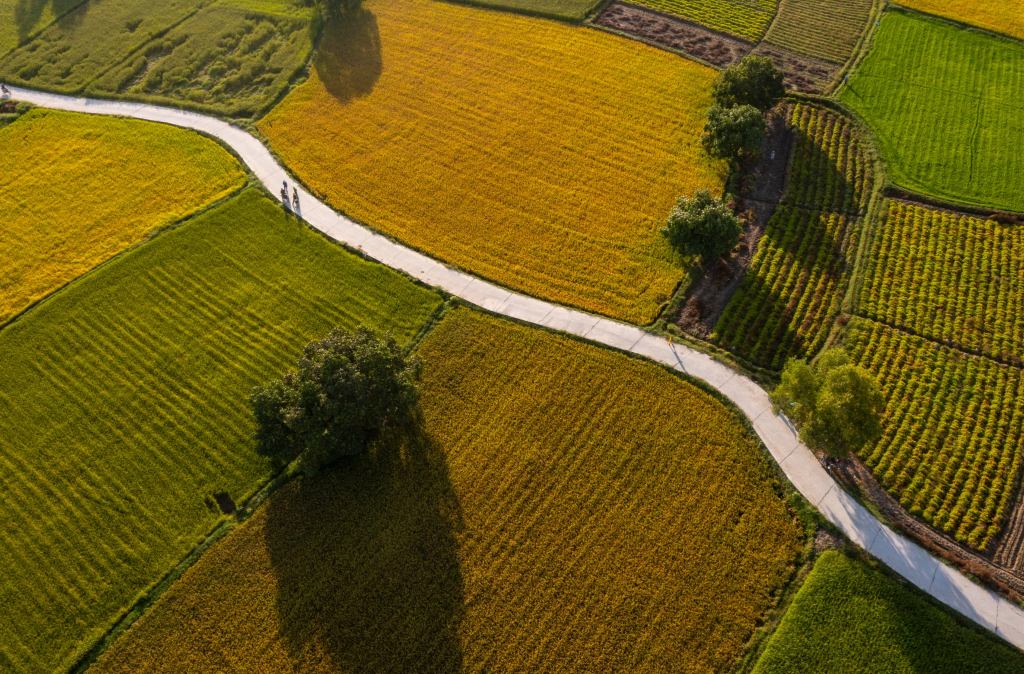
Vietnam’s Mekong Delta (VMD), the country’s largest food basket, is an area highly vulnerable to the effects of climate change, particularly drought and saline intrusion. Rice-shrimp farming, a system of growing wet-season rice and dry-season shrimp on the same plot of land, has emerged as both an effective climate-adaptive model and a productive alternative to rice monoculture.
In Vietnam, the practice dates back to the 1970s (Khanh 2026). It experienced a boom in popularity after the issuance of Resolution 09/2000/ND-CP in 2000, which allowed the conversion of inefficient land (rice production, salt production, coastal wetlands) to shrimp farming. By 2020, the area of rice-shrimp farming reached nearly 211,900 hectares (ha), concentrated mainly in the Mekong Delta provinces of Kien Giang (100,000 ha), Ca Mau (38,000 ha), Bac Lieu (57,800 ha), and Soc Trang (9,700 ha) (Nhat Ho 2020).
A Climate-Adaptive Model
There are two main forms of rice-shrimp farming in the VMD: the alternate culture model (rotational culture) and the integrated culture model (simultaneous culture) (Phuong 2006). In the alternate culture model, one rice crop and one shrimp crop are produced rotationally, annually, to take advantage of the natural seasonal cycle. Shrimp farming begins during the dry season (February to July) when brackish water is available and uses only commercial feed. Crabs and brackish-water fish can be intercropped. The soil is then desalinated for about 1-2 months before the rice crop begins in September to October, when salinity is low. By mineralizing and gradually absorbing organic materials left over from the previous shrimp crop, rice cultivation enhances the soil and water ecology. This reduces pollution and the risk of shrimp disease while saving money on fertilizer inputs and investment (Giang Nam 2022).
The integrated culture model involves raising shrimp in rice paddies, which are redesigned with surrounding ditches along the dike to enable shrimp stocking. In July, farmers release shrimp seeds into the ditch, which provides a refuge for shrimps until the rice harvest period. After the rice is harvested in December, farmers provide an influx of seawater to allow shrimps to eat the leftover by-products of the rice paddy (Dang 2020). Shrimp aquaculture waste can, in turn, be used as organic fertilizer for crops, lowering greenhouse gas emissions and the need for chemical inputs (Farrant 2021). Hence, it is easier for rice produced by this system to meet the requirements of good agricultural practices (GAP) and organic production.
Owing to the many benefits it offers, the integrated rice-shrimp farming system is hailed as a smart solution to climate change adaptation (Anh Vu 2025) and has been identified by Vietnam as one of the key strategies for lessening the detrimental effects of climate change in the VMD. Vietnam’s Nationally Determined Contributions regard it as a possible means of lowering greenhouse gas emissions from agriculture, particularly rice farming. Decision 3,550/QD-BNN-TCTS issued by the Ministry of Agriculture and Rural Development (now the Ministry of Agriculture and Environment) in 2021 targeted an expansion of the rice-shrimp farming system from 190,000 ha in 2022 to 250,000 ha by 2030 (Tran 2025).
Implementation Challenges to the Planned Expansion
The VMD enjoys several strengths that can help expand the rice-shrimp farming system. In addition to robust institutional support from both local and central governments, Tran (2025) discovered a strong understanding of the importance and advantages of the system among all stakeholders. This is in part thanks to an effective communication framework that allows information to be easily disseminated and accessed by stakeholders.
However, challenges remain in making the system sustainable. On the one hand, climate change, which brings about more severe droughts, flood fluctuations, warmer temperatures, and erratic weather, is the most prominent external factor complicating rice-shrimp farming, while additional environmental stressors, such as cross-infection from intensive aquaculture, also pose a threat (Dang 2020).
On the other hand, human-related challenges include farmers’ limited knowledge and understanding of new rice-shrimp farming techniques that could lead to more efficient and effective production. Poelma (2021) noted that these issues have been partially addressed through free specialized training programs offered by the Center for Agriculture and Aquaculture Extension, as well as by informal exchanges between farmers at the local café or during trips to other farms to learn new farming methods.
Tran (2025) identified a weak value chain as a key barrier, most evidenced by “the fragmented and small-scale nature of production” due to the lack of large, consolidated production zones. The weak role of cooperatives and farmer organizations in the VMD and insufficient value chain transparency are also regarded as “major obstacles.” Relationships between producers, processors, and traders in the system are often fragile, with no well-defined risk-sharing mechanism or price guarantee system in place to lessen the challenges. Another difficulty highlighted in the study is the “systemic issues” in obtaining and managing the funds to expand the rice-shrimp farming system. In effect, the available financial structures generally do not meet the requirements of the system’s value chain, with notable difficulties such as high transaction costs for small loans and savings and rejection due to inadequate loan collateral.
Concurrently, Anh Vu (2025) argued that the system made little sense from a scientific standpoint, since shrimp and rice live under vastly different conditions. “Rice thrives in freshwater, with a muddy bottom rich in organic matter and shallow water levels, while shrimp require brackish or saltwater, a hard, clean bottom, deep water, and high oxygen content. If raised together, both shrimp and rice will live in abnormal ecological conditions.”
On top of that, the repurposed irrigation systems for rice-shrimp farming struggle to effectively manage both freshwater retention for rice and saline water supplementation for shrimp (Tran 2025).
Beyond the above serious operational challenges to its expansion, the integrated rice-shrimp system also faces some social difficulties.
Social Considerations of Rice-Shrimp Farming
Farmers have reported increased income thanks to rice-shrimp farming, as they can optimize land use and harvest both products. However, Tran (2025) found the social effects of the rice-shrimp farming system to be “mixed.” While the system allows farmers to maintain steady livelihoods and thus improve the health of family members, it does not lessen the burden on female workers or facilitate fairer workload distribution.
Elaborating on the gender perspective of rice-shrimp farming, Grassi (2017) noted that, traditionally, women were mostly assigned time-consuming light tasks and men were assigned heavier ones. However, owing to male migration, technology introduction, and household economic need, women now contribute to tasks which were once entirely done by men, while men have begun to share some of the work previously assigned to women. Despite these changes, women are still thought to be responsible for the “lighter” work, so their labor inputs are frequently viewed as being minor in comparison to men’s.
In particular, by analyzing case studies from Binh Dai and Thanh Phu communes in Ben Tre (now Vinh Long) province in the VMD, Dang (2020) found men were paid an average of 140,000 VND/day (US$6.04) for transporting rice, removing mud, and harvesting shrimp, while women were only paid an average of 120,000 VND/day (US$5.18) for weeding, harvesting, and feeding shrimp. Furthermore, women’s lack of access to productive resources like credit, training, and technology likely contributed to the undervaluation or negligence of their opinions in important household agricultural decisions (Grassi 2017).
Recommendations
Despite its shortcomings rice-shrimp farming remains a good “temporary solution” (Anh Vu 2025) that warrants expansion, considering the VMD’s incomplete irrigation infrastructure. This can best be done by addressing its main challenges.
Regarding the farmers’ knowledge gap, Poelma (2021) suggested tailoring the required knowledge and skills to the unique requirements of specific farmer groups to prevent differences in adoption and execution. Dang (2020) emphasized the need to enhance farmers’ knowledge of advanced methods for controlling water scarcity and saline intrusion as well as the need to increase market integration, productivity, and resource efficiency.
Additionally, fortifying collaborations and engaging non-public sectors would expand the scope and efficacy of extension services, thus facilitating more inclusive knowledge dissemination and greater adoption of cutting-edge techniques across all stakeholder groups (Tran 2024). It will also be necessary to establish and standardize technical guidelines and regulatory frameworks for the rice-shrimp farming system. These should include defining optimal procedures for seed selection, stocking density, and other production characteristics.
To resolve the value chain weaknesses, Tran (2025) recommended amplifying the roles of farmer cooperatives, associations, and social organizations. He and his co-authors also suggested prioritizing policies that bolster value chain linkages to draw in private sector investment, encourage benefit-sharing, and create model value chains for wider adoption. Moreover, they thought that financial support systems like loans and certification fees should be put in place to incentivize businesses to work with farmers and establish market connections. In addition, they proposed diversifying production models to improve the resilience and productivity of the system by, for example, mixing growing vegetables on dikes with farming other aquaculture species like fish and crabs to improve farmers’ livelihoods, boost productivity, and support the system’s overall sustainability.
In the long run, it is essential to invest in synchronizing transportation logistics and upgrading irrigation infrastructure to support large-scale rice-shrimp farming and ensure sustainability across all farming methods.
Conclusion
The rice-shrimp farming system presents a viable solution to the growing climate change complexities facing Vietnam’s Mekong Delta (VMD) through rotating rice and shrimp crops during the dry and rainy seasons and by taking advantage of each crop’s leftovers to produce organic products.
This system has been targeted for expansion across provinces in the VMD, but challenges related to increasingly erratic weather, farmers’ limited knowledge of modern farming techniques, a weak value chain, and an underdeveloped irrigation system are hindering its expansion and sustainability. Plus, there is major room for improvement in the system’s gender equality aspects.
Comprehensive and coordinated solutions and policy responses are needed to remove these barriers to enhance the efficiency and sustainability of the rice-shrimp farming model.
 AQUADAPT