By Dr. Samnao Saowakoon and Dr. Praneet Ngamsnae
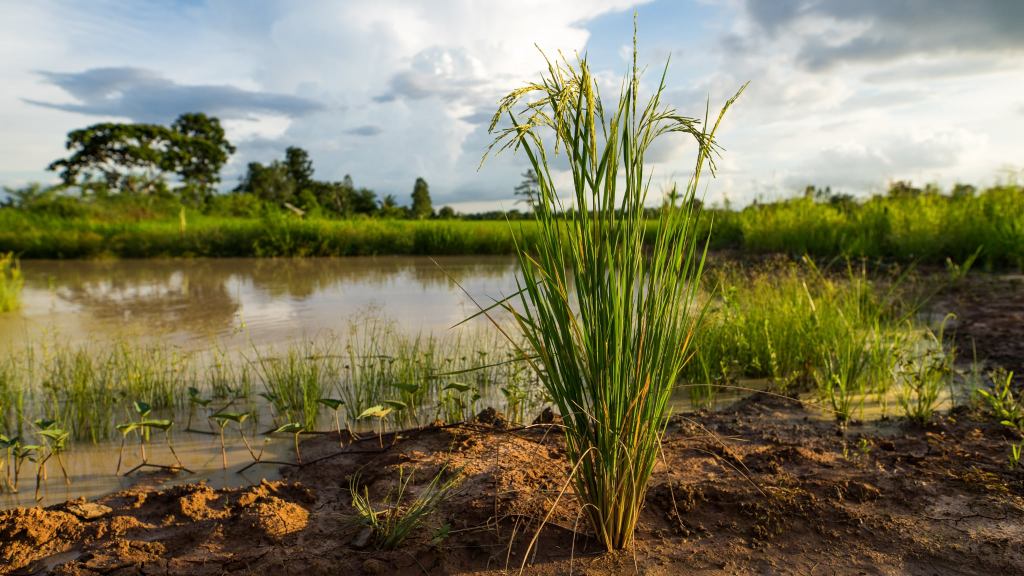
Contemporary food production systems face increasingly complex challenges arising from population growth, natural resource degradation, biodiversity loss, market volatility, and climate change. At the same time, agriculture must produce sufficient safe food, reduce dependence on external inputs, and minimize ecological impacts. Integrated agricultural systems that grow multiple food products within the same landscape, use resources efficiently, and rely on natural processes for resource cycling have therefore received increasing attention.
Rice and aquatic animal co-culture is one such system. It integrates crop and aquatic animal production within the same agricultural landscape and takes advantage of symbiotic interactions between rice, water, soil, microorganisms, aquatic plants, and aquatic animals. The system is not intended solely to increase production; it can also reduce chemical inputs, improve nutrient-use efficiency, diversify farm income, strengthen household food security, and enhance the resilience of farming households in the face of economic and environmental uncertainty.
Surin Province in Northeast Thailand provides a particularly suitable context for such a system. Agriculture forms a major component of the provincial economy, particularly jasmine rice production. As well, organic agriculture has been promoted there continuously for many years. In fact, Surin introduced an organic agriculture promotion policy in 1999, was designated a pilot province for organic agriculture in 2001 and subsequently established the Surin Organic Agriculture Standard in 2004. Integrating “organic aquatic animals” into organic rice production can therefore be viewed not simply as an additional production activity, but as an opportunity to transform an established agricultural system into an integrated food system capable of producing multiple products from the same piece of land. Rice remains the principal crop, while fish, shrimp, and other aquatic animals provide additional organic products, protein, income, and ecological functions.
This article synthesizes knowledge and evidence concerning organic rice and aquatic animal co-culture in Surin Province, Thailand, and examines its potential through the frameworks of Nature-based Solutions (NbS), Nature-based Aquaculture, climate adaptation, biodiversity conservation, and social inclusion. The objective is to assess the potential of the system to generate ecological, economic, social, and cultural value and to advance Surin’s claim for “Organic Rice and Aquatic Animal Co-culture” to be recognized as a Globally Important Agricultural Heritage System (GIAHS).
Rice and Aquatic Animal Co-Culture as an Ecological Agricultural System
The fundamental principle of rice and aquatic animal co-culture is the transition from segregated production toward symbiotic production within an agroecosystem. Fish and other aquatic animals utilize natural food resources in rice fields, including plankton, benthic organisms, aquatic insects, weeds, and organic residues. Their movement and excretion contribute to nutrient cycling and ecosystem functioning, while rice serves simultaneously as a crop, habitat, and structural component of the agroecosystem.
Evidence from different locations indicates that rice-fish systems can increase rice productivity when appropriately designed and managed. In fact, Tsuruta and colleagues (2010) reported that rice yields in rice-fish systems were approximately 20% higher than those in rice monoculture. In Surin Province, integrating Nile tilapia with organic rice increased rice yield from 409.20 to 529.10 kg per rai (1 rai = 0.16 hectare), representing a 29.30% increase (Saowakoon 2010).
Sustainability, however, does not mean maximizing aquatic animal production. Rather, it requires an appropriate balance among rice yield, aquatic animal production, and ecosystem functions. The study by Hu (2016) suggests that excessive aquatic animal densities or proportions of refuge areas may reduce rice productivity. The design of canals, trenches, refuge areas, and appropriate stocking densities is therefore critical to achieving a sustainable system.
For Surin Province, organic rice and aquatic animal co-culture should consequently maintain organic jasmine rice as the foundation of the system. The preferred approach is “aquatic animal integration into organic rice landscape” rather than “conversion of rice landscapes into intensive aquaculture systems.”
Nature-based Solutions and Nature-based Aquaculture: From Mimicking Nature to Treating Nature as Infrastructure
Organic rice and aquatic animal co-culture in Surin has a strong potential to reflect the principles of Nature-based Solutions because it uses natural processes to address production and environmental challenges, reduces dependence on external inputs, and utilizes biological interactions to generate ecosystem services. Within this system, fish and other aquatic animals occupy different consumer roles in the food web, feeding on insects, weeds, plankton, and small organisms, while rice and other organisms contribute to nutrient uptake and cycling. These interactions improve resource-use efficiency compared with monoculture.
This principle is consistent with Integrated Multi-Trophic Aquaculture (IMTA), which seeks to use wastes and nutrients from one organism as resources for another. In organic rice landscapes, the concept can be extended to Nature-based Aquaculture, in which aquatic animals are viewed not merely as economic products but as ecological components and “biological drivers” that contribute to system balance.
A clear example from Surin is the integration of giant freshwater prawns into organic rice fields. The prawns consume juvenile “golden apple” snails and thereby contribute to biological control of rice pests (Saowakoon 2010). Such biological interactions reduce the need for chemical control and incorporate pest management into the natural functioning of the agroecosystem.
The design of organic rice and aquatic animal systems should therefore follow the principle that “nature does more”; whereby natural processes perform a greater proportion of system functions, while external inputs such as chemical fertilizers, pesticides, and formulated aquatic feeds are reduced to the necessary minimum. Such systems can connect food production with ecological restoration and more clearly embody the principles of Nature-based Aquaculture.
From Organic Rice to a Multi-Product Organic Food System
A major economic strength of organic rice and aquatic animal co-culture is its capacity to generate multiple products from the same plot of land without requiring agricultural expansion. This approach emphasizes efficient use of water resources, economic value creation alongside conservation of natural capital, sustainable employment and income generation.
Surin’s organic jasmine rice already possesses substantial economic value and market recognition. Integrating organic aquatic animals can therefore transform the system from “Organic Rice Production” into “Organic Rice and Aquatic Food Co-Production” encompassing multiple products, such as organic rice, fish, shrimp, and processed products derived from system resources.
The system can also strengthen household income security because aquatic products provide an additional source of income when rice prices fluctuate. Producing both plant-based and aquatic animal protein within the same landscape improves land-use efficiency and household food security. Research on giant freshwater prawn culture integrated with organic rice production in Surin found that rice-prawn systems generated higher returns on investment than organic rice or prawn monoculture and produced two types of outputs from the same land. This illustrates how value can be created through resource integration rather than through increased resource use.
Biodiversity Conservation and Ecosystem Services
One of the most important strengths of organic rice and aquatic animal co-culture is its potential to maintain and restore biodiversity. Rice fields with no or low chemical inputs can function as semi-natural habitats supporting aquatic plants, plankton, benthic organisms, insects, amphibians, fish, and other aquatic organisms.
Evidence from Surin indicates that integrating giant freshwater prawns with organic rice increased benthic biodiversity relative to prawn monoculture and produced diversity levels comparable to those of rice monoculture (Saowakoon 2010). The use of giant freshwater prawns to control juvenile “golden apple” snails also provides an example of biological pest management based on natural processes rather than chemical pesticides.
Research on rice-fish systems in Thailand has further identified relationships between co-culture and soil microbial communities. Rice-fish systems have been associated with higher levels of soil organic carbon, total nitrogen, organic matter, and phosphorus compared to rice monoculture, together with distinctive microbial community composition. Biodiversity should therefore be regarded as a form of “natural capital” within the rice-aquatic animal system rather than simply as a by-product of production.
Maintaining canals, bunds, and vegetation along field margins, and small water bodies should consequently form part of landscape management. When managed systematically, organic rice fields can function as an ecologically connected network of agricultural habitats and contribute to biodiversity conservation across rural landscapes.
Climate Change Adaptation and Greenhouse Gas Mitigation
Climate change increases the risks to rice production through rainfall variability, drought, flooding, high temperatures, and changes in pest dynamics. Production systems that depend on this single commodity are therefore more vulnerable to climate shocks.
Rice and aquatic animal co-culture can enhance farm resilience through diversification of products and income. Rice remains the principal product, while aquatic animals provide supplementary production and an important source of dietary protein. Multiple products reduce exposure to market volatility and losses associated with the failure of any single component of the production system.
Regarding greenhouse gases, several studies have reported that rice-fish systems can reduce methane emissions under certain conditions. Fish activity may enhance oxygen exchange in water and at the soil surface and may consume organic residues that serve as substrates for methanogenesis. However, meta-analytic evidence also indicates variable outcomes, particularly under high aquatic animal densities, intensive feeding, or different water-management regimes.
Accordingly, Surin’s rice and aquatic animal systems should not be generally described as “carbon neutral” or assumed to reduce greenhouse gas emissions under all conditions. Instead, they should be developed within a climate-smart agriculture framework, with greenhouse gas emissions monitored under actual local conditions. Water management, aquatic animal density, feed inputs, and organic matter management should be evaluated together to achieve an appropriate balance between productivity and climate impact.
Social Inclusion: A People-Centered Agricultural System
The sustainability of rice and aquatic animal systems depends not only on biological efficiency but also on the ability of communities to access resources, knowledge, technology, markets, and decision-making processes equitably. Social inclusion should therefore be treated as a core component for developing Surin’s organic rice and aquatic animal system.
The system can generate economic activities throughout the value chain, including land preparation, canal construction, aquatic animal seed production and distribution, farming, harvesting, grading, processing, packaging, transportation, and marketing. This creates opportunities for people with different resources and capabilities to participate. Particular attention should be given to smallholder farmers, women, youth, elderly, and groups with limited access to knowledge, technology, finance, markets, and decision-making. Collective organizations or community enterprises that jointly manage resources and markets reduce inequalities and strengthen farmers’ bargaining power.
The system also provides opportunities for intergenerational knowledge exchange: young people can contribute their knowledge of modern technologies and marketing approaches, while elderly farmers and community knowledge holders can transmit their knowledge of soils, water, rice varieties, seasons, and local resource management. Linking these two knowledge systems transforms agricultural heritage conservation from “preservation of the past” into “innovation for the future.”
Local Knowledge, Culture, and Surin’s Identity
The value of Surin’s rice and aquatic animal system extends beyond production because it is deeply connected to local history, livelihoods, and culture. Research has documented long-standing relationships between Surin’s communities, rice, and fish, together with intergenerational transmission of knowledge concerning local resource use. The cultural practice of “Kao lak pla, pla lak kao” (rice for fish, fish for rice) reflects systems of reciprocity and sharing, while the Chumphon Buri District’s “Pla lai kao mai” (eel and new-crop jasmine rice) festival illustrates the relationship among food, agriculture, culture, and local identity.
These dimensions are important for a Globally Important Agricultural Heritage System (GIAHS) because agricultural heritage encompasses more than production techniques. It includes relationships among people, resources, ecosystems, culture, and agricultural landscapes. The development of organic rice and aquatic animal co-culture in Surin should therefore systematically document local knowledge concerning production calendars, water management, rice and aquatic animal varieties, use of food plants, pest management, canals and bunds, as well as community traditions and food-exchange practices. Such knowledge should be integrated with modern science without undermining local identity.
Pathway Toward a Globally Important Agricultural Heritage System (GIAHS)
The GIAHS concept of the Food and Agriculture Organization of the United Nations (FAO) seeks to conserve agricultural systems of historical and cultural value while maintaining food security, biodiversity, ecosystem functions, local knowledge, and community livelihoods. Examples from China demonstrate that Surin’s traditional rice-fish culture merits designation as a GIAHS because of its long history, traditional knowledge, ecological diversity, and contributions to food security and local livelihoods.
Surin possesses several characteristics that are consistent with the GIAHS framework, including a long-established organic agricultural base, local knowledge and Indigenous practices, relationships among rice, aquatic animals, and communities, biodiversity, food security, diversified income, and potential climate resilience. However, possessing these characteristics does not imply automatic GIAHS recognition. More systematic management and empirical evidence are required, including landscape delineation, biodiversity and resource databases, documentation of local knowledge, socioeconomic assessment, community participation, and long-term sustainability monitoring.
An appropriate pathway would begin with the development of “organic rice and aquatic animal innovation communities” in areas with suitable conditions. Communities should own the process, supported by farmers, researchers, government agencies, local authorities, businesses, and consumers. The next stage should involve a certification or quality-assurance system covering both rice and aquatic animals, extending beyond product standards to include ecosystem management, chemical use, biodiversity, labor welfare, community participation, and economic fairness. A shared regional brand such as “Surin Organic Rice and Aquatic Food” could further strengthen the identity of the system and connect quality and health-oriented markets with agro-tourism and green markets.
Ultimately, a spatial GIAHS proposal should integrate agricultural landscapes, history, livelihoods, ecosystems, biodiversity, production systems, community economies, and governance mechanisms. The process should aim to develop a “living system” rather than merely prepare documentation for certification, because the essence of GIAHS lies in conservation combined with continued development that enables agricultural heritage systems to remain viable for present and future generations.
Linkages with the Sustainable Development Goals (SDGs)
Organic rice and aquatic animal co-culture in Surin has the potential to contribute to several SDGs, particularly SDG 1 through income generation and risk diversification; SDG 2 through food security and nutrition; SDG 5 through women’s roles and opportunities in community economies; SDG 8 through decent work and economic growth; SDG 12 through sustainable production and consumption; SDG 13 through climate action; and SDG 15 through terrestrial ecosystem and biodiversity conservation.
The significance of the system lies in integrating these objectives rather than pursuing them separately. Aquatic animal production can increase income while strengthening food security and creating incentives for communities to maintain ecosystem quality. Reduced chemical use can benefit farmers’ and consumers’ health while supporting biodiversity. At the same time, maintaining local knowledge can strengthen continuity between older and younger generations.
Limitations and Areas for Further Development
Despite its considerable potential, organic rice and aquatic animal co-culture should not be viewed unconditionally as a positive solution. The system may require more labor, time, and management skills than monoculture. It will also need investments in landscape modification, such as canals or trenches, and improvements to water and aquatic animal management.
Increased aquatic animal production does not necessarily mean greater sustainability. If the increased production depends heavily on formulated feeds, energy inputs, or practices that increase waste and greenhouse gas emissions, environmental performance deteriorates. The key performance criterion should therefore shift from “maximum production” toward “ecological optimum” defined as appropriate productivity within ecological constraints.
Future development should include continuous monitoring of rice and aquatic animal production, soil and water quality, biodiversity, chemical inputs, greenhouse gas emissions, net income, household food security, community participation, and intergenerational knowledge transfer. Such information will provide an empirical basis for assessing sustainability and strengthening the merit of any future GIAHS designation.
Conclusion
Organic rice and aquatic animal co-culture in Surin Province has the potential to develop beyond a mixed food-production system into a “living agricultural landscape” that integrates organic rice, organic aquatic animals, ecosystems, biodiversity, community economies, local knowledge, culture, and climate adaptation.
Surin’s major strengths include its long-established organic jasmine rice production, organic agriculture standards, locally generated research knowledge, and strong cultural relationships with rice and aquatic animals. The incorporation of aquatic animals into this system therefore represents an extension of existing local capital rather than the creation of an entirely new production model. Current research also indicates that integrating fish and prawns with organic rice can increase rice production, generate aquatic products, improve economic returns, and support ecosystem functions.
In terms of Nature-based Solutions, the system utilizes natural processes for pest regulation, nutrient cycling, soil and water quality maintenance, and biodiversity support. From a Nature-based Aquaculture perspective, aquatic animals function not only as commodities but also as ecological components of the production system.
Social inclusion is particularly important because genuine sustainability requires equitable distribution of benefits and meaningful participation of farmers in determining the direction of system development. Linking the practical knowledge of older generations with the technical knowledge of younger generations can help the agricultural heritage adapt and remain viable under changing conditions.
“Organic Rice and Aquatic Animal Co-Culture of Surin” should therefore be developed as a landscape-level agricultural development framework. This should begin with organic rice and aquatic animal innovation communities, followed by the development of standards and databases, stakeholder networks, products and markets, sustainability monitoring systems, and systematic documentation of ecological, economic, social, and cultural evidence.
Surin’s ambition should not stop at becoming a “production area for organic rice,” but should move toward becoming an “integrated organic agricultural food landscape connecting rice, aquatic animals, nature, and culture.” Such a landscape creates value for both people and ecosystems. Given stronger empirical evidence and management systems, this landscape has the potential to serve as a model of Nature-based Aquaculture and Blue Economy, and also to provide a credible pathway toward future consideration as a Globally Important Agricultural Heritage System.

