Essays
This series of essays explores “environmentally friendly aquaculture” and similar concepts from the perspectives of aquaculture stakeholders from the Asia-Pacific Region. They are classified into 5 main themes, which sometimes intersect, including:
- Systems and Technologies
- Natural Feeds and Aquatic Animal Health
- Gender Equality and Social Inclusion
- Nature-based Tools and Guides
- Governance, Policies, and Economics

Systems and Technologies
- Co-Culture of Rice and Fish for an Environmentally Friendly Aquaculture (EN, TH)
- Integrated Multi-Trophic Aquaculture (IMTA): An Environmentally Friendly and Sustainable System (EN, TH)
- Climate-Friendly Aquaculture in Rice Fields (EN, TH)
- Biofloc Technology: An Environmentally Friendly Aquaculture System (EN, TH)
- Thailand’s Community Fish Banks (EN, TH, VN, FR)
- Rice Cultivation on Floating Beds in Fishponds (EN, TH)
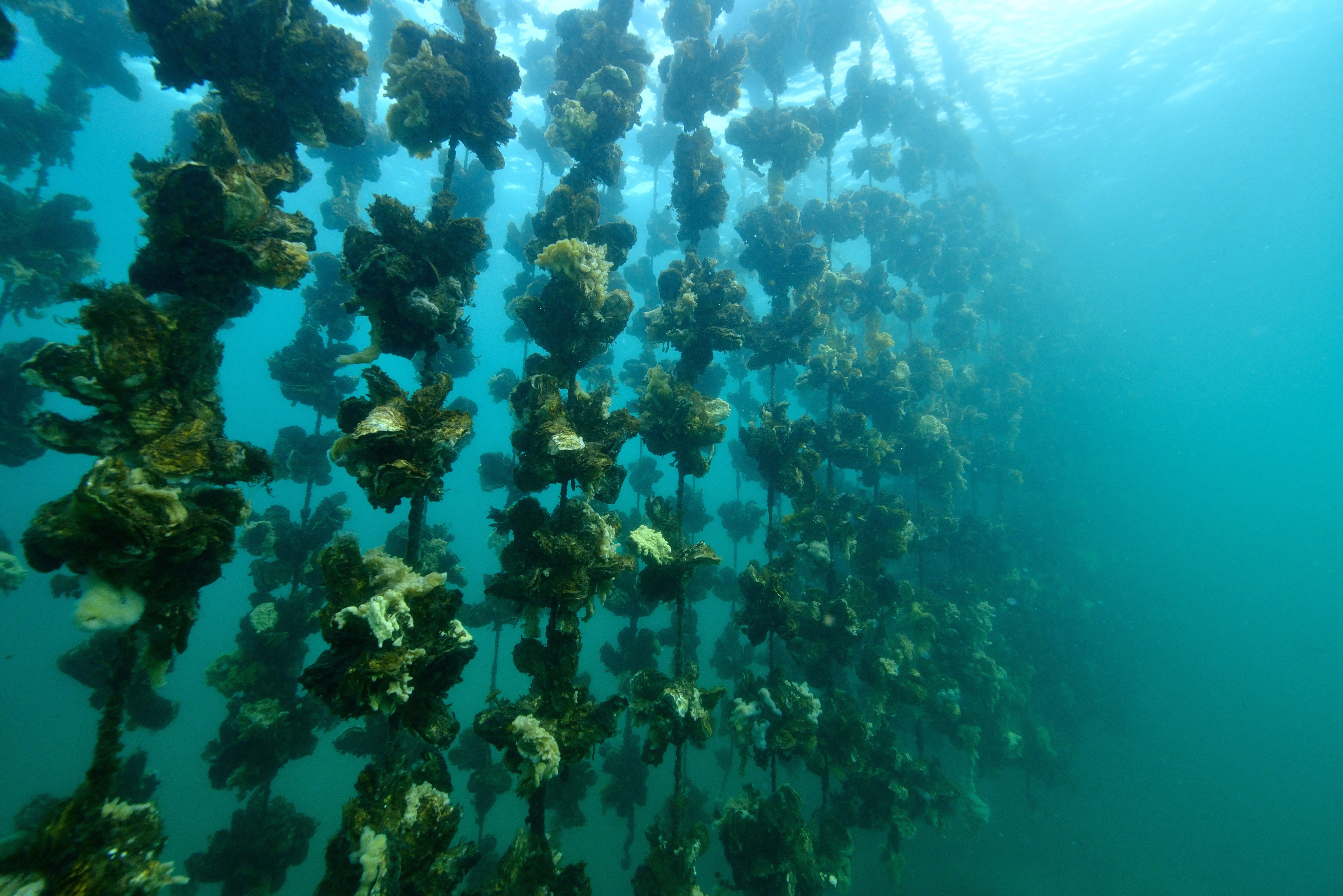
- Shellfish Aquaculture for Water Quality Improvement (EN, TH)
- Fish-Shrimp Integrated Aquaculture (EN, TH)
- Environmentally Friendly Frog Culture in Southeast Asia (EN, TH)
- Seaweed Aquaculture: A Potential Nature-based Solution (EN, TH)
- Sustainable Bivalve Aquaculture in Thailand (EN, TH)
- Community-based Crab Banks (EN, TH)
- Recirculating Aquaculture Systems for a Carbon Neutral Aquaculture (EN, TH)
- A Holistic Approach to Sustainable Aquaculture (EN, TH)
- ShrimpGuard: Combining Phage and Immune Enhancers for Sustainable Shrimp Farming (EN, TH)
- Live Fish House: Integrating Local Knowledge and Nature-Based Solutions (EN, TH)
- How Mangrove Forest Play a Vital Role in Cambodia’s Aquaculture (EN, TH, KH)
Natural Feeds and Aquatic Animal Health
- Microorganisms for an Environmentally Friendly Aquaculture (EN, TH)
- Uses of Medicinal Plants for an Environmentally Friendly Aquaculture (EN, TH)
- Napier Grass as an Eco-Friendly and Low-Cost Alternative Tilapia Feed (EN, TH)
- Incorporating Azolla into Integrated Rice-Fish Culture for Greater Productivity and Sustainability (EN, TH)
- A Path to Environmentally Friendly Aquaculture: Feed and Feeding Practices (EN, TH)
- Periphyton: A Natural Feed for an Eco-Friendly Aquaculture (EN, TH, VN, FR)
- Uses of Wolffia in Aquaculture (EN, TH)
- The Black Soldier Fly Larvae: An Alternative Source of Fish Feed (EN, TH)
- The Role of Nature-based Solutions in Mitigating Diseases in Aquaculture (EN, TH)
- Fermented Rice Straw (Fish Sandwich): A Natural Feed in Fishponds (EN, TH)
- Functional Feeds: Their Benefits in Aquaculture (EN, TH)
Gender Equality and Social Inclusion
- Gender-Inclusive Participation in Small-Scale Aquaculture (EN, TH, VN)
- Integrating Nature-based Solutions and Social Inclusion in Southeast Asia’s Inland Cage Aquaculture (EN, TH)
- Nature-based Solutions and Gender Equality in Aquaculture (EN, TH, VN)
- Beyond Tokenism: Centering Indigenous Knowledge in Vietnam’s Sustainable Aquaculture (EN, TH, VN)
- Muslim Women and Blue Crab Bank Conservation in Southern Thailand (EN, TH)
- Disability Inclusion in Vietnam’s Aquaculture (EN, TH, VN)
- Adapting Aquaculture to an Aging Workforce: Labor-Reducing Nature-based Solutions (EN, TH, VN)
- Local Knowledge and Nature-based Solutions in Thailand’s Inland Aquaculture (EN, TH)
- Aquaculture as a Nature-based Solution (NbS) for the Advancement of Gender Equity and Sustainable Development in the Lower Mekong Countries (EN, TH, KH)
Nature-based Tools and Guides
- Sustainable Shrimp Aquaculture: A Guide to Environmentally Friendly Practices (EN, TH)
- Life Cycle Assessment (LCA) for an Environmentally Friendly and Sustainable Aquaculture (EN, TH, VN)
- Climate Resilience and Eco-Friendly Practices for Shrimp Aquaculture (EN, TH)
- Water Footprint Management in Integrated Rice-Fish Farming Systems: Environmentally Friendly Practices (EN, TH)
- Nature-based Aquaculture Practices for Sustainability (EN, TH, VN, FR)
- Biochar in Aquaculture: Its Eco-Friendly and Functional Benefits (EN, TH)
- Application of Life Cycle Assessment (LCA) to the Aquaculture of the Mekong Delta (EN, TH, VN)
Governance, Policies, and Economics
- Transforming Aquaculture’s Wastes into High-Value Products (EN, TH)
- The Impact of Shrimp Farming on Carbon Footprint and Environmentally Friendly Processes (EN, TH)
- Environmentally Friendly Aquaculture in the Age of Artificial Intelligence (EN, TH)
- Government Subsidies as a Catalyst for Sustainable Aquaculture (EN, TH)
- Energy Transition in Vietnam’s Aquaculture Sector (EN, TH, VN, FR)
- Geographic Information Systems and Geospatial Intelligence in Aquaculture (EN, TH)
 AQUADAPT