By Dr. Apinun Suvarnaraksha
A transition toward sustainable agricultural systems has become a critical global priority in the face of escalating environmental degradation, food insecurity, and rural economic vulnerability. Organic aquaculture, particularly organic fish farming, is now recognized as a viable approach that integrates environmental conservation with socio-economic development, making it particularly relevant for small-scale communities (Ahmed 2019; FAO 2022). Unlike conventional aquaculture, organic systems emphasize ecological balance, reduced chemical inputs, and efficient use of local resources, thereby contributing to long-term sustainability. In this system, fish is not only a biological resource but a structural node that organizes economic flows, social relations, and ecological processes.
Conceptual Background
In the Tungtom organic farming community, 60 km southeast of Chiang Rai, in Thailand’s Chiang Rai province, fish is not merely an agricultural commodity but functions as the central driver of an integrated organic farming system, which links production, processing, and market activities within a localized value chain (CMRU 2023). This fish-centered system reflects the concept of integrated agriculture, in which aquaculture is closely interconnected with crops and livestock to enhance productivity, resource efficiency, and resilience (Edwards 2015). By positioning fish at the core of the system, the community is able to create a circular production model that minimizes waste while maximizing value.
A key mechanism supporting Tungtom’s transformation is the Organic Agriculture Forestry Participatory Guarantee System (OAF-PGS), a community-based certification approach that emphasizes transparency, trust, and collective responsibility. Participatory Guarantee Systems (PGS) are widely acknowledged as inclusive alternatives to third-party certification, particularly for smallholder farmers, as they reduce certification costs while strengthening social capital and local knowledge exchange (Home 2017; IFOAM). In the Tungtom context, OAF-PGS has been implemented to enhance organic standards and promote participatory learning and collaboration among farmers (CMRU 2023).
Furthermore, the integration of fish farming within the OAF-PGS framework aligns closely with the United Nations 2015 Sustainable Development Goals (SDGs), particularly those related to poverty reduction, food security, sustainable production, and ecosystem conservation. Integrated aquaculture systems contribute significantly to multiple SDGs by improving livelihoods, strengthening food systems, and promoting environmental sustainability (Belton 2018; FAO 2022). This demonstrates how a locally grounded, fish-centered organic system can translate community-based practices into meaningful contributions to global sustainability agendas.
Organic Aquaculture in Integrated Farming Systems
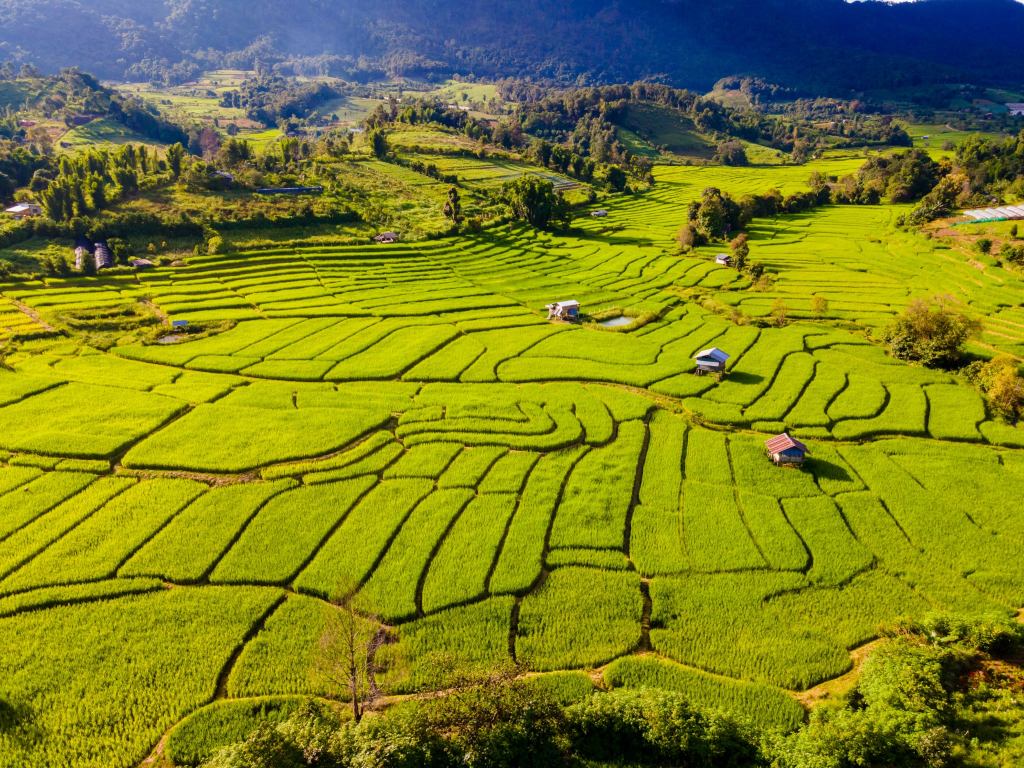
A key feature of organic aquaculture is its integration within broader farming systems. Integrated agriculture combines fish farming with crops and livestock, allowing resources to circulate efficiently and reducing waste (Edwards 2015). In such systems, fish acts as a central link. For example, crop residues can serve as feed, while livestock manure enhances pond productivity. This circular approach strengthens resilience and reduces dependence on external inputs. In the Tungtom community, fish farming is closely connected with rice cultivation, livestock production, and locally sourced feed materials, forming a self-reliant production system.
Fish As the “Hero” in the Tungtom System
Within the integrated organic farming system of the Tungtom community, fish plays a central role that goes beyond being a food source. It acts as the “hero” of the system and functions as the core element linking crops, livestock, processing, and markets into a circular and resilient production model that thereby drives sustainability across the system (CMRU 2023).
At the production level, fish supports a circular farming model in which resources are efficiently reused. Integrated aquaculture systems enhance productivity by recycling nutrients and reducing waste (Edwards 2015). Local materials such as rice bran and agricultural by-products are used as feed, while organic waste improves pond fertility (CMRU 2023). This reduces reliance on external inputs and strengthens system resilience (Ahmed 2019).
Sustainability Dimensions
The fish-centered system in the Tungtom community demonstrates sustainability across economic, social, and environmental dimensions, reflecting an integrated approach consistent with the United Nations 2015 Sustainable Development Goals (SDGs). Rather than functioning in isolation, fish acts as a unifying element that links these dimensions into a cohesive system.
Economically, fish production contributes significantly to income generation and value creation. The development of more than 20 processed products and the expansion of local value chains have increased household income and reduced vulnerability to market fluctuations. This aligns with SDG 1 (No Poverty) and SDG 8 (Decent Work and Economic Growth), as aquaculture enhances rural livelihoods when combined with processing and market access (Belton 2018). Fish production also supports food availability and nutrition, contributing to SDG 2 (Zero Hunger).
Socially, the system is characterized by strong community participation, with over 300 farmers (out of approximately 384 members) involved in production and related activities (CMRU 2023). The implementation of OAF-PGS strengthens trust, collaboration, and knowledge sharing among farmers, reinforcing social cohesion and collective responsibility. This reflects SDG 17 (Partnerships for the Goals), as participatory systems foster inclusive development and local empowerment (Home 2017).
Environmentally, the integration of fish with crops and livestock promotes a circular production system that minimizes waste and reduces reliance on chemical inputs. Organic aquaculture practices support biodiversity, improve water quality, and enhance ecosystem resilience. These outcomes are closely linked to SDG 12 (Responsible Consumption and Production), SDG 14 (Life Below Water), and SDG 15 (Life on Land), as the system maintains ecological balance while sustaining productivity.
Overall, the Tungtom model illustrates how a fish-centered organic farming system can simultaneously address multiple dimensions of sustainability. By integrating economic benefits, social collaboration, and environmental stewardship, the system provides a practical example of how local agricultural practices contribute to global sustainability goals.
Reflections and Conclusion
As the Tungtom case illustrates, fish is not simply one component of an organic farming system, but the key element that brings the entire system together. Fish connects production activities such as rice cultivation and livestock raising, links to processing and marketing, and supports circulation of local resources. This interconnected role allows the system to function as a unified whole rather than as separate parts.
What stands out most is how the community has been able to transform fish farming into more than just a source of income. Through common processing, joint collaboration, and shared local knowledge, fish becomes a means of creating value, strengthening relationships, and building resilience within the community. The participation of a large number of members reflects the strong sense of collective ownership, where sustainability is not imposed from outside but developed from within.
In addition, the system shows how environmental care can be naturally embedded in everyday practices. By relying on local resources, reducing chemical use, and reusing waste within the system, the community maintains a balance between production and nature. This highlights that sustainability does not always require complex technologies, but can emerge from well-connected and thoughtful practices.
Altogether, the Tungtom experience suggests that sustainable development is most effective when it is rooted in local contexts and driven by community participation. By placing fish at the center of an integrated system, the community has created a model that is not only productive but also adaptive and resilient. This highlights the important lesson that sustainability is not about focusing on one activity, but about connecting different elements; and in the Tungtom system, it is the fish that plays the central connecting role.
 AQUADAPT