By Nguyen Thi Thu Thuy and Dr. Long Hoang
Gender Equality, Disability, and Social Inclusion (GEDSI) are increasingly recognized as essential components of sustainable aquaculture development. Beyond technical improvements, aquaculture systems must also ensure fair access to resources, participation in decision-making, and economic opportunity for women and marginalized groups.
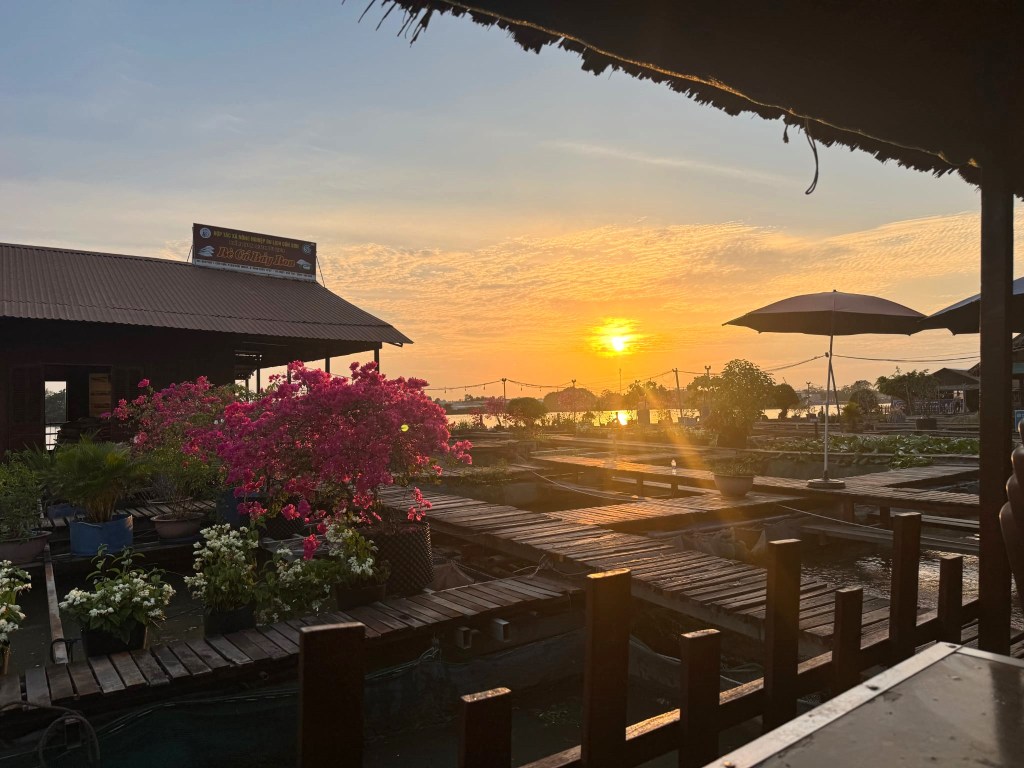
To better understand local realities, interviews were conducted with five community members and farmers in Con Son Islet, Can Tho. This is a small landform in the middle of the Hau River, spanning approximately 70 hectares and home to fewer than 100 families. The small island is known for its aquaculture and community-based tourism. Conversations with Mrs. Ut, Mrs. Nam P., Mrs. Bay M., Mr Bay B., and Mrs. Be B., reveal how gender roles, resource access, and decision-making about livelihoods operate within individual households.
Their perspectives highlight both encouraging progress towards gender equality and remaining challenges for vulnerable groups.
Land Ownership and Equality in Inheritance
Ownership of land and productive assets play crucial roles in empowering women within rural economies. In many parts of the world, inheritance practices often favor sons over daughters. However, the interviews in Con Son suggest that local families increasingly practice equal inheritance between male and female children.
According to Mrs. Ut, a local farmer and community tour guide who has lived on the island since childhood: “In my family, when parents divide property, sons and daughters receive the same share. Their rights are equal.”
She explained that decisions about who cares for elderly parents are based more on family circumstances than gender expectations. This reflects a gradual shift away from the traditional expectation that sons must inherit the land and care for their parents.
Despite this progress in ownership equality, the division of labor in aquaculture activities still reflects gender differences. Men more commonly perform physically demanding tasks such as dragging nets or diving in ponds, while women often manage feeding fish, preparing products, or supporting household businesses.
These patterns demonstrate that while formal ownership may be relatively equal, daily labor roles are still shaped by physical demands and traditional expectations.
Access to Resources and Knowledge
Access to financial services, knowledge, and technology is another important dimension of GEDSI integration.
Interviewees reported that both men and women can access loans, especially when they are recognized as the household’s representative. However, some groups still face barriers to funds.
Mrs. Nam P., a long-time resident of Con Son, emphasized that economic inequality often comes from lack of knowledge rather than from gender discrimination: “Poor households often lack land, and they also have limited access to knowledge, which makes it harder for them to improve their livelihoods”.
Education level, digital skills, and financial literacy strongly influence whether people can benefit from new aquaculture techniques or market opportunities.
Access to information has improved in recent years. Farmers now rely on televised weather forecasts, social media platforms like Zalo, and peer networks to learn about climate conditions and farming techniques.
However, not everyone benefits equally from these resources. Elderly people or individuals with limited education may struggle to access online information or participate in training programs.
Geography also plays a role. As an island community, Con Son face limitations to its infrastructure and services. According to Mr. Bay B., improving basic infrastructure, such as water supply systems, would greatly benefit the community: “If there were a project to build a water supply system for the 300 people living here, it would be very beneficial”.
Such infrastructure improvements would help strengthen community resilience and support more inclusive development.
Household Decision-Making and Women’s Roles
Decision-making power within households is another key indicator of gender equality.
The interviews suggest that most families in Con Son practice shared decision-making between husbands and wives. In fact, women often manage household finances and play an important role in planning economic activities.
Mrs. Bay M., who participates in both farming and tourism services, explained that decisions about farming or household investments are usually made collectively.
In many cases, women are deeply involved in the daily management of aquaculture and tourism businesses, as they have become important sources of income for the island community.
Community-tourism has also opened new economic opportunities for women. Local women often host visitors, prepare traditional foods, and guide tourists through farming and aquaculture activities.
This diversification of livelihoods has helped increase women’s economic participation and visibility in the local economy.
However, women still carry double workloads. In addition to income-generating activities, they are typically responsible for household tasks such as cooking, childcare, and elder care. This can limit their ability to attend training sessions or participate in community leadership roles.
Tourism is Creating New Opportunities for Inclusion
Mrs. Be B., a consultant working with agricultural and community-based tourism in Con Son, observed that the development of tourism alongside aquaculture has helped create more balanced opportunities for men and women. As tourism activities expanded, women became more involved in interacting with visitors, managing services, and sharing local knowledge. According to her, community tourism can also provide meaningful roles for elderly residents and others who may not be able to participate fully in physically demanding farming work: “In community tourism, people themselves become the product. Older farmers can share their stories and experiences with visitors, turning their knowledge into a valuable asset for the community”.
Implications of GEDSI’s Integration in Aquaculture Projects
The insights from farmers in Con Son highlight several important considerations about integrating Gender Equality, Disability, and Social Inclusion (GEDSI) into aquaculure development initiatives. While gender relations in the community show encouraging signs of equality, targeted strategies are still needed to ensure that women and vulnerable groups can fully benefit from aquaculture-based livelihoods.
Firstly, strengthening women’s participation in aquaculture’s value chains is essential. Although women already play vital roles in aquaculture households, their work is often concentrated in supporting or less physically demanding activities. Development projects should expand opportunities for women to participate in higher-value roles such as aquaculture management and planning, product processing and value addition, marketing and tourism services linked to aquaculture, and leadership roles in farmer groups or cooperatives. Encouraging women’s leadership and entrepreneurship can increase both household income and community resilience.
Secondly, improving inclusive access to training and knowledge must be taken into account. The interviews revealed that access to knowledge and technology remains uneven, especially for people with limited education and digital literacy. Aquaculture projects should therefore ensure that training programs are inclusive and accessible. Potential approaches include: providing hands-on practical training rather than purely technical workshops; using simple language and visual learning materials; delivering training through local farmers networks and peer learning groups; and ensuring the training schedules are convenient for women, who often balance household and economic responsibilities. These measures can ensure that women, elderly residents, and other marginalized groups are not excluded from capacity-building programs.
Thirdly, promoting inclusive access to financial services is strongly recommended. Access to finance is critical for expanding aquaculture production and diversifying livelihoods. While women in Con Son can generally access loans, some groups, particularly low-income households or individuals without formal collateral, still face barriers. Future projects could support financial inclusion via several options: by linking farmers with microfinance institutions or community savings groups; promoting joint household financial planning and loan ownership; and supporting small grants or seed funding for women-led aquaculture or tourism activities. Such mechanisms can help ensure that financial resources are accessible to a broader range of community members.
Fourthly, projects should support livelihood diversification. The growth of community-based tourism in Con Son specifically and the Vietnamese Mekong Delta generally demonstrates how aquaculture communities can diversity income sources. Diversified livelihoods can be particularly beneficial for women and vulnerable groups who may not be able to participate in physically demanding farming tasks. New initiatives could support some activities such as aquaculture-linked tourism experiences, processing and marketing of local aquaculture products, and small-scale food businesses or handicrafts connected to local culture. Livelihood diversification can enhance economic resilience while creating more inclusive opportunities for participation.
Last but not least, structural and infrastructure barriers need to be addressed. Local interviewees also highlighted the importance of basic infrastructure, such as water supply systems, transportation, and digital connectivity. An integration of GEDSI considerations into infrastructure planning will ensure safe access for elderly and disabled residents and improve connectivity for isolated communities.
These factors significantly influence a community’s ability to access information, markets, and development programs.
Towards the Future
The experiences of farmers in Con Son demonstrate that gender equality is not only a social issue but also a development opportunity. When women and marginalized groups have equal access to resources, knowledge, and decision-making processes, aquaculture systems become more productive, resilient and sustainable.
For future aquaculture initiatives, embedding GEDSI principles into project design, from training and finance to infrastructure and community engagement, will be essential to make sure that the benefits of aquaculture development are shared equitably across the entire community.
Note from the authors: The names in this article have been changed to provide anonymity.
Acknowledgements: The writing of this article was supported by and in collaboration with the Women4Mangrove project (supported by SEA Grants, an initiative of the GEF/UNEP/UNOPS), the SCS SAP project (in partnership with COBSEA and co-funded by the University of Economics Ho Chi Minh City), and the AQUADAPT-Nature project (funded by IDRC and the Government of Canada).

