By Dr. Nguyen Van Bao
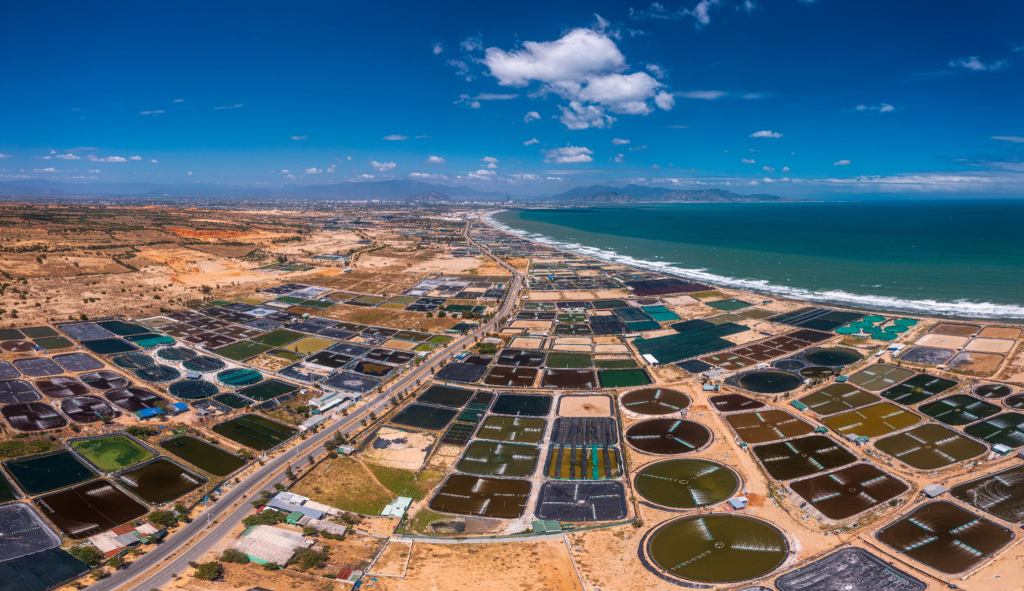
“Smart aquaculture” forms part of a broad, global transformation in food systems driven by digitalization, climate adaptation, and sustainability imperatives. Technologies such as IoT (Internet of Things) water-quality sensors, automated feeding systems, and mobile-based climate advisory services are increasingly promoted as technical solutions that improve productivity, reduce environmental impacts, and enhance resilience. In regions like the Mekong Delta, where aquaculture plays a central role in livelihoods and export economies (NSO 2025), these innovations are gaining recognition as climate-smart development strategies.
The reality, however, is more uneven. The benefits of smart aquaculture are often assumed to be broadly shared, but the evidence from comparable agricultural technology transitions tells a different story. Adoption tends to cluster among those who already have financial capital, institutional access, and technical knowledge, all conditions that are often unequally distributed along gender lines (Kusakabe 2025). Gender dynamics, long recognized as central to agricultural development, remain insufficiently integrated into the design and implementation of aquaculture innovations (Farnworth 2015). As a result, smart aquaculture risks becoming a gender-blind innovation, one that unintentionally reinforces existing inequalities rather than reducing them.
This essay examines how gender shapes the adoption and outcome of smart aquaculture technologies, who gains access, who controls the resulting income, and whether these innovations ultimately narrow or widen existing inequalities. The answers matter not only for equity, but for the overall effectiveness of the transition, since technologies that bypass half the workforce are unlikely to deliver their promised gains.
The Invisible Backbone of Aquaculture
To understand why the gender dimension of smart aquaculture is so often overlooked, it helps to start with what women in the Mekong Delta’s aquaculture households actually do. Women are central to daily farm operations, managing feeding schedules, reading water conditions by eye and instinct, handling post-harvest processing, and maintaining the trader relationships that determine household income. Globally, women account for roughly half of the fisheries and aquaculture workforce when processing and trading are included (WorldFish), and the proportion in Vietnam skews even higher.
Female farm ownership in Vietnam stands at only two to three percent (Parrao 2021). Farms are registered at the commune level in men’s names, since men are treated as the default household representative. The consequence is that women’s productive labor never appears in official statistics, extension records, and technology adoption surveys; not because women are absent from the work, but because the systems designed to count that work were never built to see it.
The practical implications are immediate. When a provincial extension office runs a training session on IoT water sensors or automated feeding systems, invitations go to registered farm owners. Women are excluded not by intention but by institutional design, regardless of how much of the daily operational work they actually perform.
This is the invisible operator problem. The person most likely to interact with a smart aquaculture device every day is frequently not the person who was consulted when it was designed, who was trained to use it, and whose name appears in the adoption record. Programs that treat the household as a single, uniform unit are not just making a methodological error. They are building a transition on a fiction and one with real consequences for whether that transition delivers.
Who Adopts Smart Aquaculture?
Technology adoption in aquaculture is commonly framed as a matter of rational choice made by farmers when the expected benefits outweigh the costs. But this framing treats the decision-maker as a single unconstrained actor, and in doing so it misses the social and institutional conditions that determine who is actually in a position to choose.
In practice, adoption clusters among those who already have financial capital, technical knowledge, and institutional connections through cooperatives, extension networks, or supplier relationships. Men are more likely to control household assets, attend technical training, and participate in the formal channels through which new technologies enter communities. Women in agriculture consistently have less access to inputs, extension services, and credit, and the arrival of digital tools can widen these gaps rather than close them, with rural women among the least likely to have access to digital platforms in the first place (Phillips 2025).
The pattern holds specifically in aquaculture. Training programs are attended predominantly by men, with women given limited opportunity to acquire new technical skills, despite evidence that they perform equally well when access is provided (Bosma 2019). In Vietnam, women’s voices in aquaculture planning and policy remain structurally constrained. Their opinions are often not taken seriously in formal governance settings, meaning that even when women are physically present in meetings about digital technology rollouts, they have limited capacity to shape what gets designed or how it gets delivered.
The result is an adoption gap that existing research has not yet directly measured because it has not tried to. Adoption surveys, in Vietnamese aquaculture, record uptake at the household level, treating the household as a single actor. This absence of intra-household data has long prevented researchers and program designers from assessing whether interventions genuinely benefit women or simply add to their workload.
Who Controls Output and Income?
Adoption is only one part of the equation. Even more consequential is who controls what happens after adoption, who decides how production is managed, and who retains the income when yields improve.
In many aquaculture households, men retain primary control over key decisions: investments, sales, and income allocation. Women may contribute substantial labor but have limited say in how resources are used or how profits are distributed. Social norms and cultural dynamics significantly shape women’s capacity to adopt and retain aquaculture technologies and, critically, to translate economic returns into greater empowerment (Parrao 2021). This imbalance does not automatically change when a new technology enters the household. If anything, technologies that require capital investment or technical expertise may strengthen the decision-making authority of whoever already controls those resources.
Consider a household that adopts a digital water monitoring system. If the system is managed by the male household head, because he attended the training, because his name is on the farm registration, and because he controls the smartphone, this may reinforce his position as the primary production decision-maker, even if his wife is the one checking the pond twice a day. The technology does not change the underlying power dynamic; it maps onto it.
Nevertheless, certain technologies genuinely could shift this balance. Mobile-based advisory services that deliver climate and market information directly to whoever holds the phone have the potential to enhance women’s knowledge and bargaining power. However, this potential is only realized if women can access and use those platforms, and if social norms allow them to act on what they learn. For aquaculture innovations to improve gender equity, they need to take into account the specific social norms in which they operate and the barriers those norms create for women. Technology alone does not determine outcomes; it interacts with existing social structures and, without deliberate design choices to the contrary, it tends to reproduce them.
Does Smart Aquaculture Reduce Gender Gaps?
Whether smart aquaculture narrows or widens gender gaps is a genuinely open question. There are reasons for optimism. Automated feeding systems and remote monitoring tools reduce the physical labor required for daily pond management, which could benefit women if time and physical burden have been barriers to their full participation in farm decision-making. Improved climate information could help women better protect household assets during weather shocks, particularly given the evidence that women in Mekong Delta shrimp farming households tend to take more conservative, household-protective approaches to risk management.
But there are also reasons for concern. Multiple factors, including lack of skills, networks, and access to finance and technology, constrain women’s choices and affect which technologies they adopt. These constraints do not simply disappear when a new technology arrives in a community. If technologies are adopted primarily by male operators, or if they increase men’s profits rather than reward women’s labor, they may widen income gaps within households. Even when technologies reduce physical labor demands, they may create new responsibilities (data monitoring, software management, supplier negotiation) that are not accompanied by greater decision-making power or income control for women. When women’s work is made visible and valued, and when they are able to speak up, be heard, and influence choices, changes start to take place, but this requires deliberate action, not the passive diffusion of technology (Gopal 2020).
The direction of technology’s effect on the gender gaps is not predetermined. It depends on how the technology is designed, who has access to it, and what institutional arrangements accompany its rollout; these are choices that are being made right now, largely without a gender lens in place.
Toward Gender-Responsive Smart Aquaculture
If smart aquaculture is to deliver on its promise of inclusive development, gender considerations must be integrated from the outset, not added as an afterthought once programs are already running.
First, training programs must be designed with women as primary users, not secondary beneficiaries. This means allowing for women’s time constraints and domestic responsibilities, using female extension agents and peer learning networks, and delivering content through modalities accessible to women who may have little prior exposure to digital interfaces. At the same time, access to finance must be addressed directly: many smart aquaculture technologies require upfront investment that women cannot independently access because they lack land title, credit history, or formal registration as farm operators. Tailored financial products such as microloans, group lending schemes, and subsidy programs that recognize operational rather than ownership roles can help close this gap.
Second, technology design itself must involve women from the beginning. Mobile applications should be tested with female users before deployment, not after. Interface simplicity, language accessibility, and offline functionality are not minor technical details; they determine whether a tool is usable by the people who need it most. Technologies that are only tested with male farmers, or that assume smartphone literacy, will systematically let down the operators who need to use them daily.
Third, monitoring and evaluation systems must go beyond adoption rates and yield improvements to include indicators of empowerment: decision-making authority, control over income, and changes in time use. Collecting this data requires moving from household-level to intra-household survey design; it requires asking not just whether a technology was adopted, but who adopted it, who was trained, and who benefits.
Conclusion
Smart aquaculture offers genuine promise for improving productivity, reducing climate risk, and strengthening rural livelihoods in Vietnam’s Mekong Delta. But its success cannot be measured by technological uptake alone. As this essay has argued, the benefits of innovations are shaped by the social structures they enter, and in aquaculture, those structures are deeply gendered.
The women who manage Mekong Delta ponds every day, who know by observation when water conditions are changing, and who absorb the financial shocks of disease outbreaks in their household budgets, are already doing the work that smart aquaculture is designed to support. Whether the transition to digital farming empowers or further marginalizes them is not a technical question, it is a design question.

