
By Tran Duc Thinh
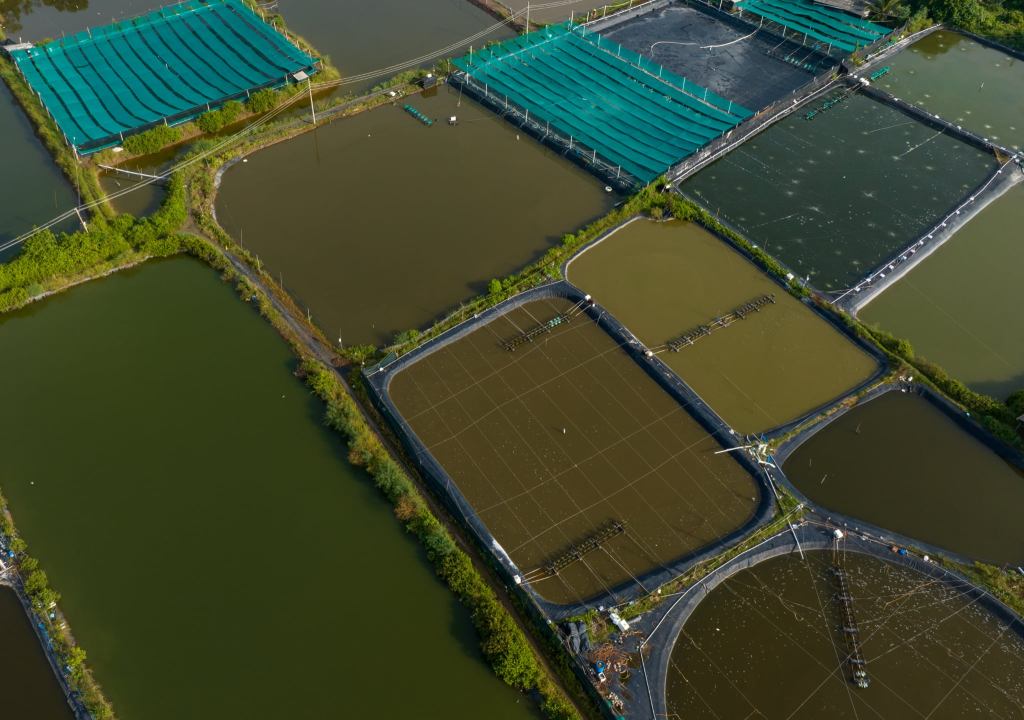
A shrimp farmer in the Mekong Delta hears good news at the district credit office: he can borrow up to VND 300 million (USD 11,500) with no collateral, if he converts part of his pond to a lower density, environmentally friendlier model under Vietnam’s Green Aquaculture strategy. He is interested. A neighbour received a better price by selling to a buyer looking for an eco-label product. Then the loan officer asks for his “phương án sản xuất kinh doanh,” i.e. his business plan: projected costs, yield, and cash flow for a production model he has never run before. He does not have a plan and does not know how to write one. So, he leaves with a smaller loan than he came for, based on the model he already knows how to defend on paper, which is the one he already has.
This is not a story about a door being closed. The ceiling really is VND 300 million. The loan really is collateral-free. What stands between the farmer and the number on the policy document is not a lack of willingness on either side, but a mismatch of scale: a credit system built, in its actual operating logic, for a borrower who already looks like a business, but applied to a borrower who is still, in every meaningful sense, a household.
A Credit System Built With Real Intent
Vietnam’s push toward nature-based, lower-input aquaculture is not short of policy support on paper. Under a 2025 decree effective 1 July 2025, individuals and households can borrow up to VND 300 million (USD 11,500) without collateral, and cooperatives up to VND 5 billion (USD 191,700), a significant increase from the ceilings set a decade earlier (Decree No. 156/2025/ND-CP). A separate 2018 decree goes further for producers organised into formal supply-chain linkages: those in high-tech, organic, or contractually linked production can access collateral-free credit covering up to 70 to 80 percent of a project’s capital need (Decree No. 98/2018/ND-CP). Taken together, these instruments describe a government that has tried, more than once, to widen the door for exactly the transition which the sector needs. The intent is real. The question is who walks through.
The Ceiling and the Disbursement
Despite these ceilings, unsecured lending remains a minority share of the funding that moves through Vietnam’s rural credit system in practice. A trivariate-probit study of farm households in the Red River Delta found that 22.4 percent of surveyed households, and 42.3 percent of those with an active credit need, were rationed, that is were either offered an amount less than requested or turned away outright, in at least one of the formal, semi-formal, or informal credit markets they approached (Anh 2022). Rationing of this kind is different from a statutory ceiling being too low; it is what happens in the space between the ceiling written into a decree and the loan approved by a bank.
Fieldwork with both borrowers and lenders helps explain why. A study of credit access in Lao Cai province found that even where policy sets a single collateral-free ceiling nominally available to all borrowers, the loan amounts disbursed differed significantly by farm scale, with larger producers routinely receiving more than double the amount smaller households were able to borrow. Lending staff interviewed for the study linked this gap to smaller borrowers carrying proportionally higher transaction costs and higher perceived repayment risks for the bank (Lam 2019). In other words, a single legislated ceiling does not translate into a single real-life one. It is filtered, loan by loan, through a bank’s judgment of how much risk a given file represents, and a first-time, small-scale applicant reads as a greater risk than an established one, regardless of what the policy allows.
Six Ordinary Conditions, One Narrow Gate
It helps to look at what an actual collateral-free application asks for, rather than at the policy in the abstract. A typical file checklist runs roughly like this: a loan request on the bank’s form; a copy of the business or household-business registration; a production plan with an itemised cost estimate; a proof of earning at least the minimum annual income, commonly around VND 50 million (USD 1,900); a clean record with the national credit information centre; and a repayment plan, backed if needed by a guarantor, a cooperative, or a third party.
None of these six conditions is unreasonable on its own. The difficulty is what happens when a first-time transition borrower, rather than an established one, tries to meet all six at once.
In the first instance, a bank cannot lend without some evidence of intent, income, and plan to repay, and no one would seriously argue it should.
The registration requirement comes next, and it already sorts applicants before much else is assessed. Household aquaculture on a family pond has traditionally sat outside formal business registration, since it was never legally required for a household simply farming its own land. A cooperative or an established farm operator typically already holds this paperwork. A household applying for the first time may need to register as a business before it can even submit the rest of the file. This is an administrative step with a hurdle that a more formalised applicant has already cleared.
First Penalty: First Orange Card
On the face of it, the production plan is reasonable to ask for, but it assumes numbers that a first-time convert does not yet have. A household running a model it already knows can draw on several seasons of its own real costs and yields to fill in the template with confidence. A household converting to a lower-density or organic system for the first time has no such history to draw on; its estimates are necessarily a projection built on someone else’s figures rather than its own, which is a harder document to stand behind and a harder one for a loan officer to trust.
Proving the income threshold favours whoever already has paper income. VND 50 million a year is not, for most working aquaculture households, an unrealistic amount to earn. What is harder is demonstrating it in a form the bank accepts: invoices, tax records, or bank statements. These follow naturally for a registered business, but do not for an unregistered household which sells directly to local buyers for cash, however real that household’s income may be.
Second Penalty: Second Orange Card
Some smallholders have no formal credit record. All their loans have come to them through an informal network of relatives, friends and co-villagers. And their hyper-clean non-existent credit record turns into a liability for a loan officer seeking repayment reassurance.
The guarantee clause is where the difference between the two types of borrowers quietly resurfaces. The requirement for a guarantor or third party applies, as the form usually puts it, “if needed,” meaning at the loan officer’s discretion when a file does not quite fully stand on its own. A first-time transition application, thin on production history and formal income proof, is precisely the kind of file most likely to be judged as needing a guarantee. At that point the loan may be collateral-free in name, but in practice it depends on finding someone willing to stand guarantor behind it, which is not so different from the “tài sản bảo đảm” or “requirement of collateral” the policy was designed to remove.
Third Penalty: Red Card, You’re Out
Put together, none of the six conditions singles out a type of borrower by design. What they share, cumulatively, is a preference for paperwork that formalisation produces as a byproduct: a business registration a cooperative already has, a cost history an established producer already has, an income record a registered enterprise already has. A household converting for the first time is not held to a higher standard than anyone else. It is held to the same standard, but with less material on hand to meet it.
There is also a gendered edge to the mismatch. Because a loan application is typically filed by whoever is registered as household head, and that registration still defaults informally to the husband’s name far more often than the law requires, the applicant is not always the person actually running the conversion day to day. When the loan applicant and the pond operator differ, the plan ends up being written, at one remove, by someone other than the person who holds the knowledge it is meant to reflect.
What It Costs To Leave This Unaddressed
The total effect of this practice is a quiet filtering, not by intentional design but by an accumulation of ordinary conditions. Credit meant to support the sector’s shift toward nature-based, lower-input models disproportionately reaches producers closest, on paper, to qualifying such as cooperatives, contract-linked operations, and households whose paperwork already resembles small enterprises, whereas households most exposed to salinity intrusion and volatile prices are often those with the thinnest paper trail. Independent smallholders converting for the first time are then left with having to choose between the model their existing paperwork supports and a smaller, maybe delayed, loan than their transition needs.
It’s not just about fairness: a strategy that, in practice, makes it easiest to access finance for producers already furthest along the path to formalisation will move forward more slowly than the sector’s climate pressures call for.
Closing the Gap Between the Credit Ceiling and the Paper File
None of this argues for a higher ceiling. The ceiling is already generous. What is missing is the connective layer in the space between the statutory funding number and the borrower it was meant to reach.
A first step is letting a simpler form of registration and income evidence count for first-time transition borrowers, a commune-level confirmation of pond use and harvest history standing in for a full business registration certificate and formal invoices, so a household is not asked to formalise its entire operation just to apply for one loan. A second is simplified, standardised feasibility templates for transition-stage aquaculture, built with extension officers who know what a realistic first-season conversion budget looks like, so a household is not expected to produce the same style of projection an established enterprise would build from its own multi-season history. A third, and perhaps the easiest to implement, is letting a loan application list either spouse, or both jointly, as the applicant of record by default, consistent with the same joint-registration principle already applied to land certificates (Land Law No. 31/2024/QH15, Art. 135). That would satisfy the guarantee clause and the gendered mismatch in one move: whichever spouse holds the operational knowledge of the conversion could stand behind the application in their own name, rather than see it filed by a household head who knows the paperwork better than the pond.
None of this requires supplying new funding or relaxing a condition that exists for good reason. The ceiling already exists, and every requirement on the file checklist is there because a bank reasonably expects some response to it. What is missing is letting a first-time transition borrower satisfy each condition with the evidence a household has, rather than the evidence a formalised enterprise generates as a matter of course. This ensures that loans reach first-time borrowers, not only those already closest to qualifying. Until that gap closes, the number on the policy document and the number a smallholder can borrow will keep describing two different loans.

