By Dr. Phan Thanh Thanh, Dr. Narith Por, and Kry Solany
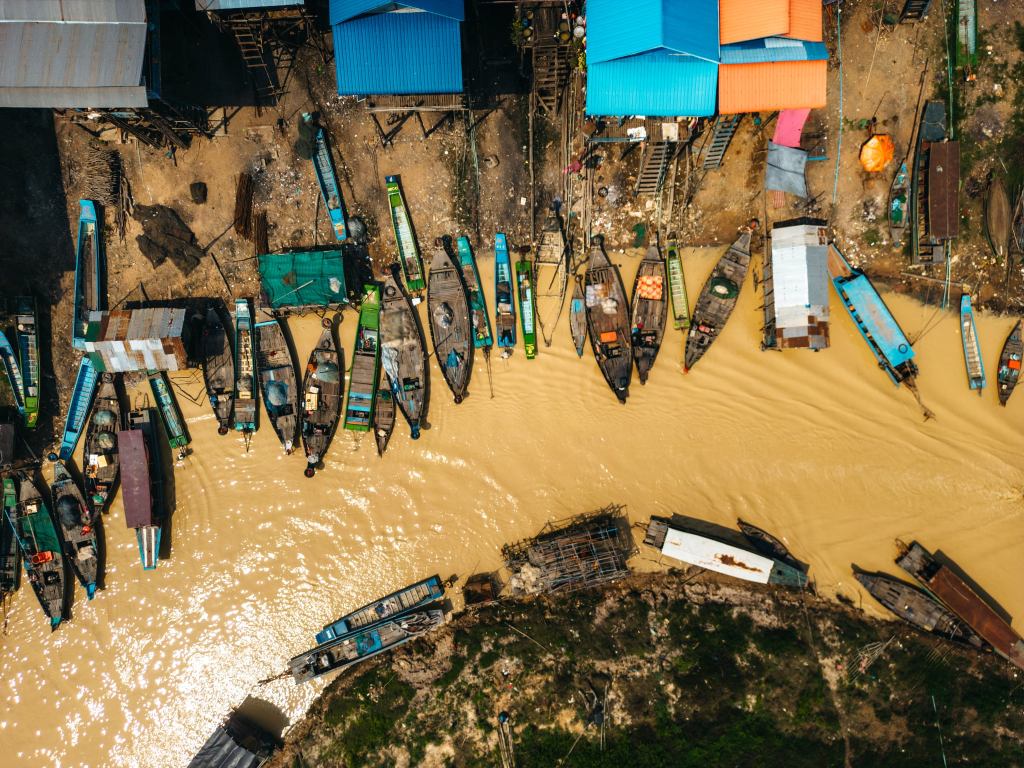
Stung Treng Province, located in northeastern Cambodia at the confluence of the Mekong River and its major tributaries, the Sesan, Srepok, and Sekong rivers, holds immense ecological, economic, and cultural significance within the Lower Mekong Basin. The province is characterized by rich aquatic biodiversity, flooded forests, wetlands, and riverine ecosystems that support the livelihoods of thousands of rural households. For generations, communities in Stung Treng have depended heavily on fisheries, seasonal agriculture, and natural water systems for food security, transportation, and household consumption. However, increasing environmental degradation, hydropower expansion, climate variability, and water insecurity are fundamentally transforming the ecological and socioeconomic landscape of the province (Hirsch 2016; Green 2020).
The Mekong Basin has experienced substantial ecological disruption in recent decades due to hydropower development, irregular river flows, deforestation, declining fish stocks, and changing rainfall patterns. Research indicates that dams throughout the Mekong Basin have interrupted fish migration routes, altered sediment transport, and weakened ecosystem services critical for rural livelihoods (Dugan 2010; Grumbine 2011). In Cambodia, these environmental changes intersect with increased climate vulnerability, particularly in provinces such as Stung Treng, where local populations remain highly dependent on natural resources and possess limited adaptive capacity.
Against this backdrop, local communities, government agencies, and civil society organizations in Stung Treng have increasingly adopted Nature-based Solutions (NbS) as an alternative framework for climate adaptation and sustainable development. According to the International Union for Conservation of Nature (IUCN 2020), Nature-based Solutions are actions that protect, sustainably manage, and restore ecosystems while simultaneously addressing societal challenges and supporting human well-being. Rather than prioritizing purely extractive or technologically intensive development models, NbS approaches emphasize ecological restoration, community resilience, sustainable livelihoods, and participatory governance.
In Stung Treng, aquaculture has emerged as a critical component of these Nature-based Solutions. By integrating fish cultivation, conservation practices, ecosystem restoration, and adaptive agricultural methods into the natural hydrological rhythms of the Mekong Basin, communities have sought to strengthen resilience against climate-related shocks while preserving long-term ecological sustainability. Importantly, these initiatives also incorporate dimensions of gender equality, Indigenous knowledge, and social inclusion, recognizing that climate vulnerability affects different social groups in unequal ways.
This article examines the implementation of Nature-based Solutions in Stung Treng Province, with particular attention to aquaculture, community fisheries, climate resilience, and inclusive governance. Drawing on interviews conducted in 2025 with local authorities, community leaders, Indigenous Peoples, women, persons with disabilities, and marginalized groups, the article explores how local actors are responding to climate vulnerability and environmental degradation through community-driven adaptation strategies.
Climate Vulnerability and Human Security
Water Insecurity and Ecological Decline
Stung Treng Province faces significant environmental and human security challenges associated with floods, droughts, irregular rainfall patterns, and ecological degradation. Water insecurity has become one of the most pressing concerns affecting livelihoods, food systems, and social stability throughout the province. The impacts of climate change are compounded by upstream hydropower development and environmental degradation, which together have altered natural river flows and weakened aquatic ecosystems across the Mekong Basin (MRC 2025).
Water insecurity in Stung Treng is multidimensional, affecting public health, household economies, agricultural productivity, and social cohesion. A local commune official highlights how environmental stress can intensify social tensions and undermine community relationships, particularly during periods of drought and resource scarcity: “Water insecurity affects social cohesion, causes competition for water use for agriculture and livelihoods, leads to conflicts over daily water use, and creates distrust between community members.”
The ecological consequences of these environmental transformations are especially severe for communities dependent on fisheries and river-based livelihoods. The Mekong Basin is one of the world’s most productive inland fisheries systems, yet hydrological changes and ecological degradation are threatening aquatic biodiversity and fish migration routes (Dugan 2010). Communities throughout Stung Treng have also observed significant shifts in seasonal weather patterns: “Rainfall that traditionally began in mid-May now frequently arrives in mid-June or occurs unpredictably during the dry season. These changing weather patterns have disrupted agricultural calendars, increased pest infestations, and reduced crop productivity. Groundwater levels have also declined significantly, with wells that previously provided water year-round now drying up after approximately eight months.”
Scholars have increasingly argued that climate change and water insecurity should be understood not only as environmental issues but also as questions of social justice, inequality, and governance (Sultana 2021). Environmental degradation disproportionately affects populations that possess fewer economic resources, limited access to infrastructure, and weaker political representation. In Stung Treng, vulnerable groups such as women, Indigenous Peoples, persons with disabilities, and elderly residents face heightened risks due to their dependence on natural resources and limited adaptive capacity. Residents in Stung Treng report declining fish stocks, increased algae and moss growth in rivers, and deteriorating water quality: “Irregular river levels and the increasing growth of moss in the river have significantly reduced fish catches for my household. As my family depends heavily on fishing for both food and income, the environmental decline has created serious hardship. To support the family, my wife has had to work away from home as a laborer.”
Social and Economic Impacts on Vulnerable Populations
The impacts of climate change and ecological degradation are not distributed equally across communities. Poor households, female-headed households, elderly persons, and persons with disabilities experience disproportionate vulnerability due to intersecting forms of social and economic marginalization: “Severe drought conditions in 2024 destroyed my peanut crops and contributed to food insecurity for my family of four. During drought periods, widows, children, and elderly people frequently experienced fatigue, illness, and weakened health conditions.”
These experiences reflect wider patterns identified in climate justice research, which demonstrates that marginalized populations often suffer the greatest consequences from environmental crises while possessing the fewest resources for adaptation (Sultana 2021). Climate-related vulnerabilities are therefore deeply interconnected with poverty, gender inequality, disability, and social exclusion.
Female-headed households are particularly vulnerable in Stung Treng because women frequently carry multiple responsibilities simultaneously. In addition to caregiving and domestic labor, women contribute significantly to agricultural production, water collection, and household income generation. During periods of drought and water scarcity, these burdens intensify considerably. Women must then balance domestic care responsibilities, livelihood activities, and climate adaptation work simultaneously: “The group of women who are most affected are poor female heads of households because they have many burdens, such as having to earn money to support their families. If there is a shortage of water, they have to spend a lot of time fetching water because they need to use it regularly.”
Research has consistently shown that gender inequality significantly shapes vulnerability to environmental change. Women often possess less access to land ownership, financial resources, education, and political decision-making despite playing central roles in natural resource management and household survival (Agarwal 2018). In rural Cambodia, these structural inequalities remain significant barriers to resilience and adaptation. Indigenous communities in Stung Treng, such as the Kuy and Kreung peoples, also face heightened vulnerability due to land insecurity, environmental degradation, and marginalization from formal governance structures. Indigenous livelihoods are deeply connected to rivers, forests, fisheries, and traditional agricultural systems, which makes ecological decline especially damaging to both their economic survival and cultural identity.
Nature-based Solutions in Practice
Resilient Aquaculture Technologies
In response to growing climate pressures and ecological instability, communities and local authorities in Stung Treng have adopted several Nature-based Solutions aimed at strengthening food security and environmental sustainability. Aquaculture has become a particularly important adaptation strategy because it enables households to diversify livelihoods while reducing pressure on declining wild fisheries.
The Department of Agriculture, Forestry, and Fisheries has introduced innovative techniques such as fish farming in plastic bags and portable aquaculture systems. These methods allow households to continue fish production even when ponds dry up or river conditions become unstable. Portable systems are especially useful for poorer households with limited land access because they require relatively small amounts of water and infrastructure.
Integrated rice-fish farming systems are also promoted as sustainable agricultural practices. These systems combine fish cultivation with rice production in mutually beneficial ecological relationships. Fish help control pests and improve soil fertility, while rice fields provide food and habitat for aquatic species. Such approaches reduce dependence on chemical fertilizers and pesticides while increasing biodiversity and household food security (Halwart 2004; FAO 2018; IUCN 2020).
The IUCN standard emphasizes that Nature-based Solutions should support both ecological sustainability and human well-being. In Stung Treng, integrated aquaculture systems represent practical examples of this principle because they strengthen livelihoods while protecting aquatic ecosystems.
Communities and local NGOs such as My Village Cambodia (MVi) have created artificial fish habitats marked by floating buoys and vegetation structures designed to support fish breeding and spawning in Stung Treng’s Samkhouy and Nhangshum villages. These local conservation initiatives seek to restore aquatic biodiversity and maintain fisheries productivity despite changing environmental conditions (Dugan 2010; IUCN 2020; MRC 2025).
Importantly, many of these NbS initiatives build upon traditional ecological knowledge and local adaptation practices developed over generations. Rather than replacing Indigenous knowledge with purely technological interventions, successful programs in Stung Treng often combine local expertise with modern climate adaptation techniques (IUCN 2020; UN Women 2020; Hensengerth 2024).
Community Fisheries and Conservation
Community-based fisheries management constitutes another key component of Nature-based Solutions in Stung Treng Province. Cambodia’s Fishery Law (2017) and Environmental and Natural Resources Code (2023) provide legal frameworks for community participation in fisheries governance and conservation activities.
Across the province, Community Fisheries (CFis) monitor aquatic resources, prevent illegal fishing, protect fish spawning grounds, and promote public awareness about sustainable resource management. These community-based governance structures strengthen local stewardship over aquatic ecosystems while enhancing cooperation between residents and local authorities.
In Koh Snaeng Commune, for example, the fishing community, established in 2006, focuses on protecting breeding areas through publicization of fishing seasons and regular coordination with commune councils. Community members conduct patrols and monitor fishing activities to prevent illegal practices that threaten fisheries’ sustainability.
Research throughout the Mekong Region has demonstrated that community participation can significantly improve environmental governance and conservation outcomes (Hensengerth 2024). Local communities often possess extensive ecological knowledge regarding fisheries, seasonal river changes, and resource management practices. Community-based approaches can therefore strengthen accountability, collective action, and environmental stewardship.
However, community fisheries face important challenges, such as limited funding, inadequate technical support, illegal fishing practices, and external development pressures. Many conservation initiatives remain dependent on short-term project financing rather than stable long-term investment.
Adaptive Agriculture and Reforestation
Nature-based Solutions in Stung Treng also include adaptive agriculture and ecosystem restoration initiatives aimed at strengthening resilience against floods, droughts, and environmental degradation.
Ecosystem restoration is increasingly recognized internationally as a cost-effective climate adaptation strategy because healthy ecosystems provide natural protection against floods, droughts, and environmental degradation (IUCN 2020). In the context of the Mekong Basin, restoring forests and wetlands also contributes directly to fisheries sustainability and rural livelihoods. Local authorities and non-governmental organizations (NGOs) have promoted organic vegetable cultivation, climate-resilient crop varieties, and water-saving agricultural practices. Some residents have adopted elevated shelf planting systems in Samkhouy Village to protect crops from flooding, while others use drip irrigation systems in Samkhouy, Koh Snaeng, and Tunsorng villages to conserve water during drought periods: “The Department of Environment in Stung Treng aims to plant approximately 100,000 trees annually to restore flooded forests and reduce riverbank erosion. Flooded forests are critically important ecosystems within the Mekong Basin because they provide breeding habitats for fish, improve water quality, stabilize riverbanks, and support biodiversity.”
Eco-Tourism and Conservation Financing
Community-based ecotourism has emerged as another innovative component of Nature-based Solutions in Stung Treng. In Koh Snaeng Commune, Community-based Ecotourism (CBET) initiatives generate income from tourism activities linked to the province’s natural and cultural resources: “Profits from ecotourism are partially reinvested into environmental protection activities, such as forestry conservation, fisheries management, and ecosystem restoration.” Moreover, women play important roles in managing the guest services and the financial affairs of the ecotourism committee.
Community-based ecotourism strengthens local ownership over conservation efforts by creating direct economic incentives for environmental stewardship. When communities benefit financially from healthy ecosystems, they become more motivated to protect forests, rivers, and fisheries from destructive activities. CBET regulated that 5% of the incomes had to be for natural resource protection and 5% had to be for forest protection.
Gender Equality and Social Inclusion (GESI)
One of the distinguishing features of Nature-based Solutions in Stung Treng is the explicit focus on Gender Equality and Social Inclusion (GESI). Local adaptation initiatives increasingly recognize the importance of including women, Indigenous Peoples, persons with disabilities, elderly populations, and marginalized groups in environmental governance processes.
Women as Resource Managers and Mediators
Women play central roles in household water management, agricultural production, food security, and community conflict resolution. Although women’s participation is often more visible at informal levels than in formal leadership structures, their contributions to local governance are substantial. Women play important roles in promoting dialogue, cooperation, and peaceful conflict resolution during periods of environmental stress: “Women in the commune council often act as mediators in disputes, such as grabbing water for rice fields or taking a shared well for private use, using gentle and understanding methods to bring both parties to an agreement.”
However, structural barriers continue to limit women’s formal leadership opportunities. Many women face severe time constraints due to unpaid domestic labor, caregiving responsibilities, and agricultural work. Traditional gender norms and limited financial resources also restrict women’s participation in decision-making processes: “For women to participate effectively, they must have decision and support from family… [they must] have the knowledge, skills, and willingness to do so.”
These findings align with broader research emphasizing that women’s participation in environmental governance requires not only representation but also structural support, capacity-building, and institutional reform (Agarwal 2018).
Indigenous Women and Climate Resilience
Despite facing multiple forms of marginalization, Indigenous women in Stung Treng have demonstrated remarkable resilience and innovation in adapting to climate change. Several interviewees described successful examples of women embracing sustainable agricultural and livelihood practices: “I adopted organic vegetable cultivation using protective sheds and drip irrigation systems. Through these methods, I generated approximately 300,000 to 400,000 Cambodian Riels (75 to 100 USD) per harvest, enabling me to support my family despite increasing environmental uncertainty.”
Such examples demonstrate that marginalized groups are not merely passive victims of climate change but also active agents of adaptation and resilience. Support for Indigenous knowledge systems and women’s leadership is therefore essential for sustainable climate governance.
Conclusion
The transition toward Nature-based Solutions in Stung Treng Province represents an important pathway to strengthened resilience, sustainability, and human security within the Lower Mekong Basin. Faced with increasing climate variability, water insecurity, and ecological degradation, local communities have developed innovative adaptation strategies that integrate aquaculture, ecosystem restoration, community conservation, and sustainable livelihoods.
Stung Treng’s experiences demonstrate that Nature-based Solutions contribute not only to environmental sustainability but also to social inclusion, gender equality, and community empowerment. Women, Indigenous Peoples, persons with disabilities, and marginalized groups play essential roles in environmental stewardship and climate adaptation despite facing significant structural barriers.
At the same time, long-term resilience requires inclusive governance, sustained investment, secure land rights, and strong institutional support. Successful adaptation depends not only on ecological restoration but also on addressing broad inequalities related to poverty, gender, political participation, and access to resources.
As climate pressures continue to intensify across the Mekong Basin, the experiences of Stung Treng provide valuable lessons about community-based adaptation, participatory governance, and sustainable resource management. With its integration of traditional knowledge, ecological restoration, and inclusive governance, Cambodia can contribute to the building of a more resilient and equitable future for the region.

